

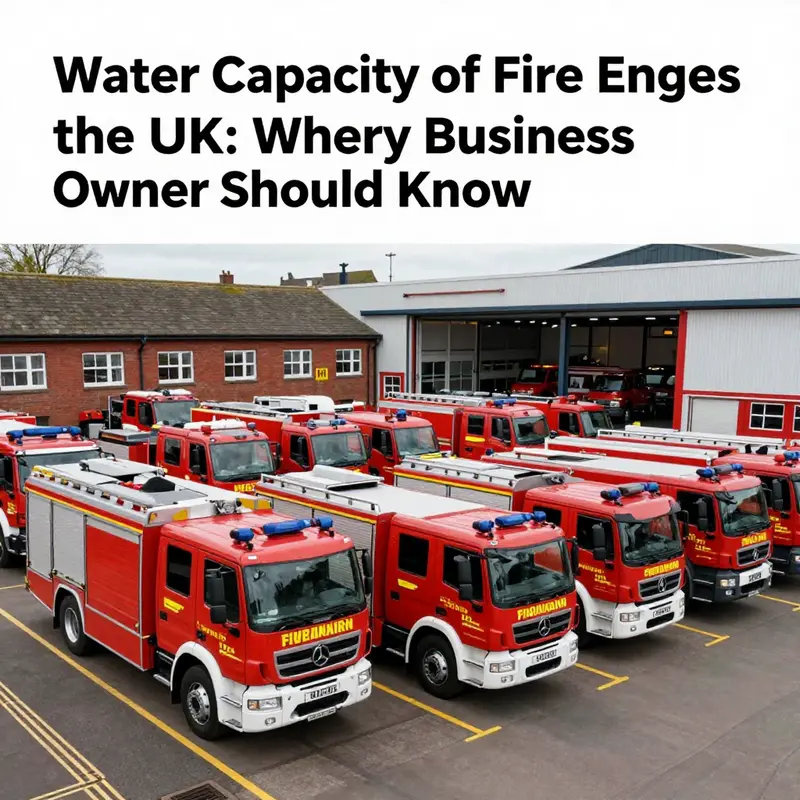
In the UK, fire engines play a crucial role in emergency response, particularly in protecting businesses from fire hazards. For business owners, understanding the water capacities of various fire engines can inform emergency preparation and reduce risk. Typically, fire engines can hold anywhere from 2,000 to 15,000 litres of water, depending on their type and intended use. This article will explore the water capacity of urban fire engines, large pumpers and tender/supply vehicles, and specialist firefighting units, giving business owners insights into how these capacities impact fire safety and emergency response readiness.
Urban Engines and Their Water: Why 1,000–2,000 Litres Often Suffice in UK Cities
Urban Engines and Their Water: Why 1,000–2,000 Litres Often Suffice in UK Cities
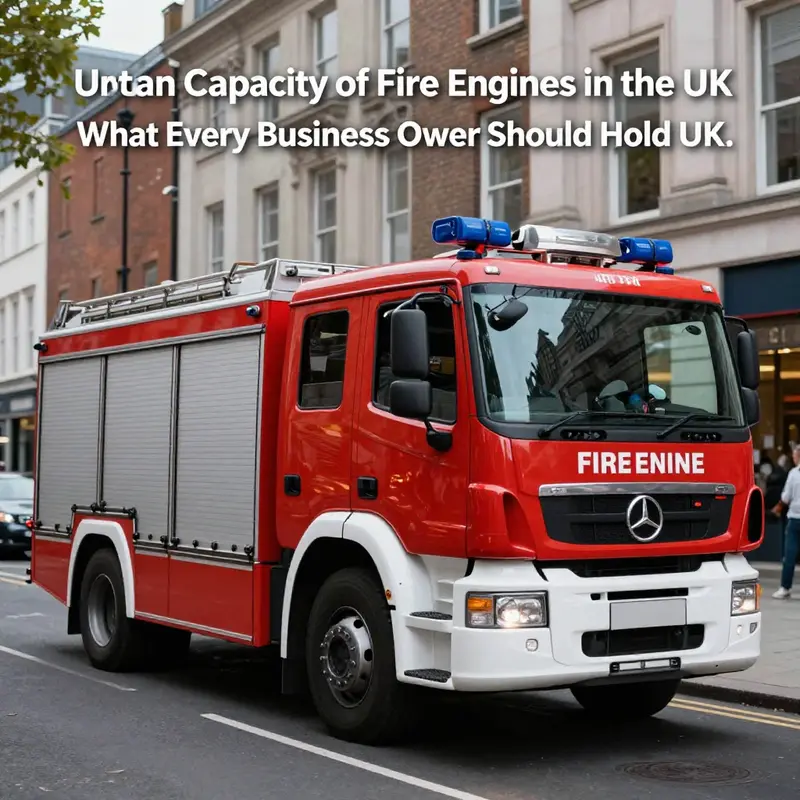
A typical urban fire engine in the UK carries between 1,000 and 2,000 litres of water. That figure surprises many people who imagine giant tanks on every appliance. The reality reflects trade offs that fire services must balance every day: agility, pump capability, crew size, access in built environments, and reliance on the broader water supply network. This chapter examines why that relatively modest onboard volume is common, what it means for operational tactics, and how crews extend their water supply during sustained incidents.
Fire engines built for urban response are optimised for quick arrival and effective initial attack. They need to manoeuvre through tight streets, enter multi storey car parks, and position close to buildings to allow high pressure hose lines. Tanks larger than 2,000 litres would add weight and bulk. Increased weight affects acceleration, braking, and turning. It also increases wear on urban roads and may reduce access to narrow lanes. Designers therefore aim for a balance: enough onboard water to begin firefighting immediately, but not so much that the appliance becomes cumbersome.
The onboard tank performs a critical but specific role. It provides an immediate supply while the crew establishes a sustained water feed. In many urban incidents, the first five to fifteen minutes are decisive. Having 1,000 to 2,000 litres available means crews can apply water or foam to control fire spread, protect exposures, and buy time for hose lay and hydrant connections. For example, a single 45 millimetre attack line flowing 500 litres per minute will deplete a 2,000 litre tank in about four minutes. That seems brief, but during those minutes the crew can deploy additional lines, request hydrant supplies, or call for support appliances. The tank therefore acts as a bridge between arrival and a continuous mains supply.
Another reason urban tanks remain moderate in size is the widespread availability of hydrants and reliable public water mains. UK towns and cities generally have dense hydrant networks designed to supply multiple appliances simultaneously. Fire crews are trained to locate and connect to the nearest hydrant swiftly. Modern pump technology allows engines to boost pressure and maintain high flow rates from hydrants, so even relatively small tanks become less crucial when mains support is available. For incidents close to hydrants, the initial tank is often a safety net rather than the primary water source.
Pump performance and hose selection influence how crews use onboard water. Urban appliances typically carry powerful pumps capable of delivering high flows at useful pressures. When a hydrant is available, the pump draws from the mains and supplies the attack lines directly. But when mains are distant, the onboard tank feeds the pump. Crews can use the tank to establish a steady, controlled flow while they implement relay pumping or bring in a tanker. The key point is that onboard water works together with pump capacity and tactics to sustain firefighting operations.
Operational doctrine also shapes tank sizes. Urban fire services set response standards and equipment specifications to meet local hazards. Where tall residential blocks, transport hubs, or industrial facilities are common, services may equip engines with additional equipment and training rather than simply enlarging tanks on every appliance. Specialist appliances such as aerials, rescue units, and hazmat vehicles carry mission specific equipment. Larger tank volumes are reserved for tanker or tender vehicles that supplement the urban fleet when needed. This approach keeps the core urban pump fleet nimble and adaptable.
Tactics for conserving and extending water supplies are ingrained in training. Crews prioritise efficient flow rates and aim water at key locations to limit waste. They use portable reels, foam proportioners, and combined attack methods to maximise the effect of available water. For fires involving compartments or small rooms, well directed water streams and ventilation control can achieve rapid knockdown with minimal volume. Where an initial attack cannot extinguish the fire, crews implement a staged plan: secure life safety, prevent spread using exposures and protection lines, then move to suppression with sustained mains or tanker supplies.
When hydrants are unreliable or absent, urban services rely on support from tanker vehicles. A tanker, sometimes called a water carrier, can bring several thousand litres to the scene. These tenders operate as part of a coordinated response in areas that lack sufficient hydrant coverage, or when incidents grow beyond the capacity of local mains. Tend to be deployed to supplement urban engines when needed, especially for extended incidents or significant fires in buildings with limited water access. This combination of pump and tender preserves the advantages of a lightweight urban appliance while ensuring continuity of supply for longer operations.
Urban engines also integrate foam capability for certain fires. Foam allows a reduced water usage because it improves extinguishing efficiency on burning fuels. Proportioning systems mix foam concentrate with water at controlled ratios. Onboard tanks either feed these systems directly or they draw from hydrant supplies. For small fuel spills or compartment fires involving flammable liquids, foam can be decisive. It reduces water demand and increases the effective reach of the onboard supply.
Design considerations beyond tank volume influence how appliances are configured. The vehicle chassis, pump capacity, crew cabin size, and equipment compartments are all part of a package. Manufacturers and fire authorities evaluate the local risk profile before specifying a build. If frequent high volume demands are likely, the service may opt for larger pump capacity or dedicated water carriers. If the area has constricted streets, the chosen appliance will prioritise manoeuvrability over tank size. These choices reflect a pragmatic view of how water fits into the larger system of firefighting capability.
Maintenance and safety rules also shape tank volumes. Tanks must be positioned securely, and their fill levels affect vehicle stability. Regulations and best practice suggest limits to maintain safe handling. Fire services consider centre of gravity, braking distances, and rollover risk when choosing tank sizes. Ensuring the crew can operate safely in urban environments remains a priority. A smaller tank helps maintain predictable handling characteristics under a variety of load conditions.
Beyond the physical and tactical rationale, there is also a cost element. Larger tanks require stronger chassis and more robust suspension. They add weight which increases fuel consumption and vehicle wear. For many urban fire services, the extra expense does not justify the marginal benefit provided. Instead they invest in other areas, such as rapid response capability, breathable air systems, cutting tools, and thermal imaging cameras. This choice demonstrates a broader strategy: allocate limited budgets where they yield the most operational value.
Incident commanders balance water availability with strategy. On arrival, they assess building layout, fire growth, occupant risk, and potential for fire spread. If the situation appears likely to require sustained high flow, they request additional resources immediately. Commanders also coordinate hydrant usage, ensuring multiple appliances can draw from the mains without reducing pressure below useful levels. When hydrant pressure is a concern, pumpers can set up relay pumping with tanker support to ensure required flows reach the attack positions. The onboard tank remains an initial resource while the bigger logistics picture is established.
The urban engine follows a clear pattern: arrive quickly, use the tank to start effective firefighting, then transition to a sustained supply. This pattern is consistent across many UK brigades. Even with varied risk profiles and local variations, the core logic holds. Onboard water is a tactical enabler, not a long term solution. It buys time and space for connections to the mains and for the arrival of specialist support where needed.
Public education about water capabilities helps manage expectations. The sight of a fire engine with a modest tank sometimes leads the public to assume inadequate equipment. Explaining the role of the onboard tank clarifies why crews depend on hydrants and other appliances. Authorities often highlight that a network of hydrants and coordinated logistics provides far more water than any single vehicle could carry. Communicating these operational realities supports informed discussion during incidents and policy debates.
When incidents occur in fringe urban areas or scattered developments, services adapt. They may stage tenders closer, pre plan water shuttles, or identify temporary reservoirs and lagoons for pumping. In such contexts, the standard urban tank remains useful for arrival response, but an immediate plan for sustained supply becomes essential. Exercises and risk assessments identify likely water shortfalls and shape response protocols. These preparations keep the initial strategy effective even when the mains are distant or under pressure.
Technological advances continue to influence how water is used. Improved nozzles, foam systems, and pump control software increase the efficiency of water application. Thermal imaging helps locate hot spots, allowing more precise suppression and less wasted water. These innovations reduce the pressure to increase onboard volumes and improve the effectiveness of the existing tank size. Investment in training and equipment upgrades often yields more operational benefit than larger tanks.
Regional collaboration and mutual aid are also part of managing water resources. Neighboring brigades support each other with tenders or pump capacity when required. Large incidents often trigger multi agency and multi brigade responses, pooling water resources and expertise. This cooperative model further reduces the need for oversized tanks on every urban engine, by distributing the burden across a coordinated network.
Finally, regulation and guidance inform specifications. National and local standards recommend configurations that balance water supply with other operational needs. Authorities refer to those standards when commissioning fleets. The guidance emphasises flexibility and a systems approach to water logistics. Tanks of 1,000 to 2,000 litres fit squarely within that framework for urban appliances, providing an immediately usable resource while depending on hydrants and support vehicles for sustained supply. For further detail on standards and service guidance, the National Fire Chiefs Council provides comprehensive resources and specifications at https://www.nfcc.co.uk.
For readers interested in how these choices translate into specific vehicle types, manufacturers and vehicle suppliers list categories such as pumpers and tankers. An example internal resource that outlines practical vehicle categories and configurations is the fire rescue pumper category. That overview helps show how a pumper integrates tank, pump, and equipment to meet urban needs: https://crrcvehicles.com/product-category/fire-rescue/pumper/.
This chapter explores why urban fire engines in the UK typically carry 1,000 to 2,000 litres. The number reflects a considered balance of manoeuvrability, cost, safety, pump performance, and the presence of an established mains network. Onboard water starts operations and supports life safety. It works in concert with hydrants, tenders, and tactics to deliver effective firefighting in densely built environments.
Water on the Move: How UK Large Pumpers and Tender Vehicles Carry and Sustain Firefighting Efforts
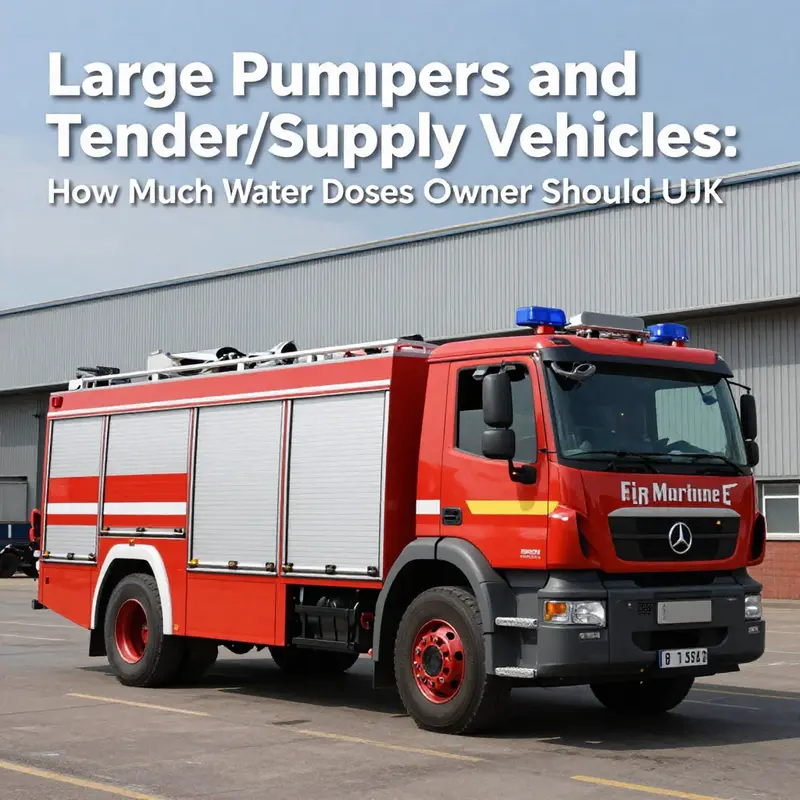
Across the United Kingdom, the question of how much water a fire engine can hold is more than a statistic. It is a window into how firefighters plan, where they choose to fight a blaze, and how they stage units to maintain a steady stream of water when every second counts. The capacity of onboard water tanks is not a single number but a spectrum shaped by role, geography, and the tactical approach that underpins modern firefighting. At one end lies the urban pumper, designed for rapid response in built-up areas where hydrants are plentiful and the initial surge of water can be met quickly from the mains. At the other end are specialist vehicles—forest and rural tenders—built to carry larger volumes to sustain a firefight when hydrants or other water sources are scarce or distant. Between these poles lie large pumpers and tenders whose capacities illustrate the practical compromises and strategic choices that govern firefighting across communities of different sizes and topographies. To understand how much water a UK fire engine holds, one must appreciate the function each vehicle serves, the constraints on weight and space, and how crews integrate onboard supply with external water sources throughout the course of an incident.
The onboard water tank is the frontline resource in every firefighting scenario. Its size is determined not merely by capacity but by a complex balance of weight, vehicle handling, and the need to deliver water at sufficient pressure. A notable thread in the UK’s fire service landscape is the way capacity scales with the vehicle’s role. Large pumpers, which form the backbone of fire suppression in many urban and peri-urban contexts, typically carry a few thousand litres of water on board. In practical terms, they are designed to deliver a robust stream of water from their pumps to the hose lines, while remaining nimble enough to navigate dense streets, stairs, and tight access points. In many cases, large pumpers hold around 2,000 to 3,000 litres of water. This range reflects a deliberate engineering choice: enough water to commence an attack quickly and to give firefighters a meaningful start before external supplies arrive, while keeping the chassis within weight limits that preserve braking, steering, and acceleration. The pumps fitted to these vehicles are built to move water at high pressure, pushing it through hoses with the aim of producing a strong, controllable jet capable of penetrating flames and reaching concealed pockets of heat. The onus on the onboard tank is to keep the initial surge steady, enabling the first lines to work while crews establish a more secure water supply.
Beyond the urban pumpers, tender or supply vehicles occupy a different but complementary niche. Their primary function is to transport large volumes of water from an external source—hydrants, rivers, or other bodies of water—toward the scene where the main attack is underway. In practice, tenders are the water conveyance backbone for longer incidents or in areas where hydrants are sparse or distant. They typically carry between 3,000 and 6,000 litres of water, a capacity calibrated to ensure that a downstream system, such as a pump-and-lay or relay pumping arrangement, can be sustained as the incident unfolds. In some configurations and specialized deployments, tenders may carry more than 6,000 litres, but such cases are less common and usually tied to particular terrain or contractual service considerations. The logic is straightforward: the more water a tender can bring to the site, the less time is wasted stopping to refill from a hydrant or a remote source, and the more resilient the overall response becomes, especially when multiple pumpers must cooperate to maintain a continuous flow.
In the broader spectrum, there are indeed larger and more specialized vehicles whose onboard tanks push toward higher volumes—up to 10,000 litres or more. Forest or rural firefighting units, for example, may be equipped with larger water tanks to address extended operations where access to hydrants is limited and the fire may travel across uneven terrain. In such circumstances, a larger onboard reservoir reduces the frequency with which crews must refill from external sources, allowing for longer, steadier attacks across open landscapes. This specialization reflects a pragmatic approach to water logistics: the aim is not only to fight fire but to do so with a sustainable rhythm, even in environments where water access points are few and far between.
However, even as onboard capacity expands for certain roles, the operational reality remains that water on the tank is only part of the equation. The UK’s firefighting framework recognizes that the most effective response hinges on a reliable and scalable water supply network at the scene. This is where hydrants and pump-to-pump transfer systems come into play. Hydrants serve as critical interfaces with the public mains water network, delivering large flows that can power a long firefighting operation once the initial attack is established. The on-tank reserve is a starting point, a buffer that buys time while crews set up hose lays, connect to hydrants, and perhaps stage a relay system that keeps the water moving from source to nozzle. The relationship between onboard capacity and external supply is a practical balancing act. A larger onboard tank can reduce the frequency of refills at the outset, but it cannot replace the need for a dependable external supply when a blaze intensifies or a scene stretches over hours. In that sense, the onboard capacity is best viewed as a springboard—a robust initial resource that accelerates early containment while the infrastructure of water supply is secured.
Crucially, the numbers that describe onboard capacity are not just about the water itself. They are also about the weight those volumes add to the vehicle and the effect on safety and performance. In the UK, road regulations and vehicle design constraints place limits on gross vehicle weight, axle load, and dimensions. Fire engine manufacturers and service operators therefore optimize the balance between water, equipment, crew, and the vehicle’s mobility. A tank holding around 2,000 to 3,000 litres sits well within typical weight and balance parameters for large pumpers; it delivers a meaningful amount of water without compromising maneuverability or braking performance. When more water is necessary, tenders and other support vehicles step into the flow, acting as mobile reservoirs that can be connected through hose networks or relay pumping configurations. It is this unity of function—the way frontline pumpers and water carriers work together—that defines the practical reality of UK firefighting, rather than a single static capacity on a particular model.
The evidence from official guidance and field reporting underscores the operational logic behind these capacities. The National Fire Chiefs Council (NFCC) provides standards and guidance that are widely referenced across the service, shaping how equipment is specified, maintained, and deployed. While the NFCC guidelines do not hinge on a single figure for every vehicle, they reinforce the principle that capacity should be aligned with role and risk. Frontline incident command must be prepared to adapt: starting with onboard water to attack, then migrating toward hydrant-based or relay supply as the scene develops. The practical implication is that a fire engine’s water capacity cannot be judged in isolation. It is part of a carefully designed system of water sourcing, pump capacity, hose deployment strategy, and coordination with other units on scene. In a typical urban scenario, a crew may initiate an attack with a 2,000–3,000 litre onboard reserve and then tap into hydrants or a relay network to sustain the attack beyond the initial deluge. In rural or forested settings, a tender may bring 3,000–6,000 litres, serving as a movable reservoir that bridges the gap between a distant water source and the point of application, thereby enabling longer operations without frequent stops to refill. The practical takeaway is that water capacity is a layered attribute: onboard volume, pump capacity, the availability of external supplies, and the tactical arrangement of multiple units all interact to define what a given engine can do on any given day.
From the street to the station, the story of an engine’s water capacity is also a story about resilience and planning. Firefighters train to anticipate how water will move through a scene, not just how to pull it from a tank. They rehearse securing a water supply through hydrants, drafting from natural sources where possible, and setting up relay systems that allow water to be moved from a distant source to the nozzle with sufficient pressure and volume. In practice, that means crews must be ready to adjust their approach as conditions change: a hydrant may be blocked or insufficient to meet demand; terrain may hinder the rapid deployment of hose lines; a line may demand higher pressure to overcome the heat and flow dynamics of a large fire. The capacity of the onboard tank remains an essential variable in this equation, but its value is enhanced when integrated with thoughtful water management on scene. The synergy between onboard capacity and external supply is what makes the UK system robust and adaptable across a broad spectrum of incidents—from quick urban rescues to sprawling rural conflagrations that demand sustained water supply over multiple hours.
In practice, the framework for understanding onboard water capacity can be imagined as a layered map. The first layer is the frontline tank: a practical starter pack, typically in the 1,000 to 3,000 litre range for large pumpers and many urban configurations. The second layer is the transport and supply network: tender vehicles that ferry water from hydrants or natural sources to the area under attack; these carry more than the immediate frontline capacity to ensure the water reaches the scene where it is most needed. The third layer is the interpenetrating dynamics of pump capacity and hose deployment: high-pressure pumps enable water to travel through hoses with enough force to penetrate flames, while careful hose layout—staging, relay pumping, and hydrant connections—ensures the water keeps moving as operations expand. The fourth layer reflects terrain and incident type: in rural forests, for instance, longer supply chains and larger onboard tanks may be warranted, whereas dense urban cores emphasize rapid access, quick attack, and efficient water draw from hydrants. In combination, these elements determine not just how much water a fire engine holds, but how effectively that water can be delivered where it is needed, and how long it can sustain a fight before new sources are tapped.
In the end, the numbers tell only part of the story. The capacity of onboard tanks—whether 1,000, 2,000, 3,000, or more litres—must be understood as part of a larger system. The NFCC emphasizes that fire services are built on standardized guidelines and shared expectations, but the real measure of capability lies in how teams orchestrate water supply on the ground. That orchestration includes selecting the right vehicle for the job, coordinating with other units to share water, and leveraging hydrants and other sources to maintain pressure and volume at the nozzle. It also means recognizing when a larger onboard reservoir is justified and when it is more prudent to rely on external supplies to sustain operations over time. For the public, these decisions translate into a firefighting service that can respond quickly with sufficient initial water while remaining flexible enough to adapt as a fire evolves. For firefighters, they translate into a disciplined approach that treats water not merely as a tankful but as a dynamic resource that must be managed, safeguarded, and moved with intention from source to application.
Those who study and design fire engines—engineers, fleet managers, and training officers—would agree that the most effective configurations follow a simple truth: water availability is not a single static measure but a movable point on a map that shifts with the incident. The onboard capacity provides the starting momentum; hydrants and external supplies extend the reach; and the equipment, hoses, and pumps together form a system capable of delivering water under pressure to extinguish flames and protect lives and property. The UK approach, with large pumpers and tenders filling complementary roles, reflects a pragmatic balance between immediacy and endurance. It is a balance that recognizes the realities of urban risk as well as the demands of rural landscapes. It also highlights why official guidance, training, and inter-service coordination matter as much as the physical tank itself. At every incident, the crews’ ability to interpret the terrain, identify the nearest reliable water sources, and deploy a relay system that maintains steady pressure ultimately governs how effectively water is delivered from tank to nozzle.
For readers curious to see how these concepts translate into the practical inventory of equipment, many fire services and suppliers maintain catalogues and product ranges that illustrate how capacity is allocated across different vehicle types. A representative point in the lifecycle of a UK fire engine’s water capacity can be found in the category dedicated to fire-rescue equipment and, more specifically, to pumper configurations. You can explore how the onboard reserve fits into the broader fleet by visiting the dedicated fire-rescue pumper section, which catalogues the typical configurations and clarifies how water capacity is aligned with operational needs. This resource provides a useful bridge between the theory of water capacity and the tangible machines that crews rely on in the field. Internal discussions like these reinforce the idea that capacity is not a solitary figure but a component of a broader system designed to deliver water efficiently at every stage of an incident. For those following the practicalities of UK firefighting, it is helpful to keep in mind that a single engine’s tank is only the visible portion of a much larger water-distribution picture, one that combines onboard reserves, real-time water sourcing, and coordinated movement of water through a network of hoses and pumpers until the fire is controlled.
Within this larger framework, the core takeaway remains clear: capacity is contingent, not categorical. The onboard tank sizes for large pumpers commonly range from about 1,000 to 3,000 litres, reflecting the needs of high-demand urban response and the constraints of vehicle weight and maneuverability. Tender or supply vehicles typically carry more—between 3,000 and 6,000 litres—so they can shuttle water from sources to the scene across longer distances or in locations where hydrants are sparse. In specialty contexts, such as rural or forested areas, these capacities can increase further to address unique logistical challenges. Yet the true strength of the UK approach lies in how these tanks are integrated into a system of water supply, where hydrants and relay pumping keep the water flowing when the scene requires more than what a single tank can provide. This integrated approach ensures that the fire service can rapidly deploy an attack, secure a reliable water source, and sustain operations even as conditions change and the incident evolves.
For those who want to see a practical expression of these principles, consider the relationship between frontline pumper units and their water-tac systems. The initial attack is supported by the pumper’s onboard tank, which supplies a balanced flow that allows crews to begin applying water while the scene is being prepared for a fuller water supply network. As the operation unfolds, tenders arrive to augment the flow, feeding water into the system from hydrants, rivers, or other sources, and then delivering it through a network of hoses and secondary pumps to reach the nozzle with the required pressure. The result is a dynamic, responsive water strategy that can adapt to the size and complexity of the fire. It is a tacit agreement among fire services: start fast with what you have on board, then extend the system to keep the water coming until the flames are knocked down and the risk is managed. This philosophy underscores why officials and practitioners emphasize that onboard volume, while important, is one part of a broader, interdependent water-supply architecture that makes modern firefighting both effective and resilient.
If readers wish to explore the practical cataloging of gear and configurations further, one can consult the relevant product category for fire-rescue equipment and specifically the pumper section. The linked resource provides a sense of how equipment categories are organized and how the capacities align with operational roles, offering a useful bridge between theory and the day-to-day realities of the fire service. By orienting here, you gain a sense of how the design choices around onboard water capacity are embedded in a wider system of response, training, and logistics that enable crews to do their jobs under pressure, day after day. In this framework, the question “how much water does a fire engine hold in the UK?” becomes a gateway into understanding how capacity, supply, and strategy coalesce to protect lives and property in a country with a diverse map of towns, villages, and landscapes.
For further context and to cross-check official standards, the NFCC provides comprehensive guidelines and updates that inform how fire services plan and operate across the country. While local fleets may show variation tailored to regional risk profiles, the overarching principles remain consistent: onboard reserves, reliable external water sources, and a coordinated, staged response. Keeping pace with these guidelines helps ensure that the fleet’s water capacity continues to serve its intended purpose—rapid incident initiation, sustained suppression, and safe, controlled operations. External readers can consult the NFCC site for the latest guidance and policy statements that shape how water capacity is interpreted and applied at the national level.
In sum, the water-holding capacity of UK fire engines is best understood not as a single datum point but as a layered system. Onboard tanks typically provide a starting push—often in the 1,000 to 3,000 litre range for large pumpers, with tenders offering 3,000 to 6,000 litres to fuel longer campaigns. The real power comes from the interplay with hydrant networks, the use of relay pumping, and the strategic deployment of multiple units to maintain a steady flow. This approach reflects thoughtful design, practical constraints, and a commitment to ensuring that water, as a resource, is mobilized with precision, speed, and endurance. As the landscape of fire protection evolves—with changing risk profiles, urban expansion, and new environmental challenges—the core logic remains anchored in one simple truth: water is a tool, and its value grows when it is managed with intention across a system calibrated for reliability and resilience. The numbers matter, but they matter most when they sit within a coherent, collaborative, and well-guided response framework that keeps communities safe.
Internal reference: For a concise view of how pumpers are categorized within fire-rescue equipment families, see the dedicated fire-rescue pumper section. Accessing this resource offers a practical glimpse into how capacity and role align in on-the-ground planning and training, reinforcing how crews translate onboard volume into effective action on scene. fire-rescue/pumper.
External reference: For up-to-date official standards and guidance, consult the National Fire Chiefs Council guidelines: https://www.nfcc.org.uk/.
Beyond the Tank: Understanding UK Fire Engine Water Capacities and the System That Keeps a City Supplying Fire Lines
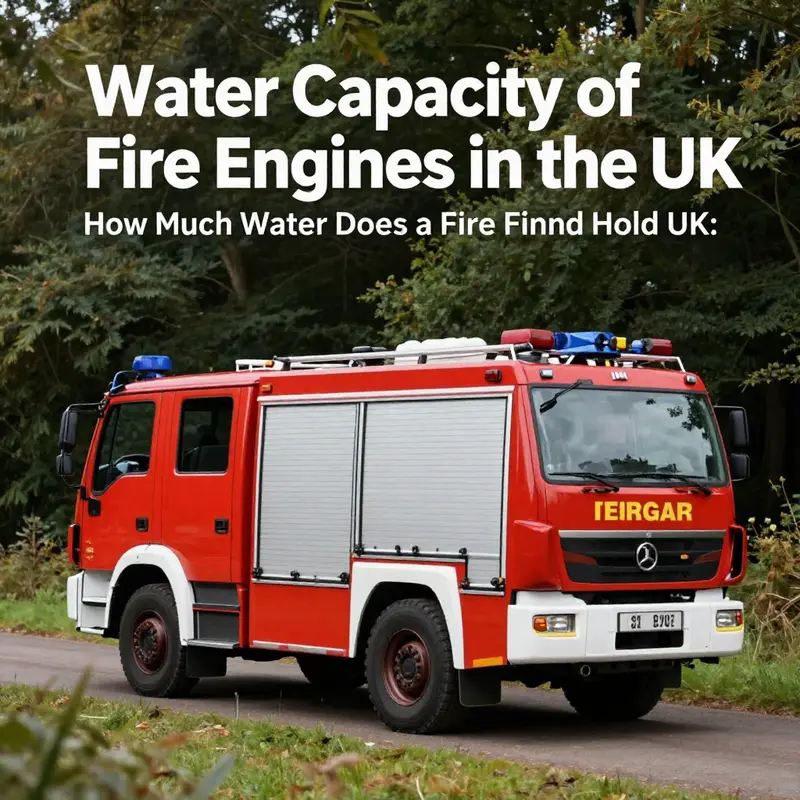
Water is the lifeblood of firefighting, but in the UK, the question of how much water a fire engine can carry is not a single, simple number. It depends on the mission profile the vehicle is built to serve, the terrain it must operate in, and the broader water supply architecture that supports a major incident. The onboard tank is only one piece of a much larger system. Fire engines are designed to be quick responders, delivering an initial flow to begin suppression while a wider network of hydrants, pumpers, hose streams, and, when necessary, water tenders and portable pumps are brought into play. Because of this interplay, the capacity of a given vehicle can be seen as a piece of a larger balance between vessel size, pump capacity, and the expected water source around a specific urban or rural landscape. As a result, the UK relies on a spectrum of vehicle types, each tailored to a particular set of conditions, rather than a single, monolithic standard. The National Fire Chiefs Council (NFCC) sets overarching guidance for equipment standards, but individual fire services adapt their fleets to local risk profiles, geography, and budget realities. In practice, this means that a city may operate a mix of small, nimble pump-rescues for rapid initial attack and larger pumping appliances that can sustain longer operations where a water supply is challenged or hydrants are sparse. This layered approach to water on the fireground is what allows firefighters to rapidly respond to a wide array of incidents—an apartment fire, a warehouse blaze, a forest fire, or a remote rural scene—without being held back by a single limiting factor: the capacity of a single tank on a single vehicle. The nuance matters, because the very shape of that fleet reveals how modern firefighting is organized around water, not just around a single tank’s capacity. In other words, the practical question is not merely “how much water is in the tank?” but “how does the tank fit into the water supply chain that will be used during an incident?” This question guides the design of each vehicle, the way crews deploy lines, and how they connect a local hydraulic network to a larger regional or national water system for sustained suppression.
To begin, it is helpful to understand the typology of UK fire engines, because different jobs require different amounts of stored water and different ways to access more water. The most common type is the pump-rescue vehicle, often referred to in the field as the standard pumper. These compact, highly maneuverable engines form the backbone of urban firefighting and are ready to respond in dense built environments where time and access are critical. In the typical urban pumper, the onboard water tank holds roughly between 1,000 and 3,000 litres. That range reflects a balance between the need for a short deployment time and the constraints of maneuverability and weight limits on roads and bridges. A 1,000 to 3,000-litre capacity is enough to begin extinguishing a small to medium fire and to begin the process of cooling, knockdown, and exposure protection while crews lay out hose lines and mobilize additional resources. The emphasis here is not on long, sustained battles, but on rapid, effective initial intervention that buys time and creates a safer space for remotely located crews to operate.
Larger incidents, bigger urban landscapes, and industrial sites push the fleet toward more capable machines: large pumping appliances. These are the heavy lifters of the municipal fleet. They carry more water, typically in the 4,000 to 8,000-litre range, and they possess more powerful pump capacity to push water through longer hose lays and to supply larger standpipes or multiple attack lines simultaneously. The increased volume is essential when the first lines are overwhelmed by a spreading fire, or when a scene demands a longer attack without an opportunity to significantly augment water from a hydrant network. The capacity difference between a standard pumper and a large pumping appliance also translates into a practical difference in how long a crew can sustain an attack from the vehicle itself before external resupply becomes a necessity. In an urban environment with dense ignition points, this additional water and the higher pump discharge rate can be decisive in maintaining a controlled progression of the firefight while additional pumpers, water sources, and transfer arrangements are established.
Beyond these general-purpose urban vehicles, the NFCC-aligned fleet includes water tenders, sometimes called tankers, which are specialized for long-duration operations and remote or water-scarce locations. These vehicles hold the largest onboard volumes, with capacities up to 15,000 litres or more, and are designed to enable sustained water supply when hydrants are unavailable, when mains supply is not readily accessible, or when an incident demands a prolonged, steady feed to a remote scene. The most conspicuous advantage of a water tender lies in its ability to act as a mobile water reservoir. In practice, this means that a tender can shuttle water from a hydrant network, a nearby water source, or a portable pumping unit to the location where it is most needed. In scenes that stretch across open countryside, industrial estates with limited hydrants, or forest fire environments, tenders become a critical link in maintaining a continuous flow, sometimes through multiple relay operations or through attached foam or hybrid systems that blend water and foam concentrates for specific hazards.
Foam appliances, while often recognized for their foam concentrate capabilities, share the same water supply considerations as other vehicles of equivalent size. Their water tanks typically align with the 1,000 to 3,000-litre range, mirroring standard pumpers. The practical value of foam systems lies not in the sheer volume of water, but in the way that foam concentrates modify the properties of the water to improve cooling and film formation on burning fuels. The coordination between water supply and foam mixture is an exercise in precision and timing, requiring careful calibration of foam concentrates with water flow and the instantaneous demands of a firefighting operation. The presence of these foam-capable units adds a layer of versatility to the fleet, enabling crews to tailor their approach to the hazards at hand, from domestic fires to vehicle or chemical incidents, while still relying on the core principle: water remains the primary extinguishing agent and the heart of any suppression strategy.
To place these capacities in a practical context, it helps to trace how water flows from the moment it is needed on the ground. A fire engine arrives, and crews assess the fire scene. The first priority is to establish an effective water supply to the nearest viable hose line. The onboard tank delivers an immediate flow that supports a first offensive attack or a short knockdown phase. This initial attack buys time and reduces heat, helping to create safer conditions for interior crews and reducing the risk of flashover. But the timeline of most significant incidents is measured not in minutes but in hours, and that is where the water supply network becomes essential. Fire services around the UK rely on a two-tier water supply approach: an onboard initial supply and a robust external water source strategy. The external supply often involves hydrants spaced strategically along streets, large-diameter hoses connected to external pumps, and, in rural or remote settings, water tenders that can shuttle and relay water to the scene.
A common tactic is the use of a relay or feeder system. In practice, an initial pumper may pump water to a secondary appliance that has a larger capacity or more powerful pumping capability. The relay chain can extend to a tertiary unit, or to portable pumps placed near a water source such as a pond, river, or farm irrigation system. The idea is not to rely on a single vehicle’s tank but to orchestrate a continuous flow through a chain of engines and pumps. This chain can span several kilometres in large, sprawling incidents, and it is the operational heart of how water is moved efficiently through an urban or rural firefighting network. The logistics of such an arrangement are intricate and rely on precise communications, trained personnel, and a well-established set of standard operating procedures. In this sense, the tank size becomes a factor that informs tactical choices, but it is the integration with hydrants, pumps, and relay strategies that ultimately determines how long and how effectively firefighters can sustain a fire attack.
The rural or forest fire scenario tends to stress this system even more. When hydrants are scarce or nonexistent, the ability to bring water to the incident becomes paramount. In these contexts, larger tanks and dedicated water tenders can supply a steadier flow, ensuring that crews can focus on extinguishment and containment rather than on the constant search for water. This reality does not imply that every rural fire engine carries the maximum possible volume; indeed, the distribution of tank sizes reflects anticipated needs across different geographic zones. Some rural services may emphasize higher-capacity tenders to deal with long-duration incidents and to avoid frequent tanker shuttling, while others may prioritise rapid response and resilience in urban cores with more abundant hydrant networks.
It is also worth noting the practical aspects that shape these numbers. The weight of water, the road network, and the physics of vehicle handling are nontrivial considerations. A full 15,000-litre tanker amounts to about 15 metric tonnes of water on board, which imposes a substantial load. This is one reason why fleet managers need to balance capably between the desire for large water reserves and the broader demands of urban mobility, accident response, and accessibility to tight street networks. The decision to deploy a tanker is not merely about volume; it is about whether an incident will require a long, uninterrupted water supply in a location where hydrants are not readily accessible. In contrast, a modern urban environment with a dense hydrant network and a well-established water authority support structure may allocate more emphasis on rapid response and high pump discharge from smaller units, while keeping a capable pumping appliance in reserve for the inevitable large or unusual fire.
The NFCC plays a central guiding role in aligning these choices with risk. Their equipment standards set out expectations for how vehicles should perform and what capabilities they should exhibit, but the reality on the ground is that the exact mix of units in any given fire service can differ from one locale to another. Local risk analysis, population density, industrial layout, and the geography of a service area all shape the fleet. Some areas with extensive forested tracts and rolling topography may lean toward a higher proportion of water tenders or tactical foams to address specific hazards, while densely built urban centers might prioritise swift access and multi-line capabilities from smaller appliances. This pragmatic approach reflects a key truth about firefighting in the UK: water is essential, but the way water is sourced, stored, and moved is a coordinated system rather than a single number on a tank.
If one steps back to survey the bigger picture, it becomes clear that a fire engine’s water capacity is a piece of a broader strategy. The tank size informs the range of possible tactics, but the operational plan is built around a flexible water supply network. A crew must be prepared to escalate to larger volumes through external supply, or to adapt to a congested urban scene where hydrants provide an almost inexhaustible, on-demand supply as long as the incident commands can manage the flow. The result is a fleet that is diverse enough to meet a spectrum of challenges while maintaining a shared reliability: that whether a unit carries a modest reserve or a substantial reservoir, it is part of a coordinated system designed to deliver water where it is needed most and for as long as it is needed.
In summary, the typical water capacities you will encounter in UK fire engines fall into a clear, practical range, shaped by purpose rather than by dogma. Pump-rescue vehicles usually carry 1,000 to 3,000 litres. Large pumping appliances push that up to 4,000 to 8,000 litres. Water tenders stand apart with capacities around 15,000 litres or more, serving as mobile water banks for extended operations. Foam appliances share similar water storage to pumpers, though their effectiveness comes from the chemistry of foam formulations rather than the amount of water alone. But the most critical takeaway is not the number on the tank; it is how that number interacts with hydrants, relay operations, and the broader supply chain that keeps fire lines pressurized and ready for action. The fleet is deliberately designed to be a flexible, scalable solution to a fluid problem: the unpredictable scale of fires, the changing geography of the landscape, and the dynamic needs of the communities they serve. This is the essence of water on duty in the United Kingdom, a system where capacity is interpreted through the lens of availability, access, and the relentless pursuit of keeping every operation supplied until the last flame is extinguished.
For further detail on the kinds of vehicles and their configurations observed across fire services, interested readers can explore the broader category pages that discuss fire-rescue apparatus, including the dedicated tanker section. This broader context helps illustrate why some fleets favour higher onboard volumes, while others prioritise rapid deployment and multi-line capability in busy urban centers. The practical reality is that each fire service builds its own answer to the question of water capacity, guided by risk, geography, and the imperative to protect life and property through swift, coordinated action. The knowledge that the tank alone does not tell the whole story is a reminder that firefighting is as much about logistics, teamwork, and systems thinking as it is about the courage of individual crews.
For readers seeking a direct look at the types of fire-rescue vehicles and how they are categorized within supplier and fleet pages, a representative example can be found in the fire-rescue/tanker section of relevant vehicle catalogs. The linked category provides a sense of how water tenders are positioned within the broader fleet and the roles they play within the wildfire and urban firefighting landscape. fire-rescue/tanker
Externally, the NFCC continues to refine and publish standards that help ensure consistency and interoperability across the country. Their equipment standards underpin the discussion you’ve just read, offering official reference for the ranges described above and the assumptions behind them. For researchers, policymakers, and practitioners who want to trace the evolution of these standards, the NFCC’s Equipment Standards page remains a vital resource. It anchors the narrative of how much water a fire engine can hold in the broader context of national guidance and local adaptation. Access to these standards provides a lens through which to understand how a seemingly straightforward question—how much water does a UK fire engine hold?—emerges from a tapestry of operational practices, geographic considerations, and strategic planning aimed at maximizing resilience in the face of fire-related emergencies.
External resource: NFCC Equipment Standards. https://www.nfcc.org.uk/equipment-standards/
Final thoughts
Understanding the water capacities of various fire engines in the UK is vital for business owners who prioritize fire safety in their enterprises. From the quick response of urban fire engines to the robust capabilities of large pumpers and specialist firefighting vehicles, each plays a significant role in managing fire emergencies effectively. By being aware of how much water these engines hold, businesses can better prepare for unexpected incidents, ensuring adequate safety measures are in place.