

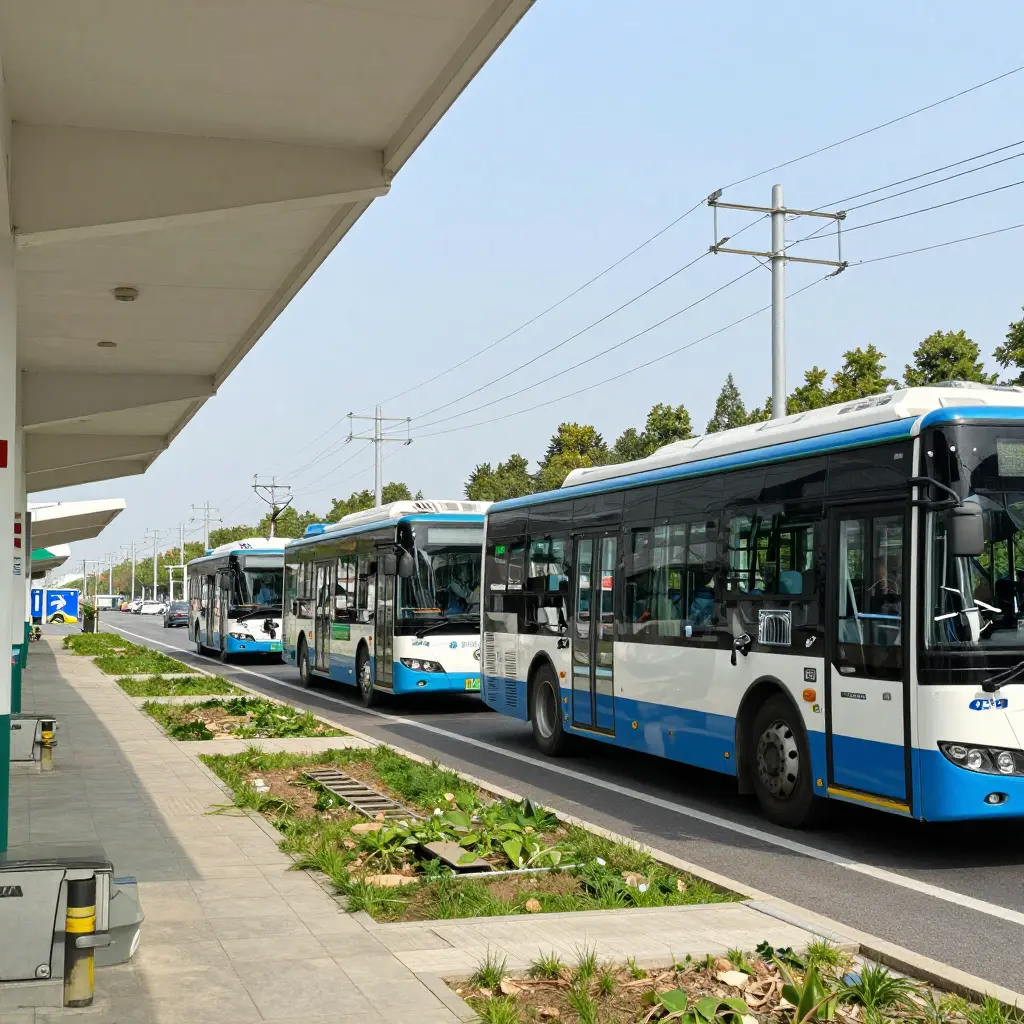
Transit agencies tend to decide they want electric buses long before they can charge them. The vehicles arrive on a normal procurement schedule; the electrical work behind the depot fence does not. Substation upgrades, new service connections, and transformer replacements move on utility and construction timelines measured in years, and that mismatch decides how many electric buses a yard can actually plug in and roll out on time. What follows is for the fleet managers, transit authorities, and planners who have to sequence that work.
Charging is less a hardware purchase than an energy-supply problem. Four things decide whether a depot keeps up: how much power the site needs once every bus charges at once, whether the utility connection and its transformers and substations can deliver it, what the upgrade costs, and how long permitting and construction really take. Managed charging, phased builds, and other ways to close the gap come at the end.
Why a Depot Rarely Has Enough Power to Charge a Full Electric Bus Fleet
A bus depot looks like an ideal place to recharge an electric fleet. Buses already park there every night, the operator owns the site, and routes begin and end on the same plot of land. What is usually missing is not the chargers but the electricity that has to reach them. Many depots were built around the modest loads of diesel operations — lights, offices, a workshop, fuel pumps — not the megawatt-scale demand of dozens of buses charging at once.
Peak load and simultaneous charging demand
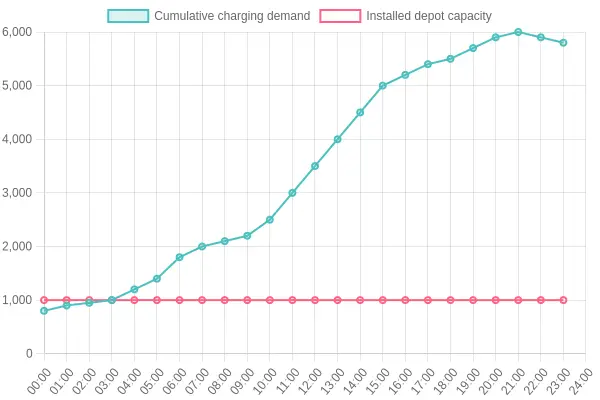
Charging does not spread evenly across the day. When a depot goes electric, most of the energy is needed in one window: the hours after the last evening service, when the whole fleet returns and has to be ready by morning. Fifty buses drawing roughly 100 kW each add up to about 5,000 kW at the same moment. That peak load, not the average daily total, is what the local grid and the depot’s own equipment have to be sized for.
Transformer capacity sets the ceiling
A transformer has a fixed rating. As demand approaches it, one more bus and one more charger do not simply add a little load; they push the whole site past its limit, and operators end up queuing for power. Closing that shortfall usually means real depot power upgrades: a larger transformer, new cabling, upgraded switchgear, and a grid connection study that can take months to complete.
The gap between installed and required power
Overnight charging calls for a large, sustained block of power. Opportunity charging calls for short, intense bursts at termini. A depot wired for one may still be unable to support the other. Installed capacity is often only a few hundred kilowatts, while the requirement can climb into several megawatts.
Think of the supply as a single pipe feeding an apartment block. Any one tap works fine on its own, but when every resident showers at once the pressure collapses — not because the pipe is broken, but because it was never sized for that many users. The same holds for the way limited water capacity constrains a fire engine: owning the equipment is not the same as having enough of the resource. Charging infrastructure is the plumbing, and adding taps without enlarging the supply changes nothing.
Understanding the phrase “stall before the first charge”
A fleet project can be fully funded, the buses ordered, the chargers specified, and still stall before the first charge, because the site cannot deliver the power the vehicles need. Nothing has failed. The vehicles are waiting on upstream electrical work. In electric bus charging, the binding constraint is usually the fixed, slow-to-change infrastructure behind the plug, not the bus.
Grid Interconnection and Utility Constraints
Available grid capacity sets the ceiling. A depot can draw only as much power as the surrounding distribution network can reliably deliver, and many sites were built decades ago with service connections sized for lighting, workshops, and a handful of block heaters. When an operator asks for a major increase, the utility first has to confirm that spare capacity exists on the local feeder. That means a formal study of how the new charging load will affect voltage, protection, and reliability on the wider network.
Such studies sit in a queue behind other applicants, and one unexpected finding — a thermal limit, a reverse-power concern — can trigger a restudy that resets the clock. Several months can disappear at this stage alone.
Transformers and substations are the harder bottleneck. An undersized transformer has to be replaced, and if the substation feeding the depot is already at capacity, shared equipment may need upgrading too. Lead times for large transformers and switchgear have stretched well past a year in many regions, so the equipment, rather than the installation labour, often dictates the schedule. This is where depot power upgrades tend to stall.
Even after interconnection, cost does not stop. Utilities bill large customers partly on their highest 15- or 30-minute demand interval, and charging an entire fleet at once can spike that peak, raising monthly costs and sometimes forcing a larger service requirement. Smart charge scheduling and on-site storage flatten the load, but they bring their own engineering and approval steps. Capacity planning across vehicle systems follows the same discipline of matching demand to what the platform can safely support.
Add up application review, feasibility studies, design, equipment procurement, construction, and commissioning, and a depot power upgrade can run 18 to 36 months from first request to first charge. Electrification roadmaps are often announced on far shorter timelines, so buses are regularly delivered and parked before the depot can power them.
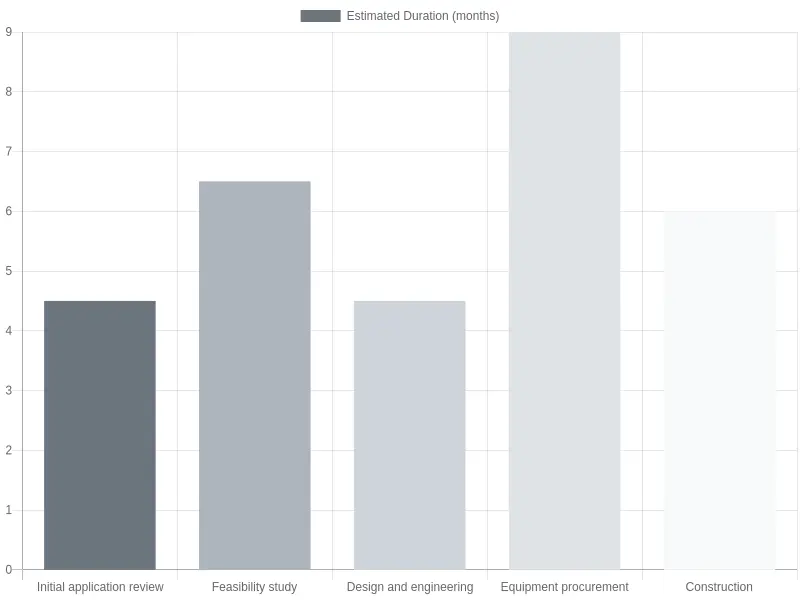
The practical point: grid capacity, not vehicle availability, sets the true pace of fleet electrification. Treat the utility as a long-lead partner from day one, engage early, and design for controlled charging.
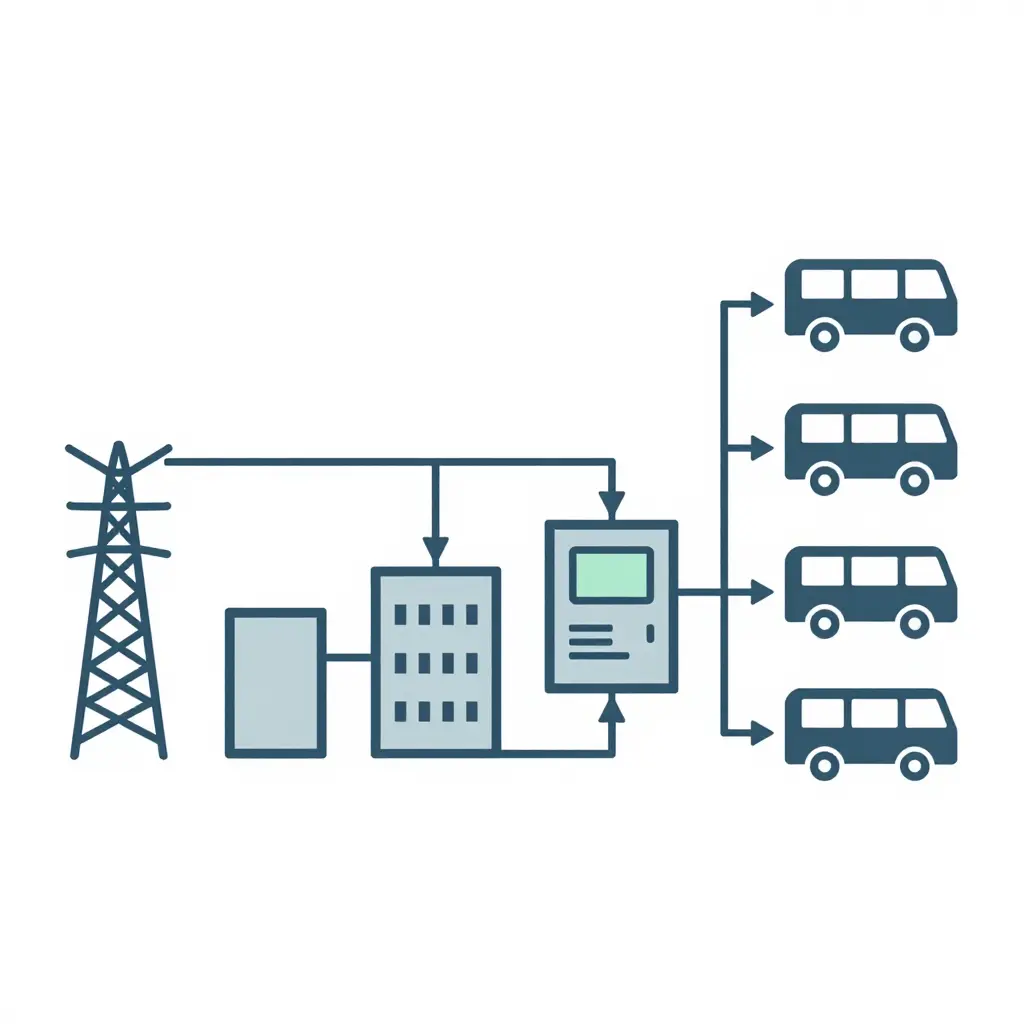
Depot electrification projects often stall long before the first bus plugs in, and the delays usually have more to do with power, permits, and physical site work than with the vehicles. The most common reasons electric bus fleets sit idle while their charging infrastructure waits to come online:
- Insufficient transformer capacity. Many depots were built decades ago around lighting and office loads, so the existing transformer cannot carry a full fleet of high-power chargers. Replacing it often triggers a utility study and new cabling, and the lead time is measured in weeks or months.
- Slow utility approvals and interconnection queues. Even a well-designed site has to pass the utility’s engineering review, service agreement, and interconnection process. Those queues can run for months, and nothing on the project can be energized until the utility signs off.
- High peak demand charges. Fast charging pulls large loads in bursts, which can push a depot into a punishing demand-charge tier. Fleets often pause once they see the projected utility bills and go back to redesign load management or add storage.
- Space constraints for chargers. Charging equipment, switchgear cabinets, and cable management all take room, and dense urban depots rarely have spare bays. Fitting the hardware in often means rethinking bus parking and circulation.
- Incompatible switchgear. Older switchboards may not meet the protection, metering, or fault-current ratings that charger deployments require. Retrofitting or replacing that gear adds cost and, more importantly, schedule risk.
- Underestimated construction timelines. Teams plan depot power upgrades around equipment delivery dates and forget the trenching, concrete, permits, and inspections in between. Schedules built from the ground up prevent most of these surprises.
Recognizing these bottlenecks early lets planners sequence the work, budget for contingencies, and keep the depot on track toward its first charge.
The chart below compares the estimated peak charging power demand of a growing electric fleet against the typical power capacity available at a depot today.
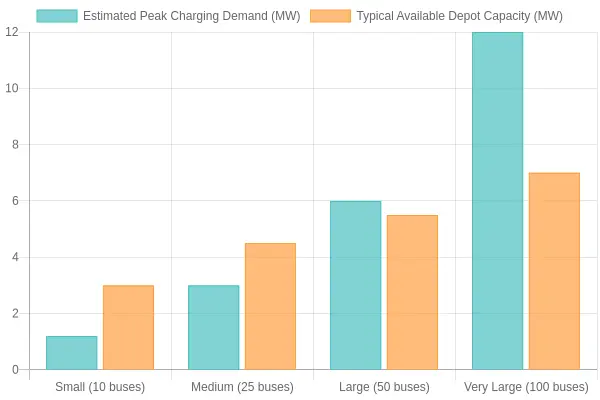
Small and medium fleets sit comfortably within their depot’s power envelope. The demand curve overtakes available capacity somewhere between the large and very-large categories, which is why power upgrades, not the first bus, stall a fleet’s electrification.
Costs and Timelines: Where Budgets and Schedules Stretch
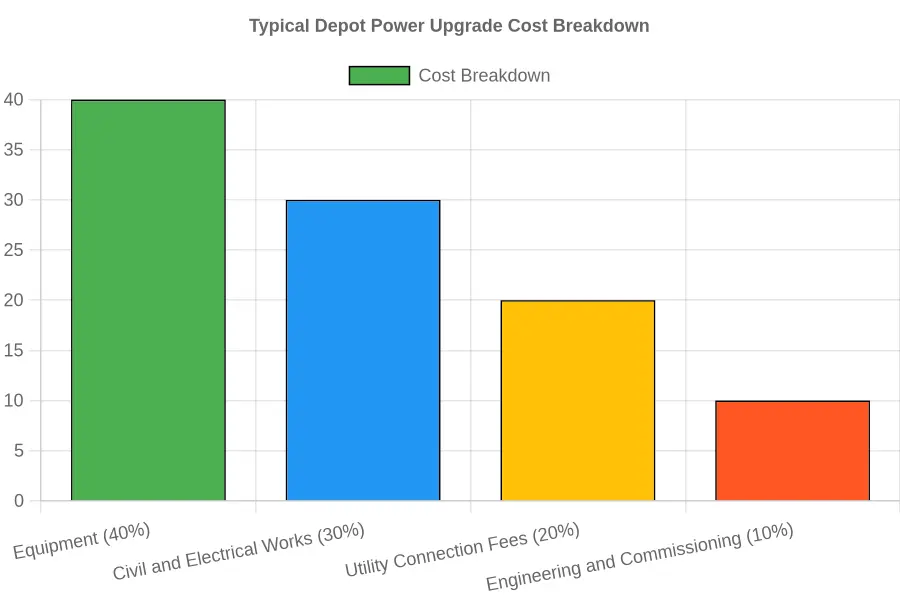
Turning a depot’s modest service supply into a high-capacity power connection is a capital project in its own right. Breaking it into cost categories helps fleet managers plan realistically before committing to electrification.
Equipment. Transformers, switchgear, protection relays, cabling, and the chargers themselves usually form the largest single block of spending. High-power DC chargers and the medium-voltage equipment that feeds them scale with the number of buses and the charging power each requires.
Civil and electrical works. Trenching, ducting, concrete pads, transformer compounds, and surface reinstatement surprise planners more often than the hardware does. Because depots stay in operation throughout, much of this work has to be phased at night or squeezed into service gaps, which raises labor costs.
Utility fees. Connection charges, capacity reservations, and network reinforcement fees are set by the local distribution operator, not the fleet. They can be substantial and are frequently underestimated because they surface late in the design stage.
Ongoing demand charges. Beyond capital, the monthly demand charge reflects the peak power drawn from the grid. Charging schedules that pull maximum load simultaneously can inflate energy bills for years after commissioning.
Why Timelines Run Long
A realistic schedule rarely follows a straight line. Utility studies and design, permitting, equipment procurement, and construction each add months, and lead times for transformers and switchgear can stretch well beyond a year. Testing and commissioning begin only after installation, followed by the trial charging runs that confirm the system performs under real fleet demand.
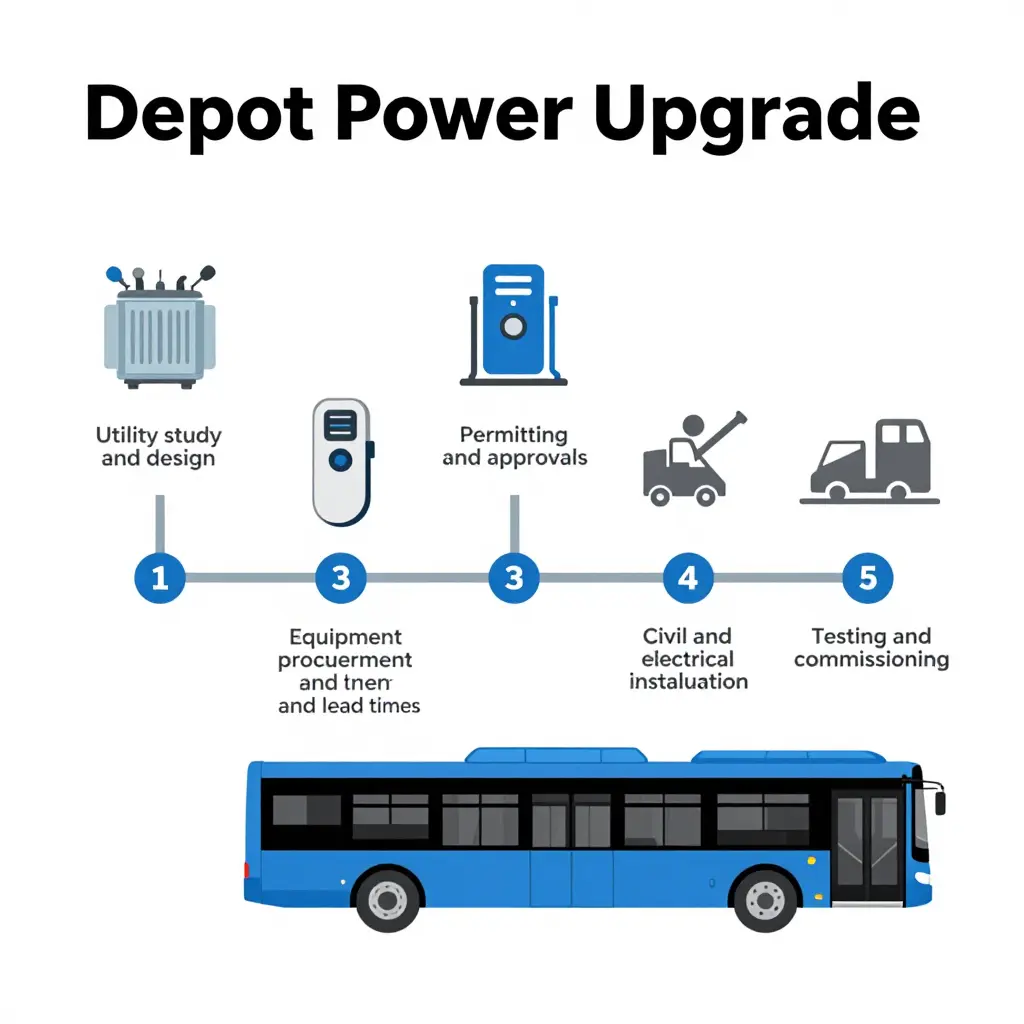
Large capital outlays and long lead times arrive well before a single bus is charged, which is where many electric bus fleets pause at the gate. The charging infrastructure that ultimately makes electrification viable comes through a slow, capital-heavy process, so the decision to commit turns on financing structures, phased rollouts, and early engagement with the utility rather than on the vehicles themselves.
Practical Solutions and Upgrade Strategies
No single fix resolves a constrained depot. Operators combine several measures and sequence them so that quick wins free up capacity while longer projects prepare the site for deeper fleet electrification. Each approach below carries a real benefit and a real tradeoff, and results vary by site.
Smart Charging and Load Management
Smart charging staggers when vehicles draw power, spreading demand across the hours instead of letting every bus pull at once, and load management software keeps total site demand under a set ceiling. That trims costly peak demand charges and squeezes more use out of existing service capacity, which can delay or shrink a utility upgrade. The catch is that it depends on reliable telemetry, disciplined scheduling, and driver habits, and it reduces the flexibility of spontaneous charging.
Phased Power Upgrades
Rather than one large, expensive service upgrade, many depots add capacity in stages, expanding transformer and switchgear capacity as the active fleet grows. This spreads capital spending over time and matches investment to the actual rollout pace. Interim capacity limits how many buses can charge at once early on, though, and poor sequencing can mean revisiting the same works twice.
Battery Storage to Smooth Peak Demand
On-site batteries charge during low-demand hours and discharge during peaks, softening the depot’s demand curve. They can noticeably lower peak demand and possibly defer grid upgrades. They also add upfront capital, footprint, degradation, and maintenance considerations, and their sizing has to reflect real charging behavior.
Right-Sizing Chargers to Actual Duty Cycles
Matching charger power to real routes and dwell times, rather than defaulting to the highest available rating, often delivers what electric bus charging actually needs. It lowers equipment and infrastructure cost and simplifies electrical loads, at the price of less headroom if duty cycles change or routes lengthen.
Coordinated Utility Engagement
Bringing the utility in early, with clear load forecasts, timelines, and site plans, reduces surprises during interconnection and produces more realistic schedules and better alignment on capacity and tariffs. Utility processes can still be slow and partly outside the operator’s control, so buffers matter.
Partnering with Experienced Suppliers
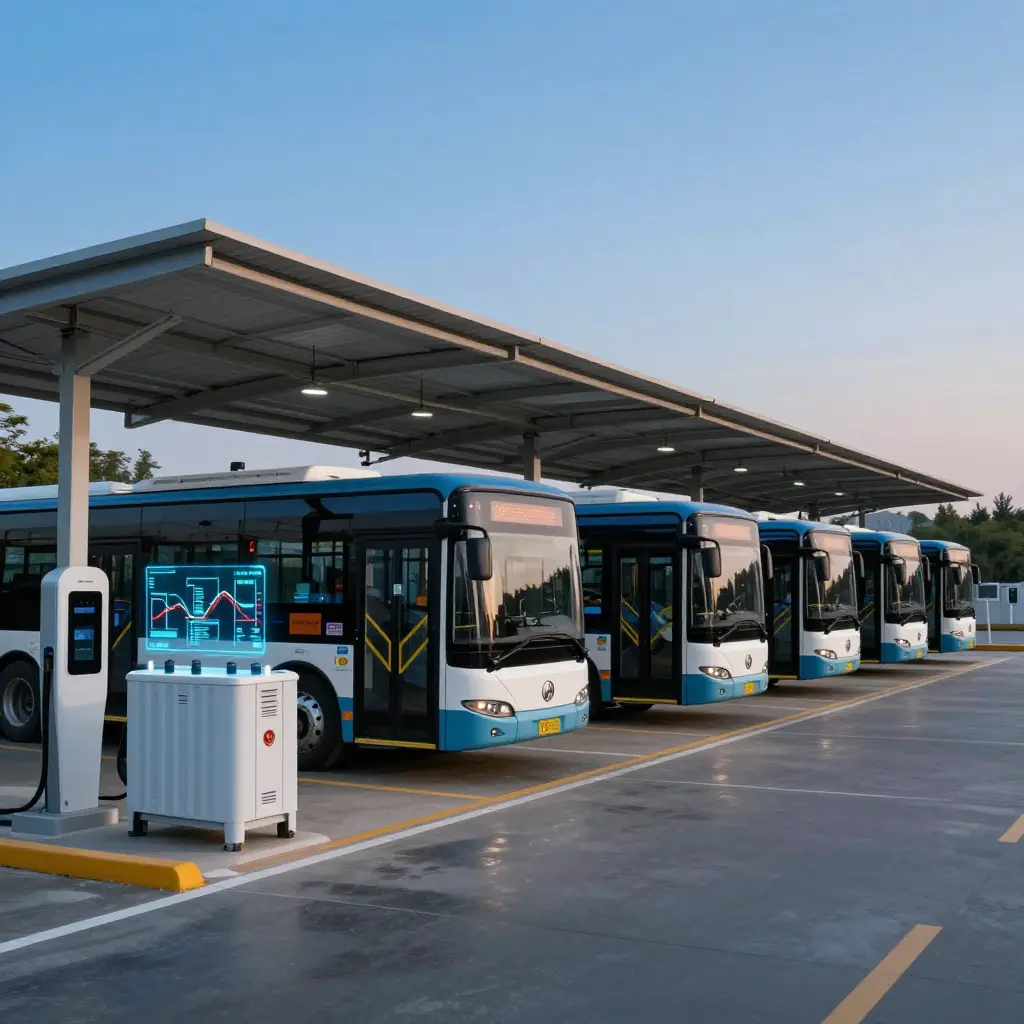
Depot power upgrades sit at the intersection of vehicles, power systems, and manufacturing quality. Partners with deep experience in new energy vehicles and smart manufacturing can help operators plan charging architecture, size equipment, and phase works sensibly. As a specialist in new energy commercial vehicles and smart manufacturing, CCIG supports these upgrade journeys, though every site’s outcome still depends on local grid conditions, routes, and operations. The chart below illustrates how managed charging and storage can reshape a typical depot’s demand profile.
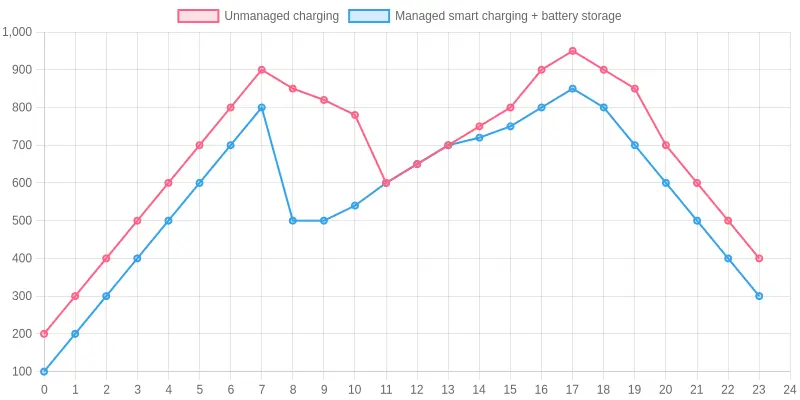
A well-planned electric bus depot, combining smart charging and on-site storage, keeps demand steady across the day.
Frequently Asked Questions: Depot Power Upgrades for Electric Bus Fleets
Why do bus depots run out of power in the first place?
Most were designed for diesel fleets, where electrical demand came from lighting, offices, and maintenance tools rather than from charging vehicles. When several electric buses plug in at once, the combined load can exceed the site’s existing transformer and service entrance, tripping breakers and stalling the rollout. That mismatch between old capacity and new demand is the root cause behind most depot power upgrades.
How long does an upgrade usually take?
Timelines depend on scope, utility scheduling, and permits. A service-level upgrade often takes 6 to 9 months, while a new transformer, switchgear, or utility line extension can run 12 to 24 months or longer. Because utility interconnection and permitting dominate the schedule, charging infrastructure planning should begin long before the first buses are delivered.
Can battery storage defer an upgrade?
Often, yes. On-site batteries shave peak demand and shift charging to cheaper off-peak hours, letting electric bus fleets charge more vehicles without immediately expanding their grid connection. Storage works best as a bridge that defers a costly upgrade by several years, though it rarely eliminates the need entirely if the fleet keeps growing.
What size transformer does a fleet need?
Size depends on fleet count, charger power, and how many buses charge simultaneously. A simple approach is to multiply the number of buses charging at once by charger rating, apply a diversity factor, then add existing site load. Rough ranges:
| Charging scenario | Approximate transformer size |
|---|---|
| Small depot, 10 chargers, staged | 500-750 kVA |
| Mid-size depot, 30 chargers | 1,000-1,500 kVA |
| Large depot, 60+ chargers | 2,000 kVA and above |
Engineers should model real duty cycles rather than assume every bus charges at full power at the same time.
How should we budget for demand charges?
Demand charges track the highest 15-minute power spike in a billing period, so one busy charging hour can dominate the monthly bill. Stagger charging, use battery storage to cap peaks, and select tariffs that reward off-peak energy use. These recurring costs belong in the total cost of ownership for charging infrastructure, not just the upfront build.
What is the biggest mistake fleets make?
Treating depot power upgrades as an afterthought. Ordering buses before confirming that a site’s electrical service can actually support them is the most common reason electric bus fleets stall before the first charge. Involving utility planners and electrical engineers early avoids costly delays and keeps schedules realistic.
Conclusion: The Decisive Factor Is on the Depot Side
The pattern is consistent: the buses are rarely why a fleet electrification program slips. Battery-electric buses are no longer the hard part. The constraint is almost always depot power upgrades, the site-level electrical work that determines whether a vehicle can actually charge overnight. Fleets that treat procurement as the finish line rather than the starting line are the ones most likely to stall.
The barriers repeat across operators:
- Capacity — existing transformers and switchgear are sized for lighting and offices, not dozens of simultaneous high-power chargers.
- Grid — utility interconnection queues and available feeder capacity add months of lead time.
- Cost — civil works, transformer replacement, and trenching often exceed the price difference between diesel and electric vehicles.
- Timeline — permits, engineering, and construction rarely align with vehicle delivery schedules.
The fixes are just as established:
- Smart charging to manage load without overbuilding service capacity.
- Phased upgrades that scale infrastructure alongside fleet growth.
- On-site storage to buffer peak demand and defer costly grid work.
- Early utility coordination so interconnection is planned, not improvised.
Going forward, electric bus fleets will increasingly be planned around energy infrastructure first, with vehicles specified to match available depot power. Operators who master depot power upgrades turn electrification from a recurring bottleneck into a repeatable, predictable process.
Related Reading: Fleet & Specialty Vehicle Solutions
Planning a depot upgrade rarely stops at charging hardware; it usually pulls the whole fleet strategy into the conversation. Choosing a fire appliance, a sweeper, or a dust-suppression unit draws on the same lessons about payload, duty cycle, and site conditions. If your remit stretches beyond buses, our guide to water capacity for UK fire engine fleets breaks down how payload, tank size, and chassis choices affect real-world performance. For those benchmarking the extremes of scale, it helps to understand what defines the largest fire truck on the road and why that scale exists.
Municipal and industrial fleets face similar trade-offs. Deciding how to choose a fog cannon truck comes down to matching throw distance and water volume to site conditions, much like sizing any utility vehicle, and many buyers ask about the fog cannon truck versus water sprinkler truck distinction, since the two are often confused despite serving very different jobs. Grounds and road maintenance follow the same logic, and our road sweeper truck selection guide walks through the factors that separate a good fit from an expensive mistake. Whether you are electrifying a bus depot or refreshing a specialty lineup, treating fleet equipment as one coherent system pays dividends.