

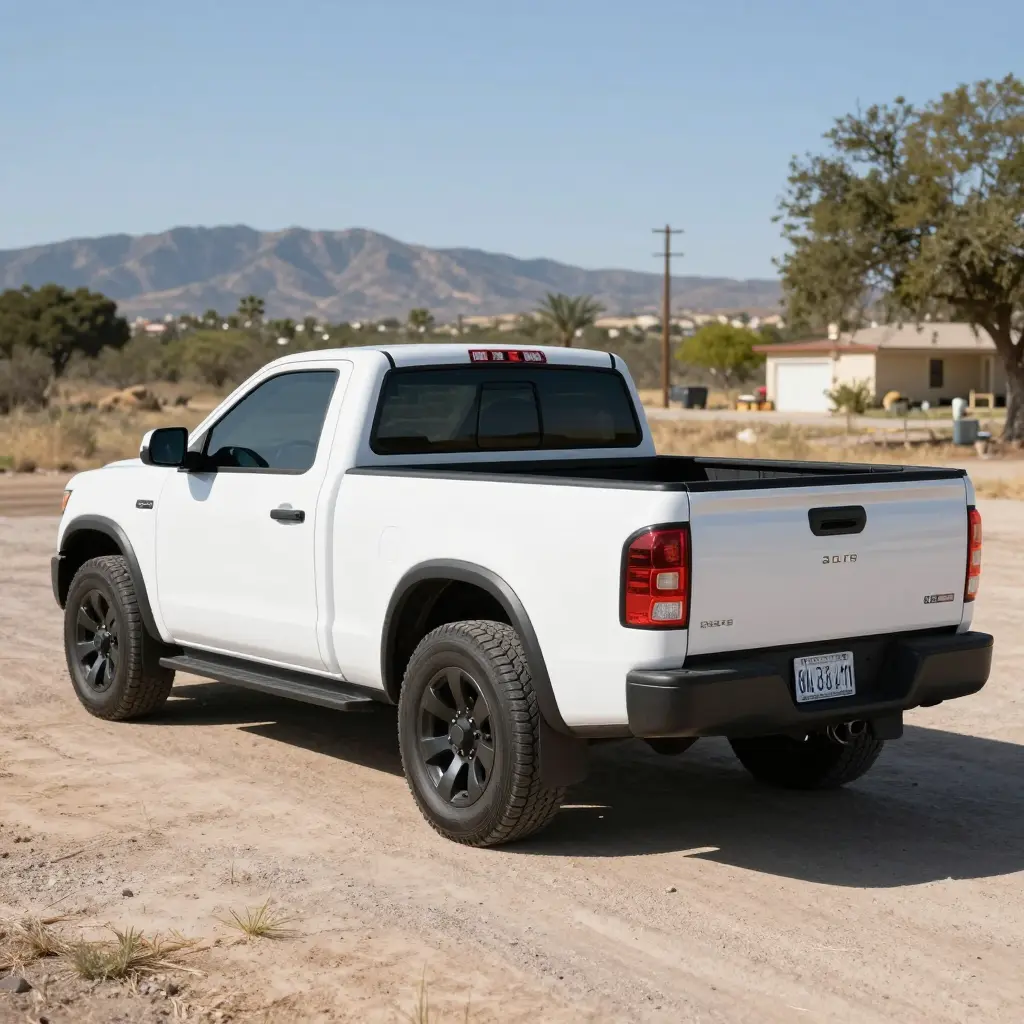
Why Battery Health Matters More Than Mileage in McAllen Used Truck Listings
When you shop for an older electric pickup in McAllen, Texas, the number that best predicts what the truck is worth and how reliably it will run is the battery’s State of Health, or SOH, not the odometer. Two used EV pickups on the same lot, with identical mileage and identical window stickers, can carry very different price tags because one pack has aged better than the other. In the Rio Grande Valley, where summer heat works on battery chemistry year after year, learning to read SOH is what separates a good deal from a repair bill.
What electric pickup battery SOH actually means
SOH is a percentage: the usable capacity a pack holds today against the capacity it held when new. A battery that once delivered 120 kWh of usable energy but now stores 108 kWh has an SOH of 90 percent. That figure tells you how much real-world range, towing capability, and fast-charging speed are left, not what the window sticker promised when the truck was new.
Batteries age by time and cycles, not just miles
Low mileage usually means low wear, but electric pickups follow different rules. Their packs age on two clocks at once: cycle aging, from the number of charge and discharge cycles, and calendar aging, from time alone. A used EV pickup that sat parked for years can lose meaningful capacity without adding a single mile, which is why an odometer reading by itself says little about the pack.
Why McAllen’s heat accelerates the clock
Heat speeds up battery decline. McAllen’s hot, humid summers keep packs at elevated temperatures, and those temperatures accelerate the chemical reactions that permanently reduce capacity. The chart below shows the practical result: a truck kept in the Valley can fall to roughly 76 percent SOH by year eight, while a truck of the same age from a mild climate holds closer to 91 percent.
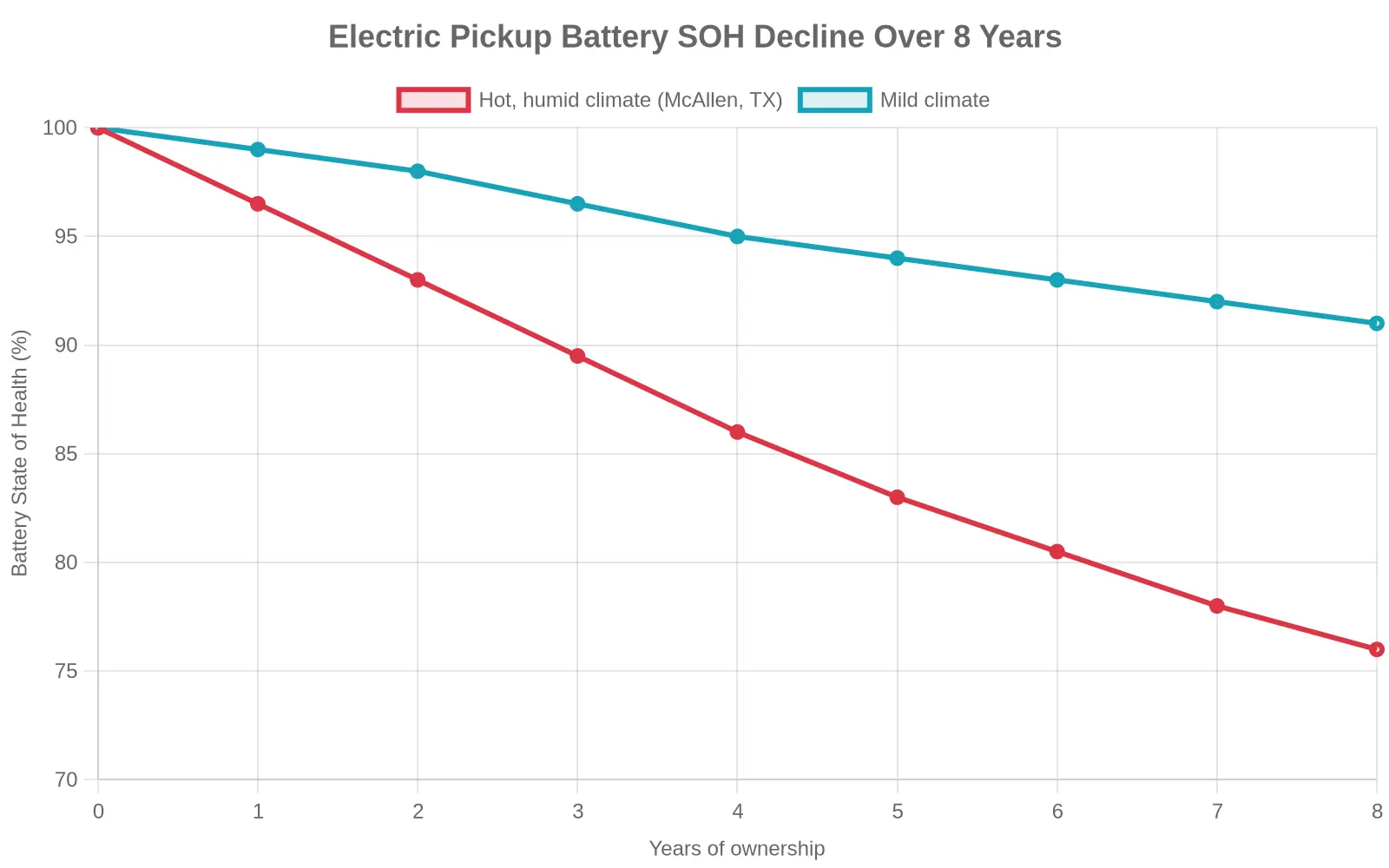
That is why calendar aging runs faster here than in cooler markets, and why a local truck can post a lower electric pickup battery SOH than an identical truck that spent its life elsewhere. The same documented degradation that drags down resale value also decides who pays when a warranty claim is filed, a pattern already familiar from battery warranty disputes on electric fleets.
So when you browse McAllen used truck listings, ask for the SOH report before you trust the odometer. A healthy battery score predicts whether the truck keeps working better than the mileage on the dash does.
Battery Health Beats the Odometer
Shoppers scanning McAllen used truck listings sort by mileage first. On an older electric pickup, that habit can cost money. The odometer records how far the truck has traveled, not how much usable capacity is left in the pack.
Mileage Wear vs. Chemistry Wear
Mileage-linked wear shows up in brakes, suspension, and drivetrain bushings. It builds gradually and predictably.
Battery-chemistry wear works differently: heat, charging habits, and time drive it, not distance. A truck that spent three summers parked in McAllen’s 100°F heat, or was DC fast-charged daily, can lose more capacity than a high-mileage work truck charged overnight on Level 2.
SOH vs. SOC: Two Very Different Numbers
State of Charge (SOC) works like a fuel gauge: how full the pack is right now. It resets every cycle.
State of Health (SOH) is the pack’s permanent capacity against its capacity when new, and for practical purposes it only moves in one direction over time. A truck can display “100% SOC” and still deliver 78% of its original range.
On any used EV pickup battery, SOH decides whether the truck can still cover your daily route.
Typical Degradation Ranges for Older EV Pickup Packs
| Usage & Climate Pattern | Typical SOH (8+ years) | Range Impact vs. New |
|---|---|---|
| Gentle AC charging, mild climate | 90-94% | Minor, under 10% |
| Mixed AC with occasional DC charging | 85-89% | Noticeable on long hauls |
| Frequent DC fast charging | 78-83% | 15-20%+ range loss |
| Hot-climate sitting, low miles | 75-81% | Severe, heat-accelerated |
The bottom two rows are the ones to watch. Those trucks often have low odometer readings; heat and fast charging, not distance, caused the loss.
Why This Changes Your Shopping Strategy
A 120,000-mile pickup with 91% SOH beats a 40,000-mile truck that baked in the sun and now sits at 76% SOH. When you compare EV pickup odometer readings, treat range loss as the depreciation that matters.
Before buying, request a battery health report, ask for the DC fast-charging history, and find out how much fast charging strains the battery warranty on fleet EVs. Ask the seller for a recent SOH screenshot; a seller with nothing to hide will have one.
Mileage still matters for the chassis. The battery decides how far you can drive.
Odometer vs. Battery Health: Which Signal Should McAllen Buyers Trust?
Table caption: Decision factors for older used EV pickups – what the odometer and battery health each reveal, what they conceal, and why it matters to McAllen shoppers.
| Metric | What It Tells You | What It Hides | Why It Matters to McAllen Buyers |
|---|---|---|---|
| Odometer reading | Total miles driven, a rough proxy for mechanical wear on brakes, suspension, and motors. | How hard those miles were driven; idle and towing hours; how much usable battery capacity has actually degraded. | Valley stop-and-go driving can be gentle on a pack yet still rack up big numbers, so a high reading alone is not a deal-breaker. |
| Battery State of Health (SOH) | Real usable capacity vs. the original spec – the range you will actually get and the pack’s remaining life. | Only a snapshot; degradation trends, cell imbalance, and internal resistance need a deeper scan to surface. | SOH decides whether the truck can complete your daily work route – a strong pack on a high-mileage pickup beats a weak pack on a low-mileage one. |
| Charging history (DC fast-charge share) | How often the pack was fast-charged; heavy DC use accelerates lithium plating and heat stress. | Exact charge rates, ambient temperatures, and whether sessions routinely ran to 100%. | A modest DC share points to gentler treatment and longer remaining life, a useful filter when scanning McAllen listings. |
| Climate exposure | Whether the truck endured repeated heat cycles; South Texas summers stress packs hard. | Parking habits, shade, and whether active thermal management kept cell temperatures in range. | Local heat does much of the damage, so two identical trucks can age very differently depending on where they were parked. |
| Warranty status | Remaining years or miles of pack coverage and the minimum SOH the manufacturer guarantees. | Exclusions, transferability, and how claims are handled – the fine print many sellers gloss over. | Remaining battery warranty is your safety net, so learn how battery warranty and fast-charging disputes are resolved before you sign. |
The odometer measures distance; battery health measures capability. On an older EV pickup, SOH, charging history, and climate exposure together say more about what you are buying than mileage does.
How to Assess Battery Health in a Used EV Pickup
The odometer on a used EV pickup records distance, not how well the battery has aged. Two trucks with identical mileage can sit 10 points apart in state of health (SOH). Since the pack is the most expensive part on the vehicle, start any used electric truck inspection with the battery, not the dash.
1. Request an Official Battery SOH Report
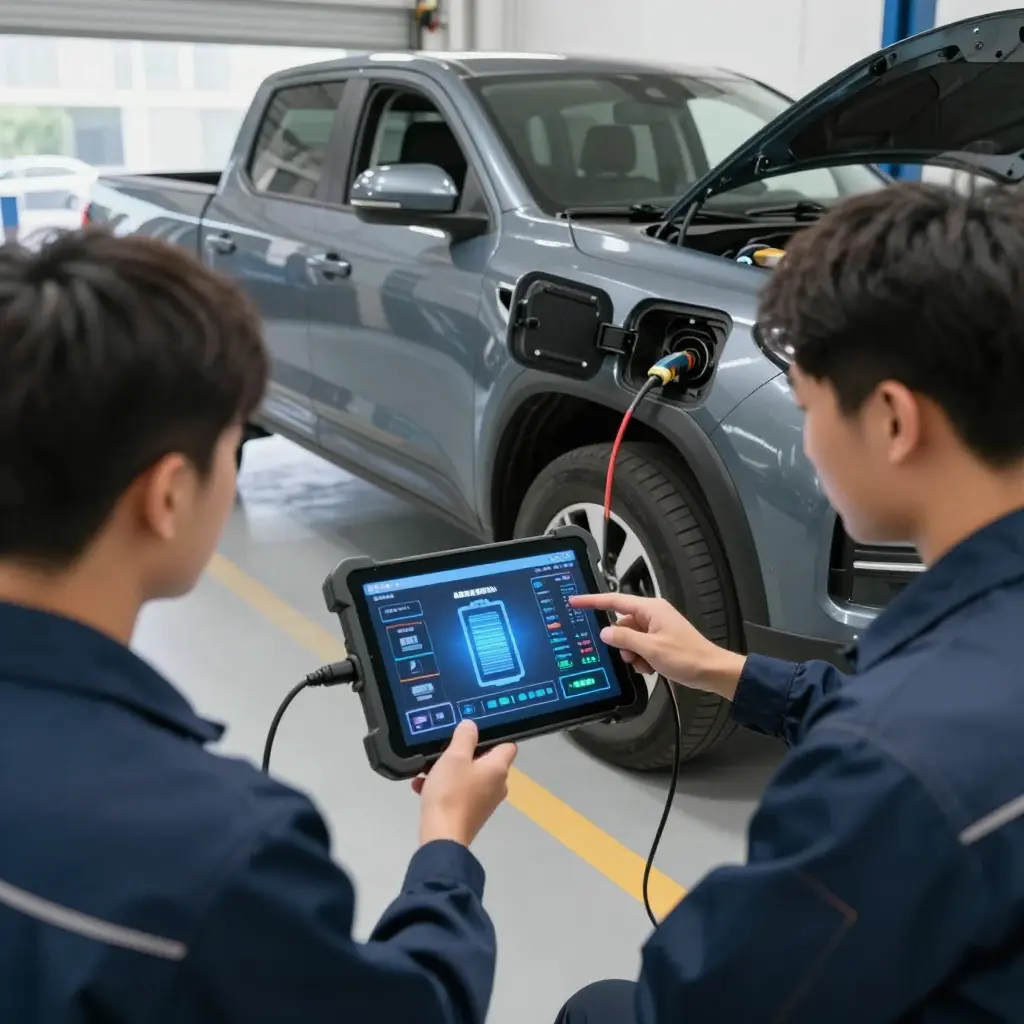
Ask the seller for a written battery SOH report before you negotiate. Dealers can pull one from the manufacturer portal (Ford, Rivian, GM, and others) or a certified diagnostic tool. The report should list SOH as a percentage of the original capacity and the current usable kWh. A verbal “the battery’s fine” is not a substitute.
2. Read the BMS Diagnostics
The Battery Management System (BMS) logs cell balance, module voltage spread, and thermal history. On a healthy pack, the spread between the highest and lowest cell group stays tight, typically under 50 mV. Wide spreads point to weak modules, and over-voltage or over-temperature events in the log can indicate hard fast charging.
3. Compare Usable kWh to Original Capacity
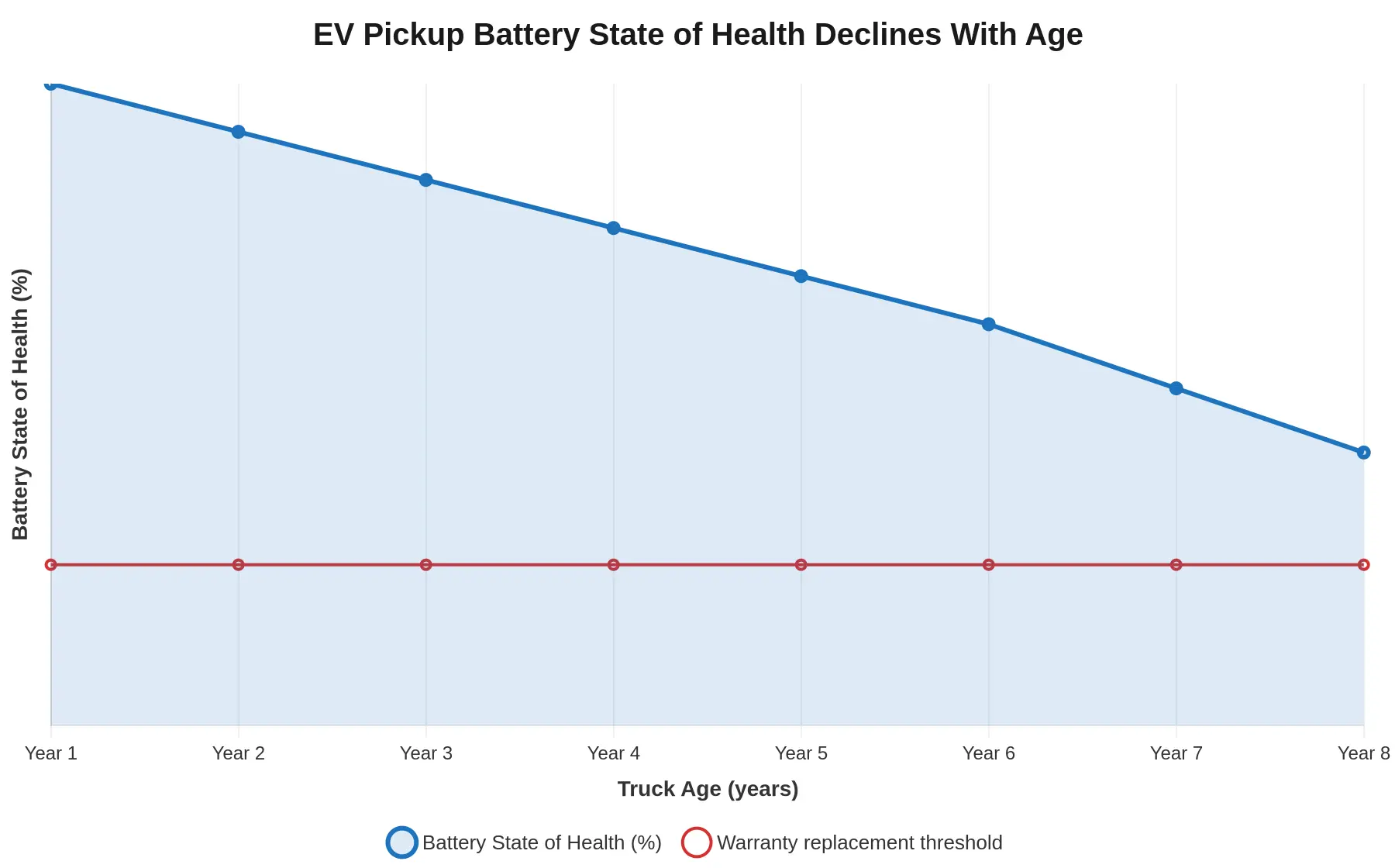
A truck sold new with 131 kWh usable might report only 112 kWh today. That gap is your real range loss. The chart below shows how SOH typically falls with age; for many brands, a reading drifting toward 70% can trigger a warranty replacement.
4. Review Charging-Cycle Data
Equivalent full cycles matter more than miles. Ask how many DC fast-charge sessions are logged against AC home charging. A pickup with 900 fast-charge sessions will degrade faster than one with the same mileage that was mostly charged at home. Charging to 100% on a regular basis also speeds capacity loss.
5. Confirm Remaining EV Pickup Battery Warranty
Warranty coverage limits your downside. Most EV pickups carry an 8-year/100,000-mile battery warranty with a 70% SOH floor. Check the original in-service date, the mileage cap, and whether coverage transfers to you. Because charging behavior sometimes becomes a point of dispute, get the transfer terms in writing; the same battery warranty and fast-charging disputes seen on electric fleets apply to pickups.
Applying These Checks to McAllen Used Truck Listings
McAllen’s hot, humid climate puts steady stress on lithium packs. When you browse McAllen used truck listings, expect age-related degradation rather than crash damage. Ask for the battery SOH report, verify usable kWh against original capacity, and confirm the EV pickup battery warranty in person. A truck with 90% SOH and 80,000 miles is the better buy next to one with 68% SOH and 40,000 miles.
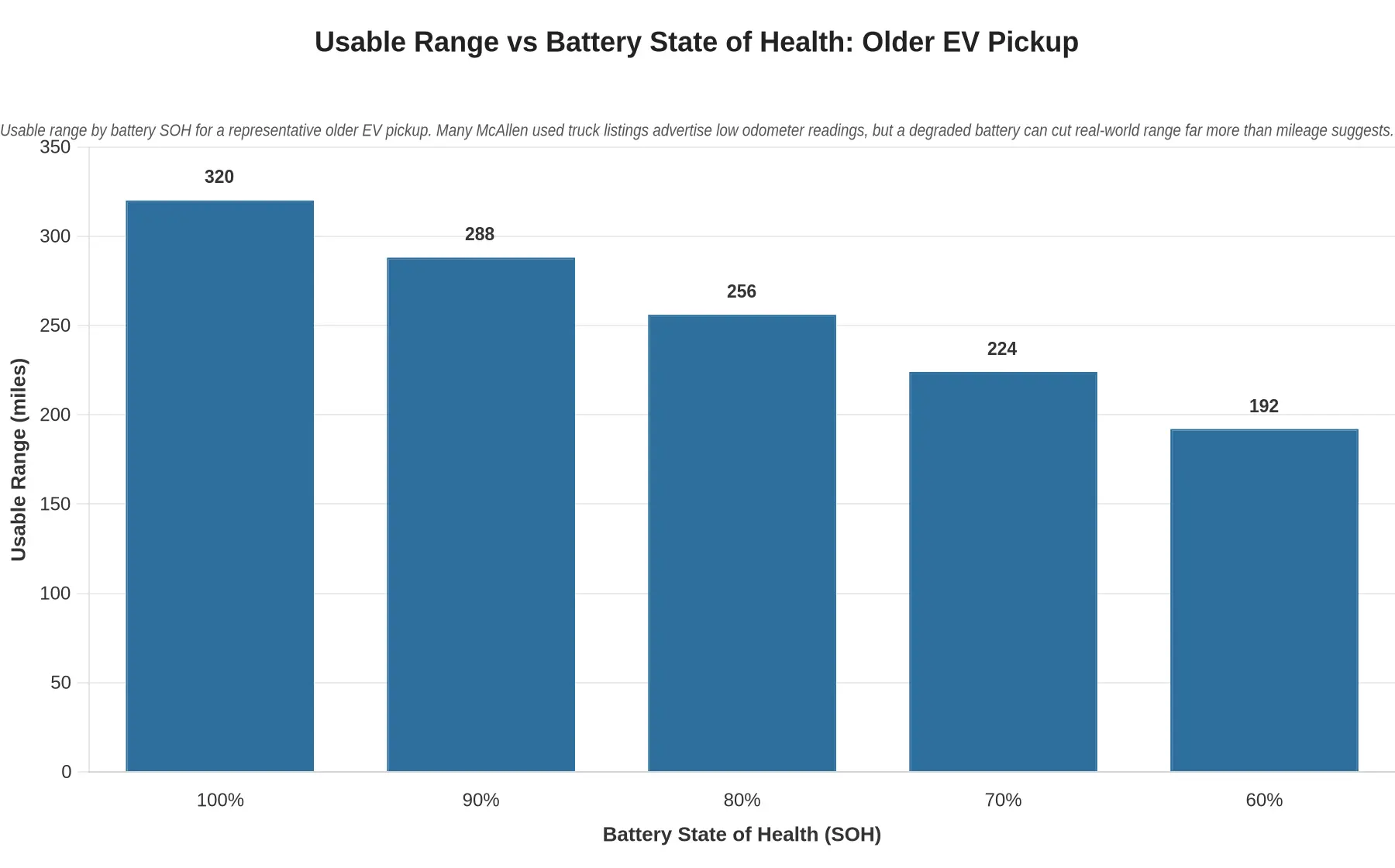
What This Chart Tells You
This bar chart plots usable range for a representative older EV pickup rated at roughly 320 miles when new. Each step down in State of Health (SOH) cuts the miles it can cover:
| Battery State of Health | Usable Range | Range Lost vs. New |
|---|---|---|
| 100% SOH | 320 miles | 0 miles |
| 90% SOH | 288 miles | 32 miles |
| 80% SOH | 256 miles | 64 miles |
| 70% SOH | 224 miles | 96 miles |
| 60% SOH | 192 miles | 128 miles |
Caption: Usable range by battery SOH for a representative older EV pickup. Many McAllen used truck listings advertise low odometer readings, but a degraded battery can cut real-world range further than mileage suggests.
The contrast is easy to miss. A pickup with 45,000 miles on the odometer can still hold 90% SOH and deliver close to full range. A truck showing 70,000 miles with only 70% SOH loses usable range that no mileage figure on the listing reveals. On a used EV pickup, battery health sets your daily driving radius.
Battery Red Flags to Watch in Used EV Pickups
On an older electric work truck, the battery pack is the most expensive component on the vehicle, and the odometer tells only part of its story. Bring this checklist to every inspection and be ready to walk away if several items apply:
- State of health (SOH) far below what the truck’s age suggests. A well-cared-for pack on a six- or seven-year-old truck should still read comfortably above 80 percent.
- No manufacturer degradation report or diagnostic screenshot behind the seller’s battery claims.
- An unusually high share of DC fast-charging cycles, which accelerate capacity loss compared with slower Level 2 charging.
- Signs of pack imbalance, such as one module charging or discharging noticeably faster than the rest, or service records showing a module was swapped out.
- An expired or voided battery warranty, often triggered by a salvage title, flood history, or unauthorized repairs. Understand how a battery warranty dispute is resolved before you sign.
- Range estimates that fall well below the original EPA-rated figures, even after you factor in South Texas heat and heavy A/C use.
- A state-of-charge readout that drops suddenly under load or behaves erratically during a test drive.
- Charging that routinely terminates early, refuses to reach a full charge, or throws repeated fault codes on the dash.
- A seller who blocks third-party battery diagnostics or pushes a cash-only, “as-is” deal with no paperwork.
- Visible pack damage or corrosion underneath, including dents, scuffs, or moisture intrusion around the battery enclosure.
Battery Replacement Cost and Resale Value: The Math That Can Erase Odometer Savings
On an older EV pickup, the odometer says little about your true cost of ownership. The battery does. Two trucks with identical 70,000-mile readings can sit $15,000 apart in value depending on state of health (SOH) and remaining warranty. That gap should shape every conversation on the lot.
What a Replacement Pack Actually Costs
Price the worst case before you commit to a used electric pickup. A full pack replacement typically runs $8,000 to $24,000 installed, with extended-range packs at the top of that band. The chart below shows how wide the range runs across today’s full-size EV pickups.
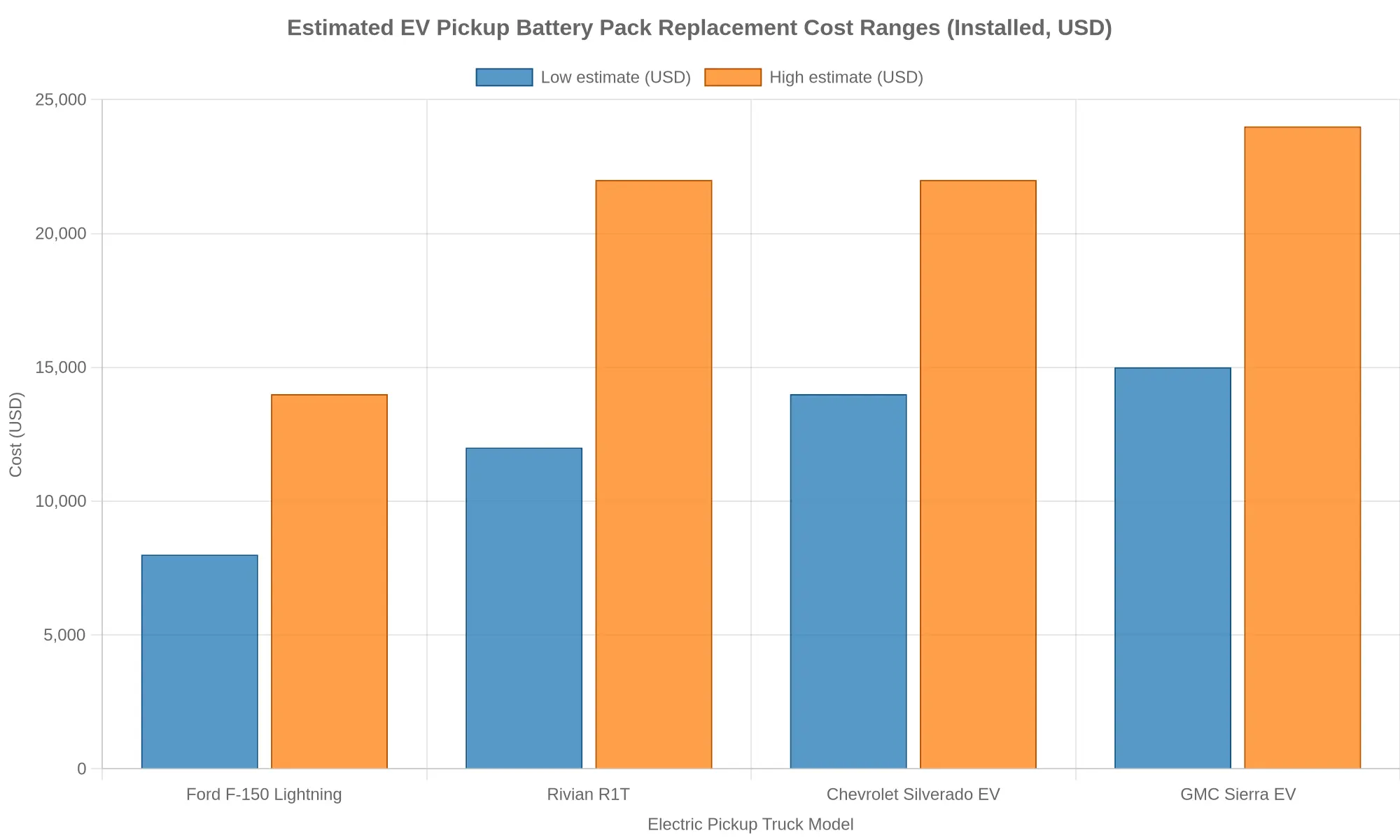
That number is why EV pickup battery replacement cost belongs in your first phone call, not your last. If a seller cannot document pack condition, assume the worst and price accordingly.
The Warranty Is the Asset – and It Transfers
EV battery warranties are usually attached to the vehicle, not the original owner, and most manufacturers cover the pack for 8 years or 100,000 miles, whichever comes first. That coverage can follow the truck to you. A 2022 model with 60,000 miles may still carry several years of protection that a mileage-focused shopper would overlook. Transfer terms vary by brand, and when coverage is disputed it pays to understand how battery warranty disputes play out before you sign.
Why a Low-SOH, Out-of-Warranty Truck Erases Your Savings
Suppose you save $12,000 by choosing a high-mileage truck over a low-mileage one. If that cheaper truck is out of warranty with an SOH in the low 70s, a future pack replacement at $18,000 erases the discount and more; you end up paying more for a weaker asset with worse used EV pickup resale value. The odometer “savings” were never savings, just an expense deferred.
How This Should Shape Negotiation on McAllen Used Truck Listings
Use battery condition as a negotiating lever:
- Ask for an SOH report before discussing price. No data, no premium.
- Deduct for warranty status. A truck with two years of coverage left deserves a higher offer than one with none.
- Discount for low SOH as if the replacement is already coming. At ~70% SOH and out of warranty, anchor your offer against the replacement cost.
- Treat high odometer readings as secondary when the pack is healthy and covered, and as disqualifying when it is not.
On McAllen used truck listings, verify battery health and warranty first, then negotiate price. A low odometer on an aging electric pickup is often a future repair bill in disguise.
What Really Drives the Value of an Older EV Pickup?
A low odometer reading on a used truck listing is not the whole picture. The doughnut chart below breaks down the five factors that move an older electric pickup’s value the most:
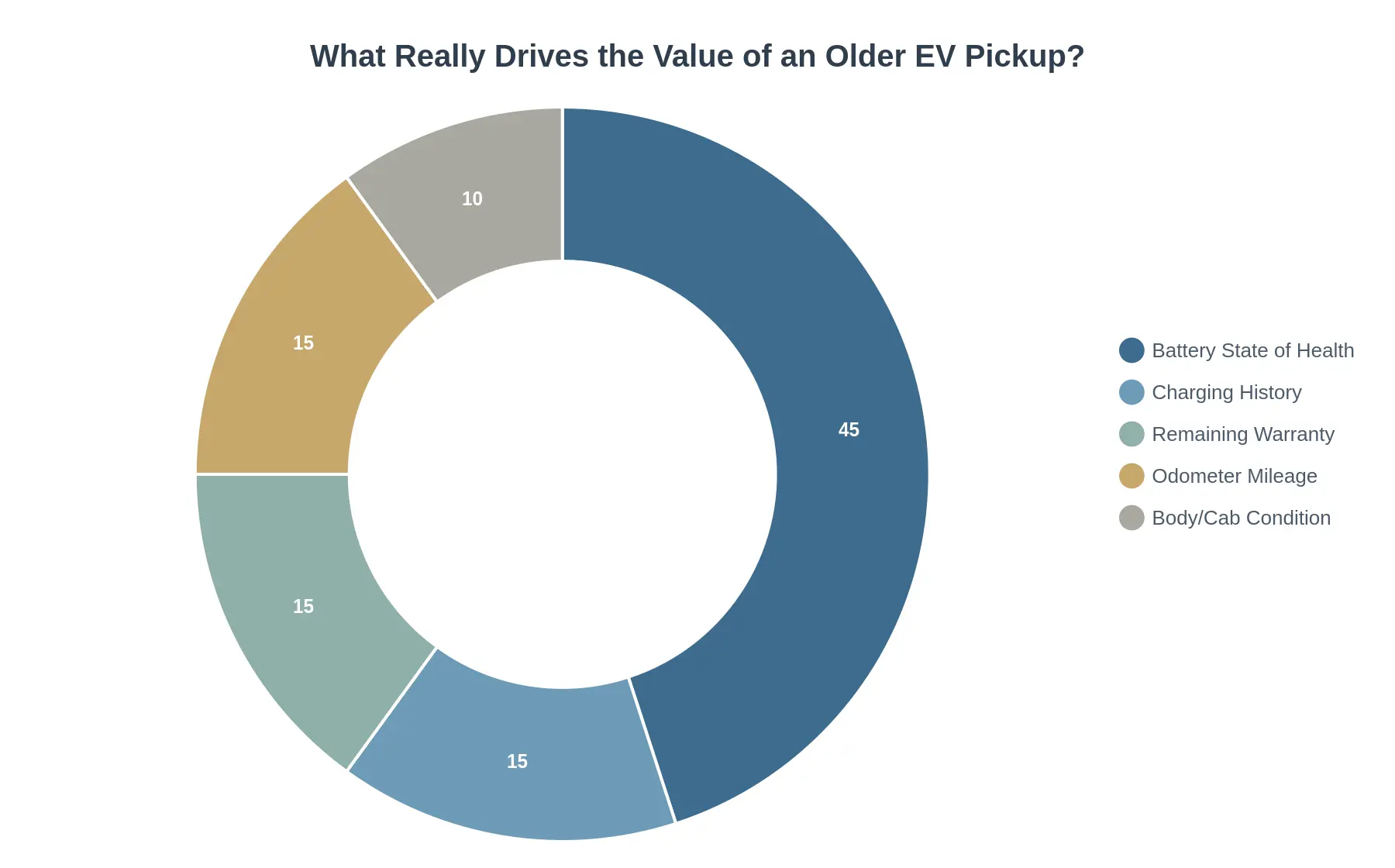
Share of Value Impact on an Older EV Pickup
| Driver | Approx. Share |
|---|---|
| Battery State of Health | 45% |
| Charging History | 15% |
| Remaining Warranty | 15% |
| Odometer Mileage | 15% |
| Body/Cab Condition | 10% |
Caption: For shoppers browsing used EV pickups in McAllen, battery state of health alone carries roughly 45% of the value, more than triple any other single factor. A well-kept pack with a clean charging history can therefore be worth more than a similarly priced truck with a lower odometer and a pack that was rarely managed. Mileage still counts, and battery warranty terms and fast-charging disputes shape long-term value, but the pack matters more than the dashboard.
FAQ: Battery Health vs. Odometer on Used EV Pickups
1) Is a low odometer reading enough to trust a used EV pickup?
No. On an older electric pickup, mileage tells you far less than battery state of health (SOH). A truck with 40,000 miles driven hard in extreme heat can show more degradation than one with 90,000 gentle miles. When you scan McAllen used truck listings, pair the odometer with a verified EV pickup battery health report before you commit.
2) What SOH percentage is acceptable for an older EV pickup?
Most buyers should target 85% or higher for a used electric truck they plan to keep for several years. An 80-85% reading is often reasonable if the price reflects the reduced range. Below 80% usually means noticeable range loss and a higher risk of costly module replacement, and anything under 70% is either a negotiating point or a reason to walk away.
3) How does McAllen’s heat affect battery life?
Sustained high temperatures accelerate lithium-ion degradation, so a McAllen truck that spent years parked in the sun may lose capacity faster than the same model in a cooler climate. Heat stresses the cells and shortens the time before usable range starts to drop. Look for trucks with active thermal management, and ask whether the truck was garaged or shaded between jobs.
4) Does the battery warranty transfer when buying used?
In most cases, yes, but the details are brand-specific. Most pickup battery warranties run 8 years or 100,000 miles and are written to follow the vehicle rather than the original owner, yet transfer conditions vary by manufacturer. Confirm the remaining term and the transfer rules in writing before purchase. For a deeper look at how coverage claims play out, review these notes on EV battery warranty disputes.
5) Can a battery health inspection reveal problems the odometer hides?
Yes. A proper inspection measures individual cell and module voltages, capacity retention, and charging behavior that the odometer cannot show. It can expose a weak module, hidden fault codes, or a history of fast-charging abuse on an otherwise low-mileage truck. A scan-based battery report is the most useful single step in evaluating any used electric truck.
Battery health, not the number on the dash, determines how much range, reliability, and resale value a used EV pickup delivers.
The Bottom Line: Battery Health Sets the Price
On an older used EV pickup, the odometer measures distance, not remaining battery life. Among the McAllen used truck listings you are comparing, the same model year can show 50,000 miles and 88% state of health, or 30,000 miles and 71%. The second truck is the riskier buy.
Battery data, not mileage, should drive the decision. A used EV pickup battery with a strong SOH reading and a transferable warranty is worth more than a low-mileage truck with a thin charging history.
Mileage still matters as a secondary signal. Treat it as context, not the deciding number.
Your Pre-Purchase Checklist
| Step | Action |
|---|---|
| 1 | Ask for a battery health report showing the current electric pickup battery SOH reading. |
| 2 | Confirm the battery and drive-unit warranty still applies, and whether it transfers to you. |
| 3 | Review the charging history for excessive DC fast-charging. |
| 4 | Verify real-world range with a test drive, not the dashboard estimate alone. |
| 5 | Check for open recalls and software updates, then get the SOH in writing. |
What To Do Next
Compare battery health, warranty status, and charging habits across every truck, then negotiate from those numbers. If a seller cannot explain how battery warranty and fast-charging disputes are handled, or will not share a battery report, walk away.
Bring this checklist, ask for the documentation, and let the numbers decide. On an older electric pickup, a battery check protects your money better than a low odometer reading.