

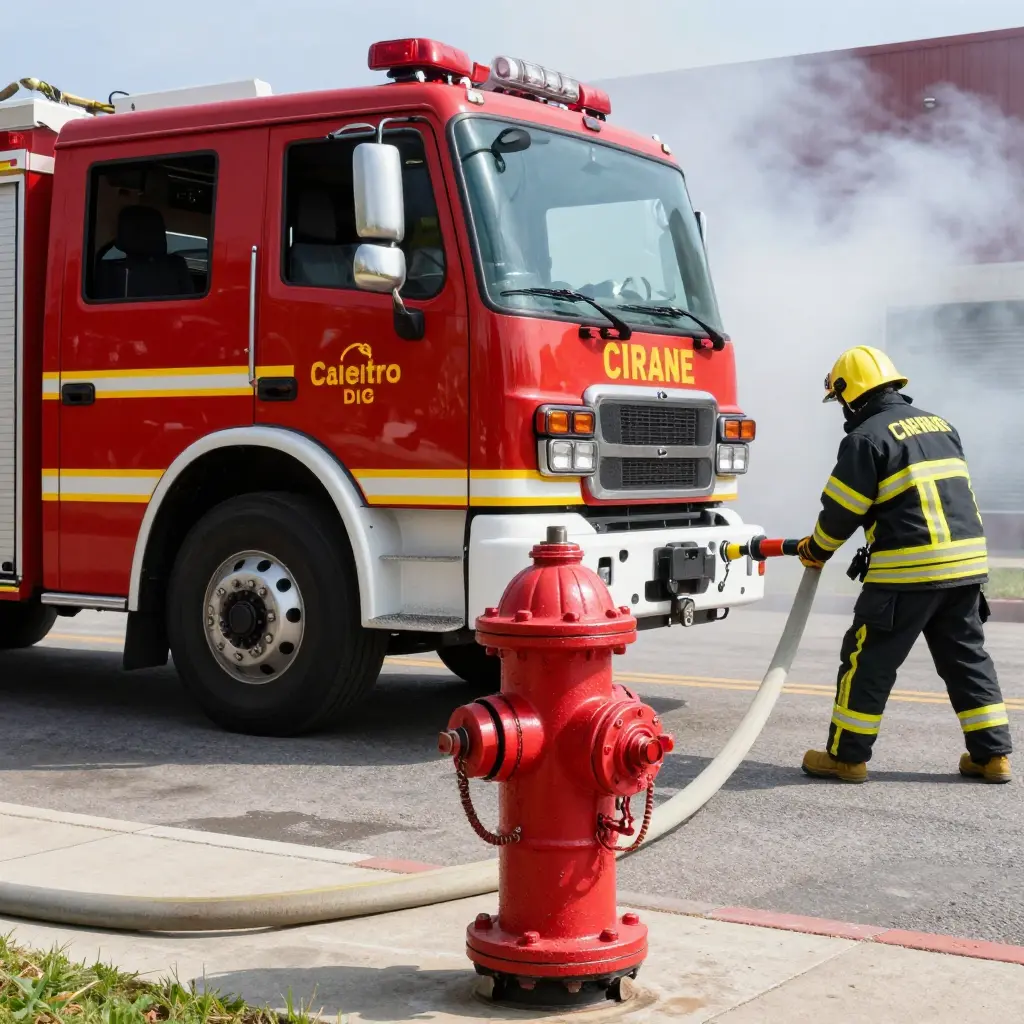
Why Time to First Water Is a Positioning Problem, Not a Speed Problem
How long it takes a fire engine to put water on a hydrant-supplied fire depends mostly on the hydrant approach angle and the apparatus positioning, and hardly at all on how fast the rig can travel. Chiefs and officers who set arrival expectations and order the pump engaged need to hold those two apart: speed covers the distance to the address, geometry decides what happens after the wheels stop.
Every response runs two clocks. Road speed sets the first one, the trip from the station to the address. The second starts when the engine pulls up, and it answers to different variables: how the driver came at the hydrant, where the intake sits relative to the steamer, and whether the pump operator can reach and charge the connection without moving the rig again. Apparatus layout decides those variables, from water tank placement to intake location.
Time to first water is the count from wheels-stopped at the hydrant to water leaving the nozzle. Hydrant approach angle is the geometry between the apparatus, its intake, and the hydrant outlet at the moment of arrival. It decides how much of that count goes into establishing supply, and how much goes into undoing a bad stop.
An engine that shaves a few seconds off the run but parks badly gives those seconds back at the hydrant, usually with interest. One that reads the approach in advance turns arrival straight into water delivery. Speed wins the route; geometry wins the hydrant.
The Operational Sequence That Defines Time to First Water
Road speed decides how quickly a fire engine reaches the block. It says nothing about how quickly water reaches the nozzle; the angle at which the driver commits to the hydrant decides that. Five steps make up the arrival-to-water timeline, and the approach angle affects each one, so the penalties stack.
1. Apparatus Arrival at the Hydrant
The approach angle is decided well before the wheels stop. Coming at the hydrant on a shallow, oblique line forces the operator to carry too much speed past it to keep the rear clear, then brake and sort it out. A square, controlled approach lets the driver shed speed earlier and reach the spot with the steer axle already lined up. Every degree of misalignment turns into corrective steering and extra braking distance, and the clock keeps running while the rig has not yet even stopped.
2. Final Positioning and Spotting
This is where apparatus positioning is settled. Arrive at a wide angle and the pump panel or steamer connection ends up on the wrong side of the hydrant, so the operator shuffles forward and back to square the rig, burning time and often needing a spotter. Bring the rig in close to perpendicular and the intake port sits a short, predictable distance from the hydrant, so the spot works on the first attempt with almost no reverse travel.
3. Hydrant Connection and Hose Lay
The angle sets how much hose the connection actually takes. A misaligned rig opens a diagonal gap between the intake and the steamer, so crews pull more soft sleeve, fight a bend radius that wants to kink, and drag hose over awkward ground. A square position shortens the lay, keeps the run to the intake straight, and lets one firefighter make the connection without moving the appliance.
4. Pump Engagement and Pressure Build
Geometry still matters after the connection is made. A long, sharply bent suction line adds friction and slows priming, and the pump has to pull against a compromised flow path before it can build discharge pressure. Keep the intake short and the curve gentle and the pump primes faster, reaches working pressure with less throttling, and takes on less air. All of that shortens time to first water.
5. Water at the Nozzle
This last step collects everything before it. Seconds lost to arrival, spotting, hose lay, and priming all show up here. A rig that came in square delivers water sooner because it paid none of those penalties; a rig that came in obliquely pays them together. Departments working tight or narrow access live with these clearance trade-offs every shift, and they shape the specification before the apparatus is ever ordered — see how narrow-lane sizing shapes maneuverable fire truck design.
So the hydrant approach angle is not a driving detail. In the arrival-to-water timeline, it is the leading variable.
Approach-Angle Geometry and Hose Deployment Mechanics
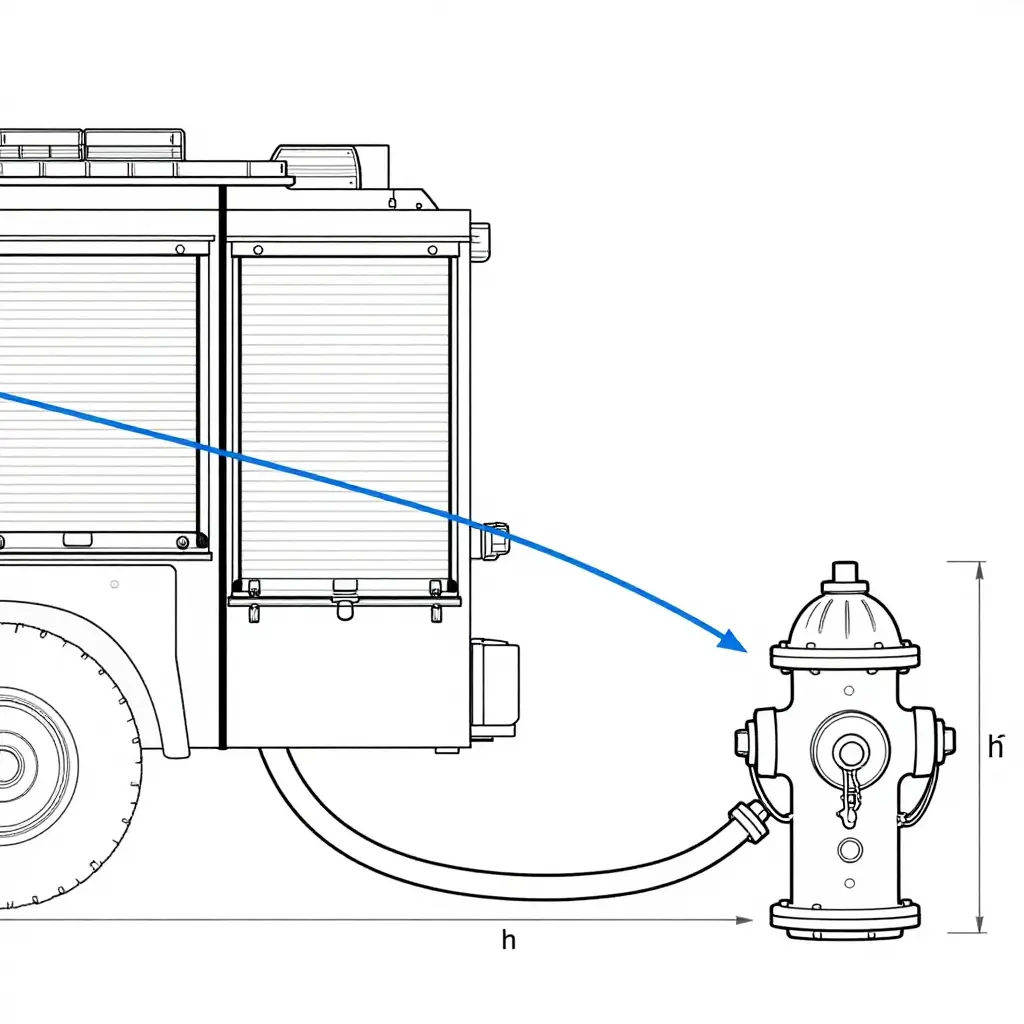
Geometry matters more than horsepower here, and it gets less attention. The hydrant approach angle, defined as the angle between the apparatus centerline and the axis of the hydrant steamer connection, decides the path a supply hose has to take from the pump intake to the steamer. Keep the angle small and the hose lies nearly parallel to the vehicle centerline, a short, gentle route with room to spare on the bend radius. Widen it toward ninety degrees and the hose has to turn sharply; every added degree of misalignment costs curvature, length, and resistance before a gallon reaches the fireground.
Bend Radius and Kink Risk
Bend radius and kink risk follow from the same geometry, predictably. A fire hose holds its shape down to a minimum bend radius; force it tighter and the inner wall collapses into a kink that chokes the flow. A large hydrant approach angle squeezes the space between the steamer and the hose bed, pushing the hose toward that limit. The consequence is physical, not cosmetic: a kinked or sharply bent line raises friction loss, the pressure spent on turbulence and wall contact as water moves through the hose. More friction loss leaves lower residual pressure at the nozzle, and that shows up as a weaker stream and slower knockdown.
Wheelbase, Turn Radius, and Achievable Approach Angle
Vehicle dynamics, not driver preference, set the hydrant approach angle a crew can actually hit. Turn radius comes from wheelbase and steering geometry: a long wheelbase with a modest lock sweeps a wide arc, while a short one with a tighter lock pivots into whatever room the street gives it. On tight residential streets or narrow rural lanes, those limits force a choice — accept a wide approach angle or give up seconds to repositioning. The decisions cascade: wheelbase sets turn radius, turn radius sets the achievable angle, and the angle sets hose routing.
Relating Geometry to Friction Loss and Time Cost
Every repositioning maneuver costs time. Rerouting a charged line around a poor angle, or moving the apparatus to find a cleaner one, adds the distance from the pump intake to the steamer, a diagonal path that grows roughly with the sine of the angle. Add the higher friction loss that may force a higher pump discharge to compensate, and poor geometry drags down both the speed and the quality of the initial water supply. The chart below tracks required hose length and relative friction loss climbing together as approach angle increases.
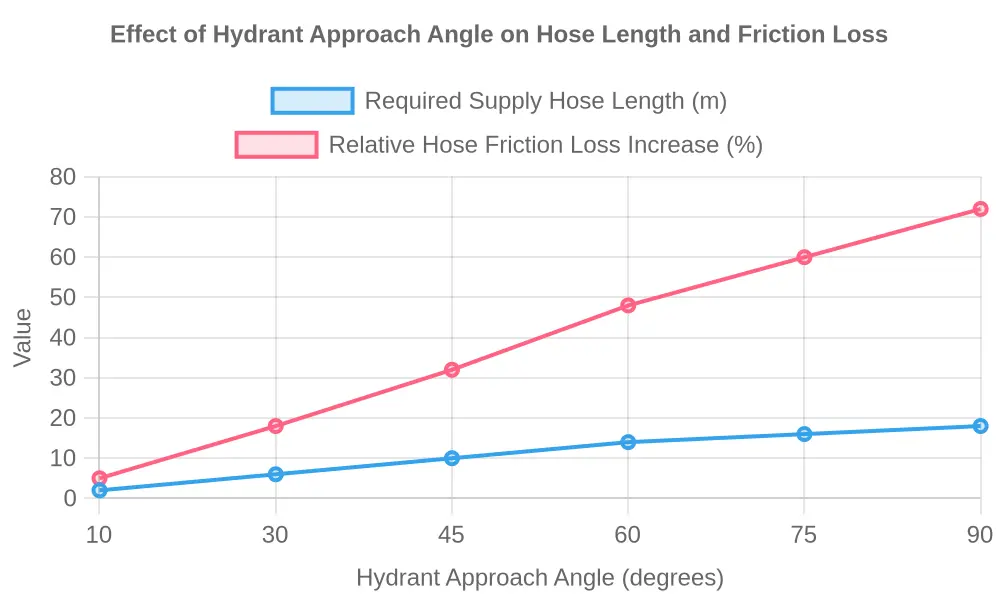
Experienced officers tend to treat fire apparatus positioning as a geometry problem first and a driving problem second. A crew that works out the angle before the wheels stop runs a shorter, straighter line with less friction loss and reaches first water faster, no matter how fast the apparatus arrived.
Benchmarking Hydrant Approach Angles Against Time to First Water
Approach angle has more to do with geometry than speed: the closer your line of travel runs to the hydrant, the harder the steamer is to land cleanly. The table benchmarks common scenarios against a 30-degree reference, and it pairs well with a review of fire engine water capacity when you plan the initial lay.
| Approach Angle to Hydrant | Estimated Spotting Time | Hose Routing Complexity | Rerouting Risk | Relative Time to First Water |
|---|---|---|---|---|
| 0-15 degrees (near-head-on) | 12-18 s | High: hose doubles back to intake | High: reverse re-spot | 1.3x (slowest) |
| 30 degrees | 5-8 s | Low: gentle sweep to steamer | Low: slight forward nudge | 1.0x (reference) |
| 45 degrees | 6-10 s | Low-Moderate: clean side entry | Low: easy forward correction | 1.05x |
| 60 degrees | 8-14 s | Moderate: reduced turning room | Moderate: wider re-spot arc | 1.15x |
| 90 degrees (perpendicular) | 15-25 s | Moderate-High: hydrant leaves view early | High: full loop to reposition | 1.4x (slowest) |
The pattern runs the same way in each column: as spotting time, routing complexity, and rerouting risk fall, the total compresses toward the 1.0x reference. That makes the 30-45 degree band the one to train toward. The rerouting-risk column is your margin, because on a narrow or congested street you should pick the angle whose worst-case re-spot you can still afford.
Tactical Reasoning: Reading the Street Before You Spot
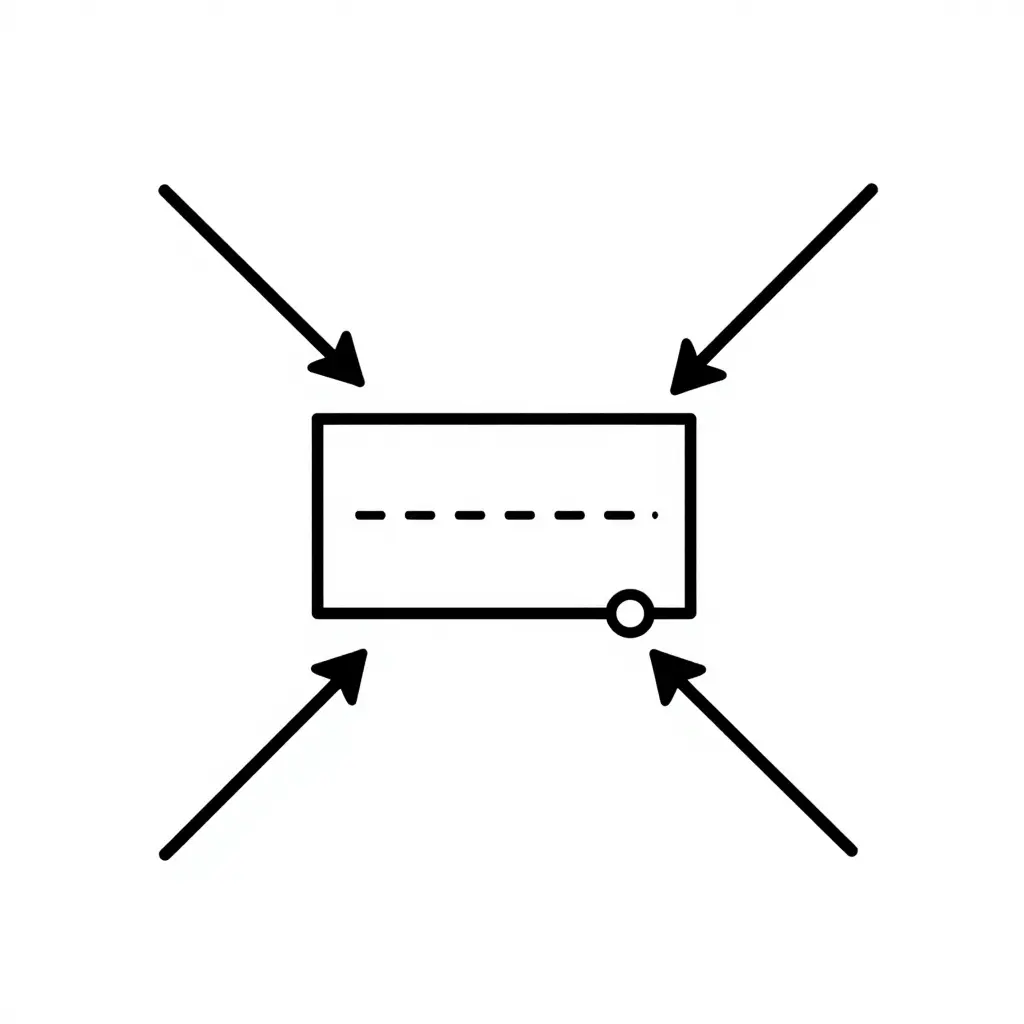
The spot sets the tempo of the whole operation. Before the wheels stop, the operator should already know where the hydrant is, how the curb bends, who owns the traffic lanes, and which way the hose will run.
Hydrant location drives everything downstream. If the steamer faces the wrong way, the intake hose fights both gravity and geometry, bending awkwardly and kinking under pressure. A poor angle costs seconds at the hydrant, and those seconds come back every time a line is charged.
Curb geometry compounds it. A tight radius or a raised median changes how close the apparatus can safely and legally sit, which changes how much hose you need. More hose means more friction loss, so the pump works harder for the same flow. That is why apparatus sizing for constrained streets matters as much as steering skill.
Traffic exposure is the variable nobody talks about. A spot that blocks a live lane may shave time off the approach while multiplying the collision risk for crews at the pump panel, and an unprotected scene can stall the whole response.
Hose-lay direction decides the finish. Lay toward the fire while pulling away from a clear exit and the line stays straight and the egress stays open. Lay it the other way and the engine ends up trapped behind its own supply.
That is the trade-off. A faster spot shortens the drive but can lengthen the lay. A slightly slower approach that lines up the hose route often reaches first water sooner, because the line is short, straight, and watched.
Hydrant approach angle is a tactical decision, not just a mechanical one, and it touches flow, safety, and control at once. Read the street first, then commit.
Field Checklist for Hydrant Approach and Spotting
Time to first water is decided in the thirty seconds before the pump is engaged, not on the drive in. The checklist below turns hydrant setup into a sequence any crew can run under pressure, and it accounts for how tank placement and rear axle limits constrain safe spotting positions once the rig is on scene.
- Minimize the angle between the steamer connection and the hydrant so the run is near-straight and adapters seat without kinking or cross-threading.
- Decide the hose lay before arrival: which side of the apparatus faces the hydrant, and where the first coupling lands.
- Check turning clearance and the curbside line on approach so the driver never has to reverse and re-spot.
- Call out driver and hydrant-operator roles before the wheels stop, so one spots while the other readies the connection.
- Verify pump intake alignment with the steamer before charging, preventing a twisted connection that stalls the first water.
- Position the apparatus so the operator can watch both the hydrant and the fireground from the pump panel.
- Back the rig only far enough to clear the traffic lane, keeping one lane open and the pump panel fully accessible.
- Pre-stage the hydrant wrench, adapters, and spanner in the cab so no one hunts for tools at the hydrant.
- Call out obstacles such as parked cars, low overhead lines, soft shoulders, and grade changes in the final 100 metres of approach.
- Mark the hydrant and the charged hose lay for the second-arriving company to shorten their connection time.
For an instructor, the checklist turns a vague hydrant drill into a set of measurable checkpoints. Score each line and you can point to where a department loses its seconds, then aim the next session at that.
Time to First Water by Hydrant Approach Angle
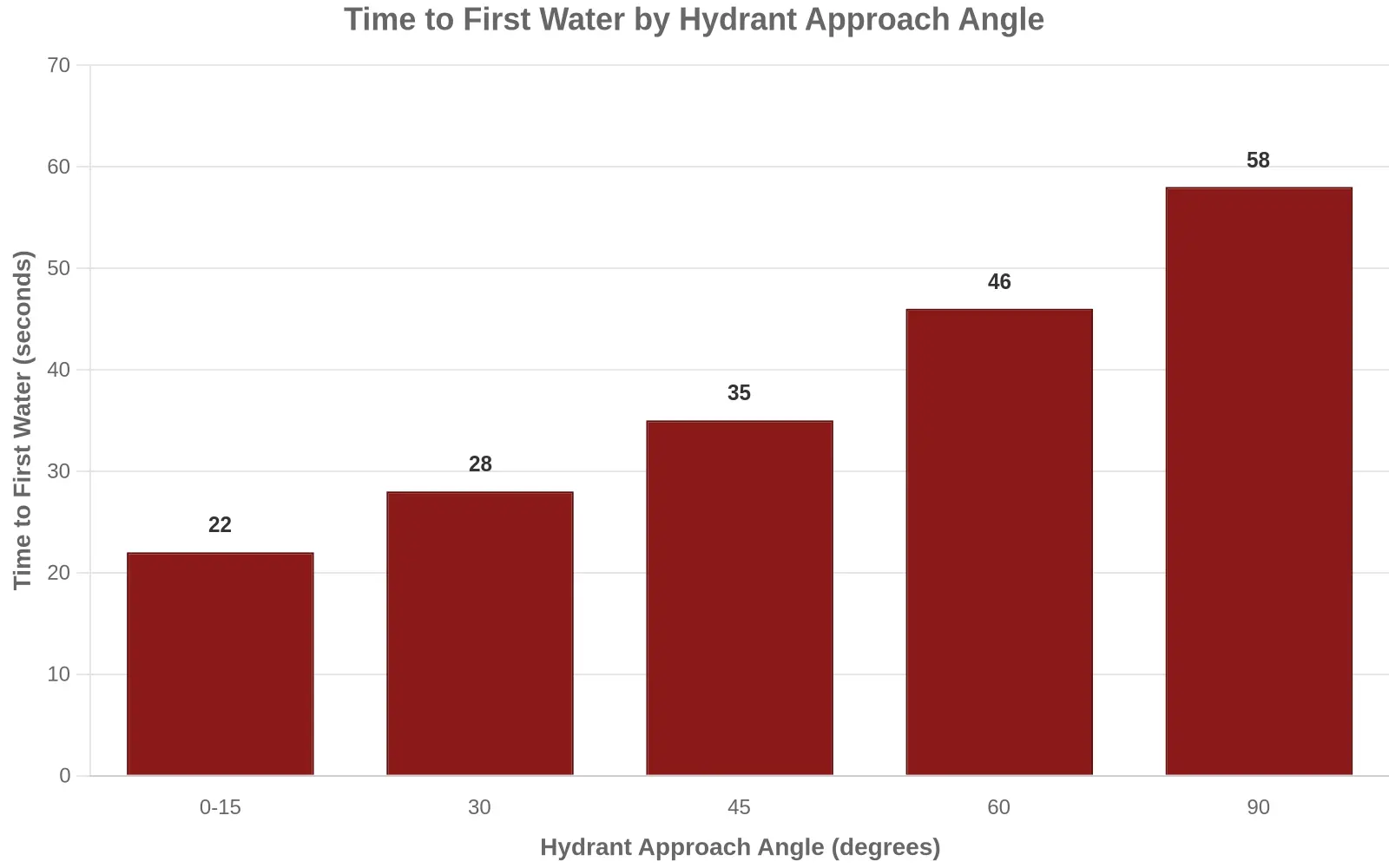
| Approach Angle (degrees) | Time to First Water (seconds) |
|---|---|
| 0-15 | 22 |
| 30 | 28 |
| 45 | 35 |
| 60 | 46 |
| 90 | 58 |
Flat approach angles line up with shorter time to first water.
Implications for Fleet and Procurement Decisions
Fleet and procurement managers write the specifications that decide how fast a crew reaches first water, often without meaning to. Judge an apparatus on top speed and peak pump pressure alone and you can buy a vehicle that runs beautifully in a straight line and still costs minutes at the curb. Approach-angle performance belongs in the tender document, weighted the same as everything else.
- A short, steeply raked approach angle lets the front bumper clear a curb or ramp without grounding, so the driver commits on the first pass and skips the reverse-and-retry cycle that quietly eats 30 to 60 seconds.
- Top speed is rarely usable on congested urban streets or unpaved lane ends. Money spent on acceleration buys far less time-to-first-water than money spent on steering geometry and ground clearance.
- A smaller, nimbler chassis gets closer to the hydrant, so agencies working tight corridors should look at small fire truck sizing for narrow rural lanes before defaulting to full-size pumpers.
Tank placement, wheelbase, and connection layout then decide whether that advantage survives contact with the street.
- Rear-axle-mounted water keeps the weight inside fire truck water tank placement and rear axle limits and frees the forward section, so tank position governs both braking balance and how close the cab can nose in.
- A longer wheelbase steadies high-speed tracking but enlarges the turning envelope. Match wheelbase to the tightest hydrant approach in the response district, not to highway comfort.
- Low, forward-mounted intake and discharge connections shorten the run from curb to steamer, which trims the interval between arrival and charging the line.
When the connection geography is poor, no amount of water capacity on a fire engine makes up for a driver who cannot reach the steamer port cleanly. Specify approach angle, wheelbase, tank position, and pump-out layout as one system, then test it against real junctions in the district rather than the manufacturer’s proving ground.
Frequently Asked Questions
Does top speed ever meaningfully reduce time to first water?
Rarely. Once the engine leaves the station, what counts is how fast the crew spots the hydrant, couples the suction line, and charges it, not how fast the chassis can sprint. Top speed earns back seconds on a long highway response. On the final approach it is worth almost nothing. On most city and suburban runs the time is won or lost in the last hundred metres, where braking, positioning, and connection speed count for far more than velocity.
How does approach angle differ for rear versus front intake connections?
A rear intake sits behind the cab, so the operator is towing the connection point: the engine usually noses just past the hydrant and settles, letting the hose reach back to the inlet. A front intake shortens the run and lets the apparatus stop with the hydrant just ahead, so the suction line reaches forward with less bending. The two layouts change the hydrant approach angle a driver can accept before the line kinks, strains a coupling, or fouls the bumper.
What angle range is generally preferable?
Operators aim for a hydrant approach angle that keeps the suction hose in a smooth, sweeping arc, usually somewhere between about 45 and 135 degrees relative to the outlet. Angles that push the line back under the chassis or hard against a wheel create sharp bends, and sharp bends raise friction loss and the risk of cavitation. Stay inside that band and the couplings stay unstressed and the time to first water stays short.
How can training improve spotting consistency?
Repetition against fixed references builds consistency; intuition does not. Instructors mark practice hydrants and drill drivers to stop at the same relative position every time, using mirrors, cab markers, and verbal callouts. Log every attempt and review the hose runs, and a lucky park becomes a repeatable one. The goal is a predictable hydrant approach angle under pressure, in the dark, on streets the crew has never seen.
How do apparatus specifications influence achievable approach angles?
Wheelbase, turning radius, front overhang, and inlet position set the geometric limits on where the fire engine can stop. A long wheelbase with a rear-mounted intake needs a wider arc and more room; a short, nimble chassis tucks closer to the hydrant. Bumper height and pump-panel placement narrow the hose path further, which is why sizing decisions matter before purchase — see how small fire truck sizing for narrow rural lanes shapes real-world positioning. Specifying for the streets the apparatus will actually serve is what keeps approach angles usable.
Conclusion: Engineering the Fastest Path to Water
The elapsed time from arrival to first water is rarely settled at the top of the speedometer. It is settled in the seconds before the wheels stop turning, when the operator commits to a hydrant approach angle and an apparatus position that either opens a clean path for the hose lay or quietly closes it. A fire engine that sprints to the address and then fights the curb, a bad hydrant offset, and a kinked intake is slower to water than a disciplined rig that arrives at moderate speed and stops exactly where the engineer needs it.
That puts the subject in the realm of engineering and tactical discipline, not marketing. The approach angle — the relationship between the intake, the steamer connection, and the hose-bed routing — governs how quickly a line can be charged and pressurized. Apparatus positioning decides whether that geometry is achievable on a given street, slope, or kerb line. Both are fixed long before the call, in the layout of the appliance, its weight distribution, and how its crew trains. Weight and axle geometry are set at the design stage and shape how a rig settles into position; the link between tank placement and rear-axle limits is worth understanding for exactly that reason — see why tank placement and rear-axle limits matter.
The practical consequences are direct. Officers should build positioning geometry into pre-incident planning and size-up and treat the stop point as a tactical decision, not an afterthought. Drivers should rehearse approach angles and stop placement until they are automatic. Procurement managers should specify intake location, hose-bed layout, turning characteristics, and weight distribution with time-to-water in mind rather than horsepower alone. Speed gets the fire engine to the scene; hydrant approach angle and apparatus positioning decide how fast water actually flows.