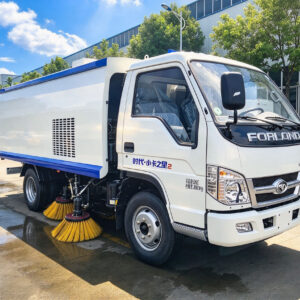
Road Cleaning
Street Sweepers and Water Trucks That Keep A City Presentable
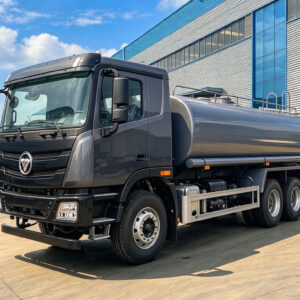
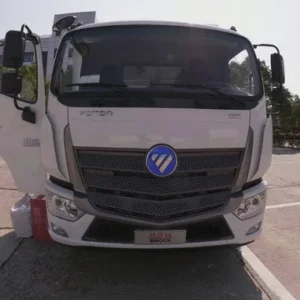
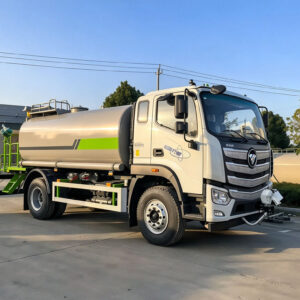
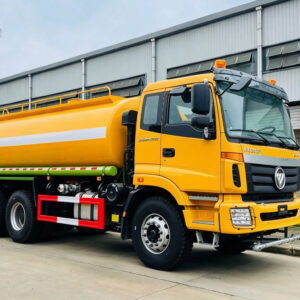
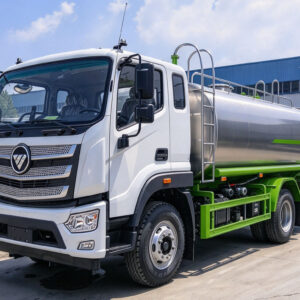
Road cleaning is judged by residents, not by spec sheets. A sweeper that leaves a dust trail behind the suction nozzle, or a sprinkler that arrives with an empty tank because the pump could not self-prime from a canal, fails in public. This category covers both halves of the job: mechanical sweepers with twin brushes and four suction points for kerb-line litter, and water trucks with front flush, side spray and a rear cannon for washing, dust suppression and greenbelt irrigation — from a 2 m³ mini sweeper working pedestrian zones to a 20,000 litre tanker on a trunk road contract.
Tank builds run 3,000 to 20,000 litres in Q235B steel at 4 mm, with stainless steel available for chlorinated or brackish water. The 15 CBM reference build uses a self-priming pump moving 60 m³ per hour against a 90-metre head, priming from 6 metres of suction lift, with a 12-metre front flush and a 30-metre cannon. Sweepers run dry or wet modes on Cummins power with Euro 4 compliance. Left-hand drive is standard, right-hand drive is built to order, and every unit ships with ISO 9001 and CCC documentation.
Six Reasons A Road-Cleaning Contract Fails On Equipment
Dust suppression and street sweeping are contractually measured. If the equipment cannot hold the frequency the contract promises, the penalty is deducted, not negotiated. These are the specifications that decide whether you meet it.
The 15 CBM build primes from 6 metres of lift in roughly two minutes and delivers 60 m³ per hour at a 90-metre head. That means a canal, pond or fire hydrant is a valid water source, not a reason to drive back to the depot.
Front flush at 12 metres or more, adjustable rear and side spray, and a cannon reaching 30 metres that throttles from downpour to mist. One truck covers road washing, kerb flushing, median irrigation and dust suppression in a single shift.
An 18,000 kg GVW with a 6,670 kg kerb leaves about 11,200 kg for water, crew and equipment. A tank sized to the brochure rather than the rear-axle rating is the most common cause of a truck that squats and steers badly when full.
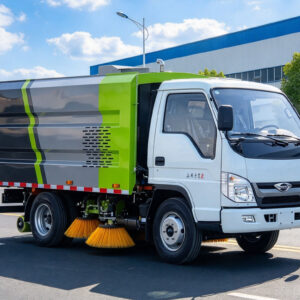
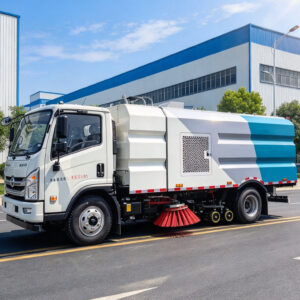
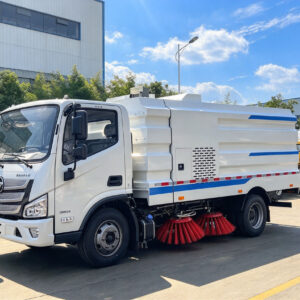
Twin side sweepers throw litter into the suction path of four vacuum units on the 6 CBM sweeper, with a mid-long suction device. Wider coverage per pass means fewer return journeys on the same kilometre.
Dry sweeping suits sealed roads and low humidity; wet sweeping controls dust where the surface is rough or the load is heavy. Being able to switch per district avoids buying two trucks to cover two conditions.
Dual-circuit air service brake, spring-energy parking brake on the rear wheels and an engine exhaust auxiliary brake. Sweeping cycles destroy a brake system that was specified for highway duty, which is why this is not a place to save money.
Match The Machine To The Street
A trunk road, a market square and a hotel forecourt need three different machines. Buying one size for all three is how operators end up with a truck that does none of them well.
15 to 20 CBM tankers with a 30-metre cannon for shoulder washing, or 6 to 8 CBM sweepers with four suction units for kerb-line debris at traffic speed.
Mist sprayer builds at 12 to 20 CBM, with a cannon that throttles to fine mist so the surface is dampened without run-off into drains.
2 CBM mini sweepers and multi-functional 2 CBM units that sweep, wash and collect in one pass where a 6 CBM truck cannot enter.
Side spray with adjustable width, plus a rear platform cannon for tree lines and central reservations where a hose will not reach.
High-pressure washing builds at 7 CBM with a bowser configuration, for wheel-wash and site-exit cleaning where mud is the enforcement issue.
Sprinkler and mist builds with wide front flush, run at low speed on long straight sections where a sweeping truck would be a traffic hazard.
Bulk hauling with a fire-hydrant coupling and gravity-fill option, so the same tanker supports disaster response without a separate purchase.
Low-noise sweeping configurations with an independent auxiliary engine, scheduled outside traffic peaks to cut the labour cost of daytime lane closures.
What Ships With The Truck
Tanker bodies and sweeping equipment both attract inspection. These are the certificates and test records that travel with the unit.
Tank forming, welding and equipment fitment under an ISO 9001 certified system, with a documented inspection record per vehicle.
China Compulsory Certification for the Foton chassis, the first document most registration authorities ask to see.
Leak test on the tank shell, pump flow and head verified against the quoted figures, and a full spray-function check before release.
Euro 2, 3, 5 and 6 available on the tanker line; Euro 4 on the 6 CBM sweeper. The bracket is fixed at order so the truck registers on arrival.
Certificate of Conformity, Certificate of Origin, invoice, packing list and bill of lading, plus an English manual and parts list.
Available on request for destinations that require them, alongside SGS or TÜV pre-shipment inspection and loading photographs.
Confirm the certificate list against your registration authority before the deposit. Emission bracket changes the certification path more than any other option.
Sweepers And Tankers In One Table
Two equipment families, one selection grid. Capacity, working width and chassis class decide the duty; each row links to the model page.
| Machine | Capacity | Working performance | Best-fit duty |
|---|---|---|---|
| Water sprinkler, 15 CBM WS15BJ240L3 | 15,000 L standard; 3,000 to 20,000 L on the same chassis; Q235B 4 mm | Yuchai 240 hp, 8-speed, 18,000 kg GVW, 60 m³/h at 90 m head, self-priming 6 m, flush 12 m, cannon 30 m | Road washing, dust suppression, greenbelt irrigation, bulk water supply |
| Water mist sprayer, 20 CBM Largest tanker build listed | 20,000 L, aimed at long trunk-road and site-road runs | Mist-throttle cannon for dust suppression without surface run-off; front flush and side spray retained | Highway contracts, mining and quarry haul roads, large construction sites |
| Water sprayer, 12 to 16 CBM Four tank sizes listed | 12,000 L, 13,000 L, 15,000 L and 16,000 L builds | Same spray architecture as the 15 CBM reference, sized for tighter turning circles and lighter axle limits | District-level cleaning, municipal fleets with mixed street widths |
| Street sweeper, 6 CBM RS6BJ210L4 | 6 m³ hopper, 7,650 × 2,480 × 2,950 mm, 5,350 kg kerb | Cummins 210 hp, 155 kW, Euro 4, 2 brushes and 4 suction units, mid-long suction device, dry or wet mode | Urban roads, industrial parks, large residential estates |
| Street sweeper, 8 CBM listed Larger hopper variant | Larger waste hopper to extend the interval between dumping stops | Brush and suction arrangement matched to wide carriageways and long routes | Trunk roads, airports, ports, continuous shift sweeping |
| Mini and multi-functional sweeper 2 CBM builds | 2 m³ hopper, compact footprint for footways and market lanes | Sweeping, washing and collection combined in one pass on a light chassis | Pedestrian zones, squares, station forecourts, narrow service roads |
Sweeper hopper volume is not the same as tank volume. A 6 m³ hopper with a 2,000 L water tank is a different machine from a 6 m³ water tanker, and the two are often confused in tenders.
Tank, Pump, Sweeping Gear And Paperwork From One Order
Road-cleaning fleets are usually bought as a package: two sweepers, four tankers, one spare pump set. Buying that package from one supplier means one specification language, one spare-parts list and one warranty contact. Buying it from four suppliers means four incompatible definitions of "6 CBM" and four sets of shipping documents.
The chassis base is the Foton programme, produced through the Daimler-Foton joint venture in Beijing — a partnership covered by Reuters and Automotive News Europe — so the cab, brake and axle architecture follows European conventions. Engines come from Beijing Foton Cummins Engine Company, Cummins' largest engine joint venture worldwide, with Yuchai specified where a market's service network favours it. That matters for a sweeper, because the auxiliary engine and blower are only as reliable as the dealer network behind the main engine.
Delivery is quoted in writing: around 15 working days in low season and one to three months at peak, from a single unit upward. Every vehicle carries a one-year or 30,000 km warranty, 24-hour online after-sales support and factory-cost parts for its service life. Drawings are reviewed against your route width and water source before production, because a 12-metre flush width on a 7-metre street is not an improvement.
Coverage of CRRC as the world's largest rolling-stock manufacturer by revenue, the industrial base behind the CRRC Vehicles name.
Reporting on the Daimler and Foton joint venture in Beijing and the Auman heavy-truck platform it produces.
Beijing Foton Cummins Engine Company described as Cummins' largest engine joint venture, supplying the ISF and F2.8 platforms.
Delivery reporting on Foton's African network — 220+ outlets, 12 KD plants, 43 parts warehouses, 8 training centres.
Street-Cleaning Programmes, With The Numbers Attached
Publicly documented deliveries of water trucks and sweepers. Client type, date, quantity, value and source are given so each record can be verified.
50 water sprinkler units, 35 m³ tank, Yuchai 280 hp, front counter-spray, rear and side spray plus a 30-metre cannon, procured under a World Bank loan for the capital's road maintenance programme. Delivered inside 60 days with EAC certification and UNBS clearance documentation. After entering service the client reported dust on main roads down by more than 65 percent and cleaning frequency raised from twice weekly to daily, with 100 percent availability at inspection.
12 units of a 20,000 litre water truck configuration delivered for road cleaning, dust suppression and municipal water distribution, specified for rough-road and high-temperature operation with a multi-function spray system.
5 four-wheel-drive tanker units ordered for an East African police department serving a UN force camp: two water tankers for daily street sprinkling, two fuel tankers and one vacuum tanker for drainage suction. Electrophoresis plus fluorocarbon double painting and internal tank anti-corrosion treatment were specified for the duty cycle.
What Buyers Ask Before Signing
Fourteen questions on tank size, pump performance, sweeping width and registration, answered with the parameters.
What tank size should a mid-size city buy?
ANSWER15,000 litres is the practical middle of the 3,000 to 20,000 litre range and the standard build we quote most, because it balances payload, axle load and cost for daily municipal work. Where routes are long and refill points are sparse, go to 20,000 litres; where streets are narrow, 12,000 litres usually works better than a bigger tank.
Can the pump fill from a river or canal?
ANSWERYes. The pump is self-priming with a suction lift of 6 metres or more and primes from open water in about two minutes. A fire-hydrant coupling and gravity-fill connection are both provided, so the truck can work from mains pressure, a storage tank or a natural water body without a separate transfer pump.
How wide does the front flush actually cover?
ANSWER12 metres or more on the standard 15 CBM build, with adjustable angle. The rear cannon reaches 30 metres or more and throttles between downpour, moderate, drizzle and mist settings. On a street narrower than the flush width, reduce pressure rather than width, or you will wash debris onto the footway.
Do I need a sweeper and a sprinkler, or can one truck do both?
ANSWERThey are different machines with different bodies, and combining them compromises both. A sweeper needs a hopper, a blower and an auxiliary engine; a sprinkler needs a tank, a pump and a spray circuit. Multi-functional 2 CBM units do combine sweeping and washing, but only for footways and small areas — not for a trunk road contract.
What is the difference between a water sprinkler and a water bowser?
ANSWERA sprinkler carries a full spray system — front flush, side spray, rear cannon — for road washing and dust suppression. A bowser is primarily a water carrier, often with a high-pressure washing function rather than a wide spray pattern, used for site-exit cleaning and wheel wash. The bodies look similar and the duty is not.
Is a stainless steel tank worth the extra cost?
ANSWERYes where the water source is chlorinated, brackish or drawn from treated effluent. For clean municipal supply, Q235B carbon steel at 4 mm with a rust-inhibiting primer and top coat inside and out is adequate and considerably cheaper. Coastal depots using groundwater should default to stainless.
How wide does the sweeper clean in one pass?
ANSWERThe 6 CBM sweeper runs twin side brushes with four vacuum suction units and a mid-long suction device, sized for a full carriageway lane plus kerb. Sweep width depends on brush configuration and road camber, so we quote it against your lane width rather than an optimistic maximum.
Dry or wet sweeping — which should I choose?
ANSWERSpecify a machine that can do both. Wet mode controls dust on rough or heavily loaded surfaces; dry mode avoids slurry on sealed roads and in cold weather. The 6 CBM unit is offered in both configurations and the mode is selectable per shift rather than per vehicle.
What emission standard do you deliver?
ANSWERThe tanker line offers Euro 2, 3, 5 and 6; the 6 CBM sweeper is a Euro 4 build with a 5,900 ml Cummins engine at 155 kW. Fix the bracket at order, because changing it after the chassis is built is a re-homologation, not a software update.
Left-hand drive and fleet colour?
ANSWERLeft-hand drive is standard and suits the widest range of export markets. Body colour is free to any RAL reference to match a municipal livery, and reflective striping and unit numbering are applied before shipment.
What is the lead time and minimum order?
ANSWEROne unit is a normal order and mixed tank sizes can ship in the same batch. Allow around 15 working days in low season and one to three months at peak, counted from deposit and drawing approval. Sweepers carry a longer body lead time than plain tankers.
How are the vehicles shipped?
ANSWERNaked with anti-rust wax on the tank and working parts, or RoRo, or container for the smaller 2 CBM builds. We quote CIF or DAP and handle the inland leg for landlocked destinations, with loading photographs before departure.
What warranty and support come with it?
ANSWEROne year or 30,000 km, whichever comes first, with 24-hour online after-sales support and factory-cost spare parts for the life of the unit. Chassis coverage follows Foton policy where that is longer, and an English manual plus numbered parts list ships with every vehicle.
What do you need to quote accurately?
ANSWERDaily kilometres per unit, your widest and narrowest working street, available water source and refill distance, emission bracket, and destination port. With those we fix tank volume, flush width, sweeper type and axle rating and issue drawings before you commit.
Give Us Your Street Width And Your Water Source
Those two facts determine tank size, flush width and whether a sweeper can work your route at all. Send them with your emission bracket and destination port for drawings and a landed-cost quotation.
Fleet livery, stainless tanks, fog cannon and 4×4 drive are all specified before production.
- Road Cleaning
FOTON 16 CBM Water Sprinkler Truck
- Road Cleaning
FOTON 15 CBM Water Sprinkler Truck
- Road Cleaning
FOTON 13 CBM Water Sprinkler Truck
- Road Cleaning
Foton 20CBM Water Sprayer Truck
- Road Cleaning
Foton 12CBM Water Sprayer Truck
- Road Cleaning
Foton 16CBM Water Sprayer Truck
- Road Cleaning
Foton 2CBM Multi-functional Street Sweeper
- Road Cleaning
Foton 8CBM Street Sweeper
- Road Cleaning
Foton 6CBM Street Sweeper
- Road Cleaning
Foton 2CBM Mini Street Sweeper
- Road Cleaning
Foton 7CBM Water Bowser Truck
- Road Cleaning
Foton 15CBM Water Sprinkler Truck