Solid Waste
Solid Waste Trucks Built for Collection Routes, Not Showrooms
Municipal solid waste is no longer a single-truck job. Cities now split the same tonnage across rear-loading compactors for dense residential blocks, swing-arm and hook-lift bodies for container exchange in narrow streets, sealed food-waste units for wet markets, and tippers for transfer stations and construction debris. One wrong body type in a fleet shows up as idle hours on every shift. This category covers the full collection chain on Foton 4×2, 6×4 and 8×4 chassis, from a 1-ton Forland hook-lift working apartment compounds to a 400 hp Auman GTL tipper feeding a regional transfer station.
Every unit is supplied factory-direct with the discharge, sealing and compaction set to your route: 6 to 20 m³ bodies, 0.6 to 6.5 m³ effective compaction volumes, 240 L to 1100 L bin lifting, 16 MPa hydraulic systems, Euro 3 through Euro 6 powertrains, and full-electric options where your city has already banned diesel in the centre. Left-hand drive is standard, right-hand drive is built to order, and a single unit is a normal order size.
The Cost of a Body That Does Not Match the Route
Most solid waste fleets do not fail on chassis quality. They fail on body selection: a compactor that cannot seal in a humid market, a tipper asked to do container work, a swing-arm truck too long for a 4-metre alley. The spec sheet below is written around those failures.
Rear-loader bodies run a 0.6 m³ filler and a 0.36 m³ integral sewage tank, so leachate travels with the load instead of the road. Optional pneumatic sealing covers cut odour escape on long transfer runs in hot climates.
A rear-loader completes a filling cycle in 25 seconds and an ejection cycle in 40 seconds at 16 MPa. That is a route plan built on documented numbers rather than a supplier promise.
Containers use Q235 carbon steel at 3 mm side and 5 mm floor; tipper bodies move to T700, WKC800 or NM450 wear plate with 6–8 mm sides and 8–10 mm floors on a 280–320 mm closed-height frame.
Hook-lift and swing-arm units let a single cab serve garden waste in the morning, bulky refuse at noon and construction debris at night — capacity bought once, deployed three times.
The BJ5102ZYSEV-H1 runs a 160 kW permanent-magnet synchronous motor with a rated 20 kW at 1400 rpm, single-pedal CAN-bus control and a 90 km/h top speed — quiet enough for night collection in residential zones.
Galvanised precision seamless pipe, Eton Walform extrusion and CNC bending with three-stage filtration hold the oil at NAS 9 or cleaner — the difference between a five-year body and a two-year one in coastal humidity.
Find Your Operation in This List
Municipal contracts, private haulers and industrial sites buy the same category for very different reasons. Match your duty cycle first, then the body.
6.5 m³ rear-loader with 240 L and 660 L bin lifting, one-button CAN control, and a body narrow enough for 2.2 m carriageways.
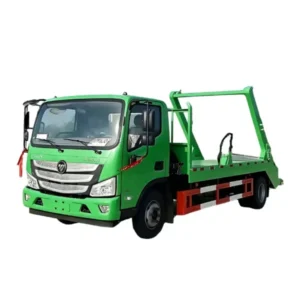
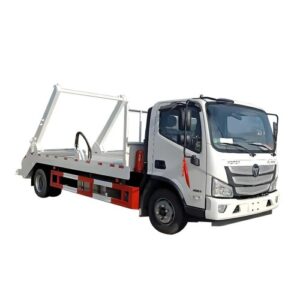
Swing-arm skips on a 7,000 mm 4×2 chassis with a 3.6 t front axle turn where a compactor cannot, and the skip is dropped at the kerb, not tipped.
Sealed 6 m³ food-waste bodies with liquid-tight discharge, built for high-moisture loads where a standard tipper becomes a corrosion problem.
12,370 kg payload on a 25 t GVW 6×4 with a 5.6 m × 2.35 m × 1.5 m box and a 5.92 rear axle ratio — built for repeated full-load tipping, not occasional loads.
1-ton Forland hook-lift with interchangeable 1–6 m³ containers handles compound waste without a dedicated compactor on site.
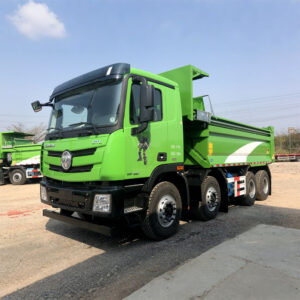
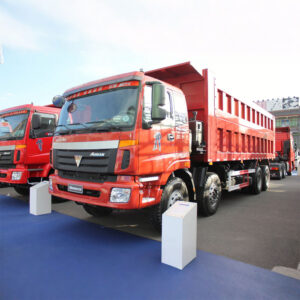
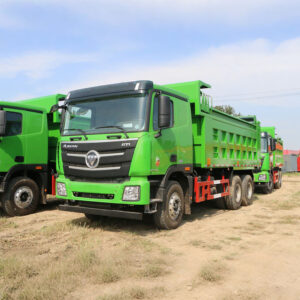
8×4 tippers with U-shaped wear-plate bodies and low centre of gravity, sized to move demolition spoil out of city sites on legal axle loads.
Full-electric compactors for city centres with diesel restrictions, or Euro 6 / China VI diesel where charging infrastructure is not yet in place.
Fleet-standardised units with one spare-parts list, so a 20-truck bid can be priced without a separate sourcing exercise per body type.
Documentation Your Tender Office Will Actually Accept
A truck that cannot be registered is a parked truck. These are the certificates, test reports and import documents that ship with the vehicles.
Body fabrication and assembly run under an ISO 9001 certified quality management system, with a documented inspection record per unit.
China Compulsory Certification for the Foton chassis, which is the base document most import authorities ask for first.
Euro 3, Euro 4, Euro 5, Euro 6 and China VI builds, so the same body can be homologated for several destinations in one order.
Certificate of Conformity, Certificate of Origin, commercial invoice, packing list and bill of lading issued per shipment.
SGS or TÜV inspection arranged on request, with loading photographs and a hydraulic pressure test record before the unit leaves the yard.
PVoC, KEBS, SONCAP, EAC and UNBS paperwork prepared with the order where the destination requires a conformity programme.
Documentation scope is confirmed per destination port and per model. Ask for the certificate list before you place the deposit, not after.
Six Body Families, One Selection Table
Read across a row to match body volume against chassis, power and duty. Every family links to the model page with the full parameter sheet.
| Body family | Volume and payload | Chassis and power | Best-fit duty |
|---|---|---|---|
| Rear-loader compactor BJ5102ZYSEV-H1 · electric |
6.5 m³ effective bin, 0.6 m³ filler, 0.36 m³ leachate tank, 240 / 660 L and 1100 L bin lift | 160 kW motor, 20 kW rated at 1400 rpm, 10,495 kg GVW, 3360 mm wheelbase, 16 MPa | Dense residential blocks, city-centre night collection, low-emission zones |
| Swing-arm container FOTON 6 m³ · two models listed |
6 m³ skip in Q235 steel, 3 mm sides, 5 mm floor, 6,865 kg loading capacity | Foton 4×2 LHD, ISF3.8s3168 125 kW, 6-speed, 11,995 kg GVW, 3.6 t / 8 t axles | Skip exchange in narrow streets, heritage centres, markets with tight access |
| Hook-lift container Forland 1 ton |
1–6 m³ detachable containers, one cab serving several bodies per day | Foton Forland light chassis, compact footprint for compound and lane access | Property management, campus waste, garden and bulky refuse rounds |
| Food and organic waste AUMARK-C33 6 m³ |
6 m³ sealed body, liquid-tight discharge, corrosion-managed for high-moisture loads | Foton Aumark cabin, light-duty 4×2, suited to stop-start collection | Restaurants, canteens, wet markets, food-processing estates |
| Heavy tipper Auman GTL 400 hp 6×4 |
5.6 m × 2.35 m × 1.5 m box, 12,370 kg payload, 25,000 kg GVW | Weichai WP12.400E62, 2,000 Nm at 1000–1400 rpm, Fast 12-speed, 5.92 ratio, Euro 6 | Transfer stations, construction spoil, mining and quarry haulage |
| Light and medium tipper 5 t to 25 t, 4×2 / 6×4 / 8×4 |
5 t, 20 t and 25 t payload builds; 8×4 bodies up to 20 m³ with tarpaulin systems | 190 hp to 400 hp, Euro 3 to Euro 6, manual and AMT options | Narrow collection routes, sand and gravel delivery, small-site clearance |
Volumes shown are body or compaction volumes, not chassis ratings. Confirm the axle load your registration authority allows before fixing the body size.
Chassis, Body, Hydraulics and Paperwork From One Supplier
Most failed waste-truck projects are procurement failures, not engineering failures. A buyer sources a chassis from one dealer, a body from a second workshop, a hydraulic kit from a third, then discovers at the port that nobody owns the interface between them. We quote the whole unit: chassis, subframe, body, hydraulic system, PTO, sealing, paint and export documentation, with one bill of lading and one warranty contact.
The chassis side is not generic. The Foton Auman line is produced through the Daimler-Foton joint venture in Beijing, a programme covered in detail by Reuters and Automotive News Europe, which is why the cab, axle and brake architecture follows European design conventions rather than a local-only pattern. Engines come from Beijing Foton Cummins Engine Company, Cummins' largest engine joint venture worldwide — the ISF3.8 and F2.8 units in this category are built on that line, which is the practical reason a 125 kW ISF and a 156 hp F2.8 share parts with trucks already running in dozens of markets.
Then there is the network behind the name. Foton operates more than 220 outlets across Africa alone, with 12 knock-down plants, 43 parts warehouses and 8 training centres, according to delivery reporting by ChinaTrucks.org — the reason a 20-unit order in West Africa is not a parts-availability gamble. On our side, every order ships with a one-year or 30,000 km warranty, whichever comes first, 24-hour online after-sales support, and a drawing review against your route and climate before production starts.
Coverage of CRRC as the world's largest rolling-stock manufacturer by revenue, the industrial base the CRRC Vehicles name is built on.
Reporting on the Daimler and Foton joint venture in Beijing and the Auman heavy-truck programme it produces.
Beijing Foton Cummins Engine Company described as Cummins' largest engine joint venture, supplying the ISF and F2.8 platforms.
Delivery reports on Foton's African footprint — 220+ outlets, 12 KD plants, 43 parts warehouses, 8 training centres.
Orders On Record, With The Numbers Attached
Publicly documented deliveries of this vehicle class. Client type, date, quantity and source are given for each, so you can verify before you rely on them.
10 Foton compactor garbage trucks, 270 hp, 15 m³ compaction body, fitted with a rear standing platform, safety handrails and a pneumatic sealing cover to cut odour escape during long transfer runs. Batch completed and prepared for shipment to Ghana.
10 Foton garbage compactor trucks ordered by a government city sanitation project, delivered in white municipal livery, selected after the buyer compared several Chinese compactor suppliers on body quality and sealing.
100 Foton Auman heavy trucks handed over in Addis Ababa to a multinational working in transport, construction and mining — a customer that has taken more than 400 Foton vehicles since 2013. A further large-volume purchase memorandum was signed at the same ceremony.
What Buyers Ask Before Signing
Fourteen questions that come up in almost every solid-waste enquiry, answered with the parameters rather than adjectives.
What body volume do I need for a city of 200,000 people?
ANSWERWork backwards from daily tonnage rather than population. A 6.5 m³ rear-loader with a 0.6 m³ filler typically completes 8 to 12 stops per load in dense housing; a 15 m³ compactor halves the trips. Most operators of that size run two to four compactors plus one swing-arm unit for tight streets.
Compactor or swing-arm: which one pays back faster?
ANSWERA compactor wins on tonnage per trip and on labour, because the body does the compaction. A swing-arm wins on street width and on capital cost, because you buy skips instead of a compactor. Cities above roughly 150,000 people usually need both, split by district.
Can the truck lift 1100 L bins as well as 240 L bins?
ANSWERYes, with the right mechanism specified at order. The BJ5102ZYSEV-H1 offers a tipping-bucket or tipping-bucket-plus-packing configuration, and the feeding form is quoted as 240 / 660 L or 1 L per m³ depending on the arm fitted. Tell us the bin standard your municipality uses and we match the arm, not the other way round.
How does the body stop leachate leaking on the road?
ANSWERThree measures work together: a dedicated 0.36 m³ sewage tank inside the body, a sealed tailgate with an optional hydraulic rear-door lock, and a pneumatic sealing cover on transfer-spec units. On tippers, tarpaulin systems with horizontal push or rocker-arm operation close the body before the truck moves.
Is the electric compactor realistic without a depot charger?
ANSWERIt is realistic for fixed-route collection that returns to a depot each shift, which is how most municipal rounds already run. The powertrain is a 160 kW motor with 20 kW rated continuous output at 1400 rpm and a 90 km/h top speed, so route length matters more than peak power. If your depot has no three-phase supply, stay on Euro 5 or Euro 6 diesel for this cycle.
What steel thickness should I insist on?
ANSWERFor containers handling household waste, 3 mm sides and 5 mm floor in Q235 is the working standard and is what the 6 m³ swing-arm unit uses. For construction debris, move to wear plate: T700, WKC800 or NM450 at 6–8 mm sides and 8–10 mm floors. Anything thinner is a one-tender body.
Which emission standard can you actually deliver?
ANSWEREuro 3 through Euro 6, plus China VI, depending on model. The 6 m³ swing-arm is a Euro 3 build; the 400 hp Auman GTL tipper is Euro 6 with common-rail injection, DPF, DOC and Hi-SCR. Tell us the minimum your registration authority accepts and we quote only compliant powertrains.
Left-hand drive or right-hand drive?
ANSWERLeft-hand drive is the standard build across this category. Right-hand drive is available to order on most chassis, but it adds lead time and should be fixed at the quotation stage, because the steering and pedal box change is not a workshop retrofit.
What is the minimum order and the lead time?
ANSWEROne unit is a normal order, and mixed configurations are accepted in the same batch. Lead time runs around 15 working days in the low season and one to three months at peak, counted from deposit and drawing approval rather than from the enquiry.
How are the trucks shipped?
ANSWERNaked with anti-rust wax, or RoRo, or container where the body breaks down. Compactors and tippers usually go RoRo or break-bulk because of height; hook-lift and light tippers can be containerised. We quote CIF or DAP and handle the inland leg for landlocked destinations.
What warranty comes with the unit?
ANSWEROne year or 30,000 km, whichever comes first, with 24-hour online after-sales support. Chassis coverage follows the Foton policy where that is longer. Spare parts are supplied at factory cost for the life of the unit, and a parts list ships with every vehicle.
Can you match our municipal livery and signage?
ANSWERYes. Body colour is free to any RAL reference, and reflective striping, council crests and unit numbering are applied before shipment. Send the artwork with the order; repainting after arrival costs more than the original paint job.
Do you supply spare bodies without a chassis?
ANSWERYes, where local assembly or import rules make a complete vehicle impractical. We can ship the compactor body, subframe and hydraulic kit for mounting on a chassis you already own, which also avoids the finished-vehicle duty bracket in some markets.
What do you need from me to quote accurately?
ANSWERFive things: daily tonnage or stops per shift, the narrowest street on the route, your bin standard, the emission level your authority will register, and the destination port. With those we can fix body volume, chassis, axle rating and hydraulic package and issue drawings before you commit to a deposit.
Send Your Route Profile, Get Drawings Before You Pay
Tell us the waste stream, the street width, the bin standard and the destination port. Our engineering team confirms body volume, axle rating and hydraulic package, then issues drawings and a landed-cost quotation.
Fleet colour matching, right-hand drive conversion, spare-parts kits and inspection support are handled in the same order.
-
Solid Waste
FOTON 3 CBM Roll-off Hook Lift Garbage Truck
-
Solid Waste
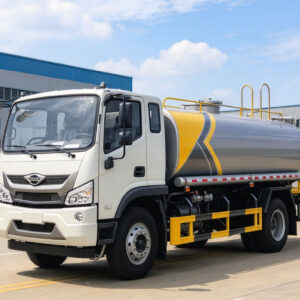
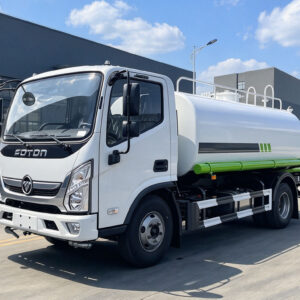
FOTON10 CBM Water Sprinkler Truck
-
Solid Waste
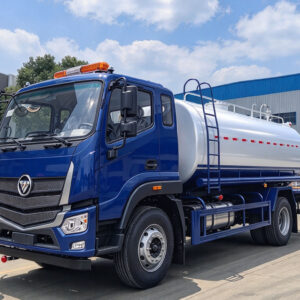
FOTON 15 CBM Water Sprinkler Truck
-
Solid Waste
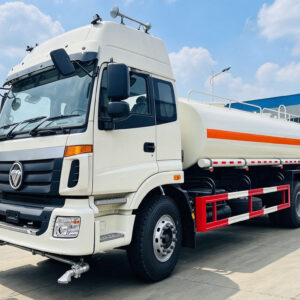
FOTON 15 CBM Water Sprinkler Truck
-
Solid Waste
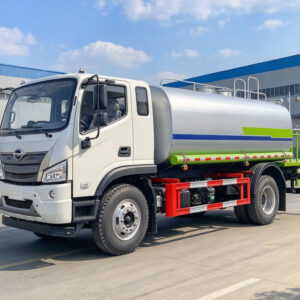
FOTON 13 CBM Water Sprinkler Truck
-
Solid Waste
FOTON 5 CBM Water Sprinkler Truck
-
Municipal
FOTON 6m³ swing-arm garbage truck
-
Municipal
Foton Auman 350HP 8X4 Dump Truck
-
Municipal
Foton Auman 380HP 8X4 Dump Truck
-
Municipal
Foton Tipper Truck