

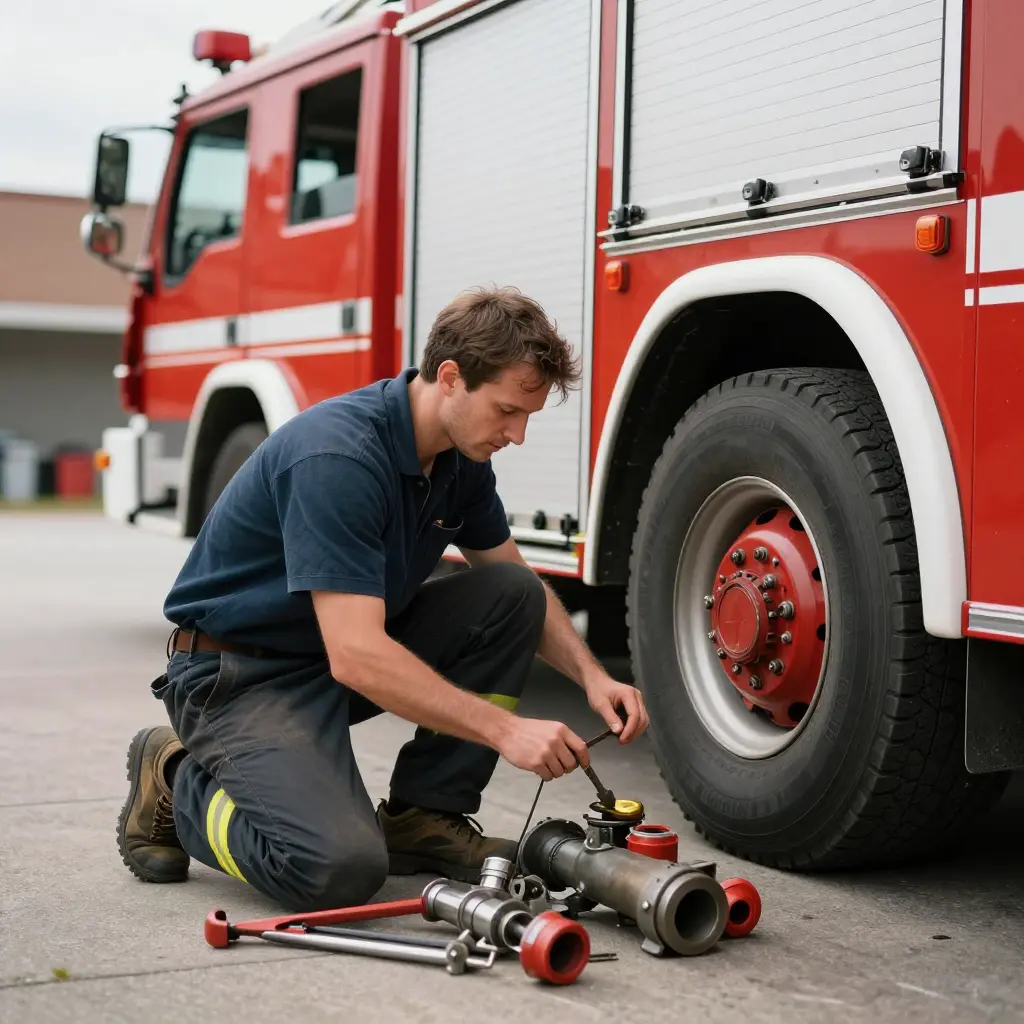
If you have typed “fire truck repair near me” into a search bar, you are probably not browsing for fun. You run a fire department or an emergency vehicle fleet, and you need a rig back in service without towing it to a dedicated shop bay. A mobile mechanic brings the tools, diagnostics, and parts to your station, which makes fire truck repair without a shop bay workable.
Emergency vehicles rarely break down at a convenient time. When a pump, brake system, or electrical fault sidelines a truck, the hours until it returns matter, and the department is short a rig in the meantime.
The rest of this guide covers what a mobile mechanic can fix on site, which jobs still need a full shop bay, and how to keep your municipal fleet inspection ready.
The table below sorts common fire truck repairs by whether a mobile mechanic can complete them on site or they still demand a dedicated shop bay.
| Repair Task | Can a Mobile Mechanic Do It? | Typical Shop Bay Requirement | Downtime Impact |
|---|---|---|---|
| Brake and air system service | Yes | Lifting bay and air-supply hookup for full overhaul | Low – most service finished on-site in hours |
| Electrical and wiring diagnostics | Yes | None for testing; bench space for major rewiring | Low – truck stays in service nearby |
| Hydraulic leak repair | Partial | Bay with containment and pressure-rated tooling for deep hydraulic work | Moderate – minor leaks fixed on-site, major lines pulled |
| Tire replacement | Yes | None; mobile unit carries jacks and torque tools | Low – single tire swapped without leaving the station |
| Fluid and filter changes | Yes | None; spill containment trays recommended | Low – routine service completed in place |
| Pump-related servicing | Partial | Bay with water supply and drainage for pump rebuilds | Moderate to high – diagnostics mobile, rebuilds in bay |
| Lighting and siren systems | Yes | None; wiring access and test gear brought to site | Low – emergency lighting restored same day |
| Emergency battery replacement | Yes | None; jump-start and replacement kit on the van | Minimal – unit back in service within the hour |
A mobile mechanic handles most routine and emergency fire truck repairs at the station. Only the heaviest hydraulic work and pump rebuilds consistently need a shop bay.
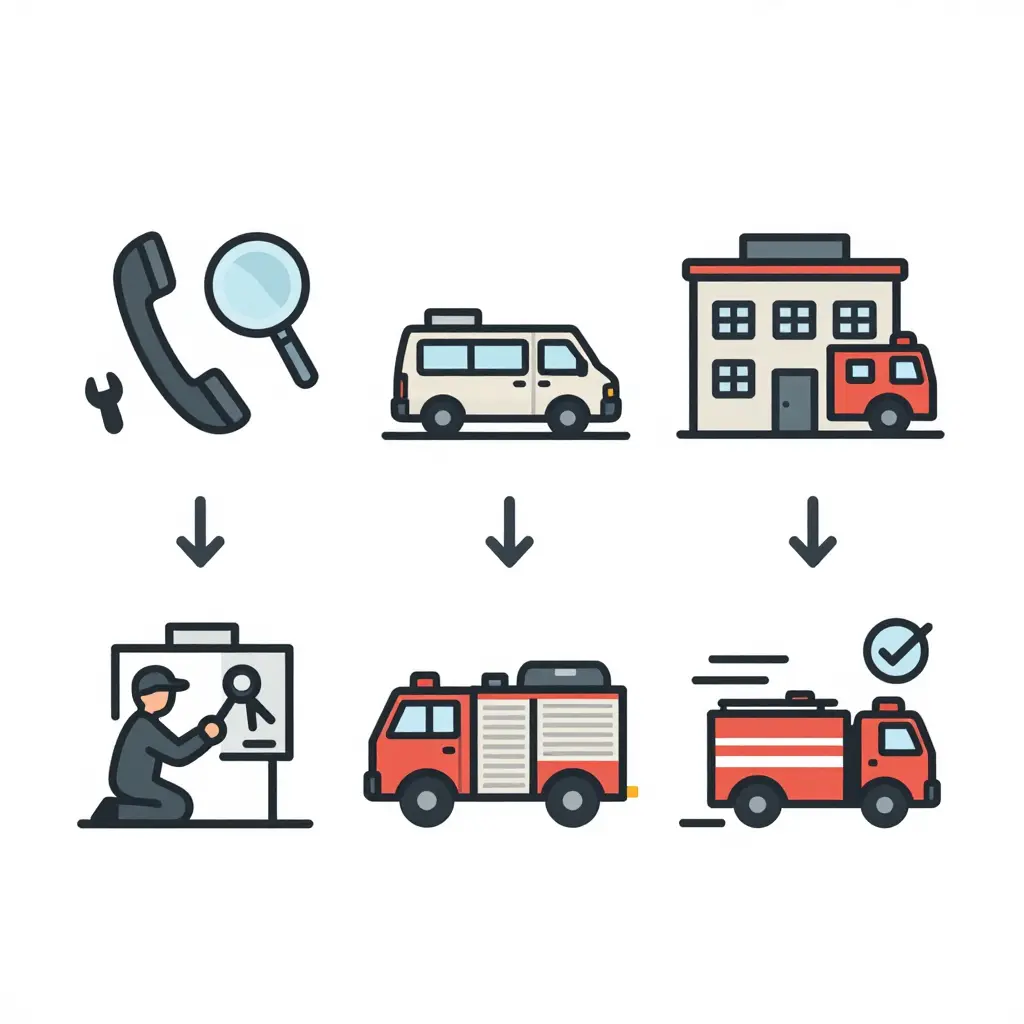
How a mobile repair call works:
| Stage | What Happens | Your Role |
|---|---|---|
| 1. Call & diagnosis | You describe the fault; the mechanic triages it remotely | Report symptoms and vehicle details |
| 2. Mobile unit arrival | A fully equipped service van reaches your station | Provide bay or apron access |
| 3. On-site repair | Repairs, replacements, and adjustments are made on location | Keep the truck accessible |
| 4. Return to service | The truck is tested and cleared for duty | Log the service and return to roster |
Common fire truck breakdowns a mobile mechanic handles most
Fire apparatus live hard lives. Pumpers, aerials, and tankers sit idle for long stretches, then run hot and heavy to a scene, so parts wear faster than on ordinary commercial trucks. That stop-start duty pushes the same systems to fail first.
Air brake components fail most often. Compressors, valves, chambers, and air dryers cycle under constant pressure, and a small leak quickly becomes an out-of-service defect. Electrical and multiplex wiring runs a close second, because vibration, water intrusion, and corroded connectors disrupt the multiplexed controls modern rigs depend on.
Hydraulic systems power ladders, stabilizers, and lifts, and heat plus contaminated fluid wears pumps, hoses, and cylinders. Cooling systems struggle with long idle periods and heavy loads. Tires take sidewall damage and uneven wear from weight and tight turns. Pump drive components, including the split-shaft gearbox and driveshaft, absorb severe torque loads.
Consistent fire apparatus maintenance keeps any municipal and emergency vehicle fleet ready, but breakdowns still happen. That is where fire truck repair near me services earn their keep, diagnosing and fixing many faults on site.
The two charts below show which systems drive the most repair calls.
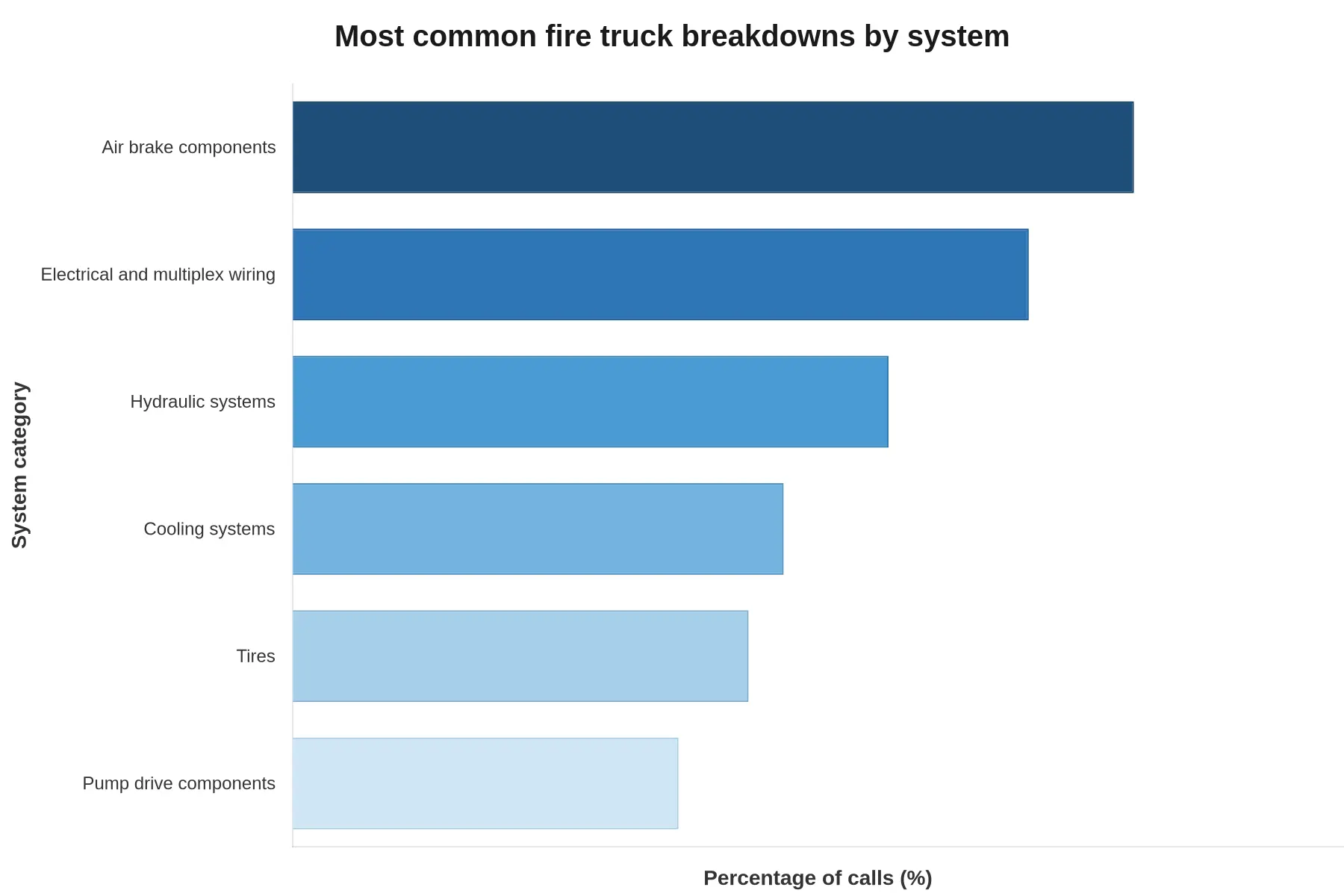
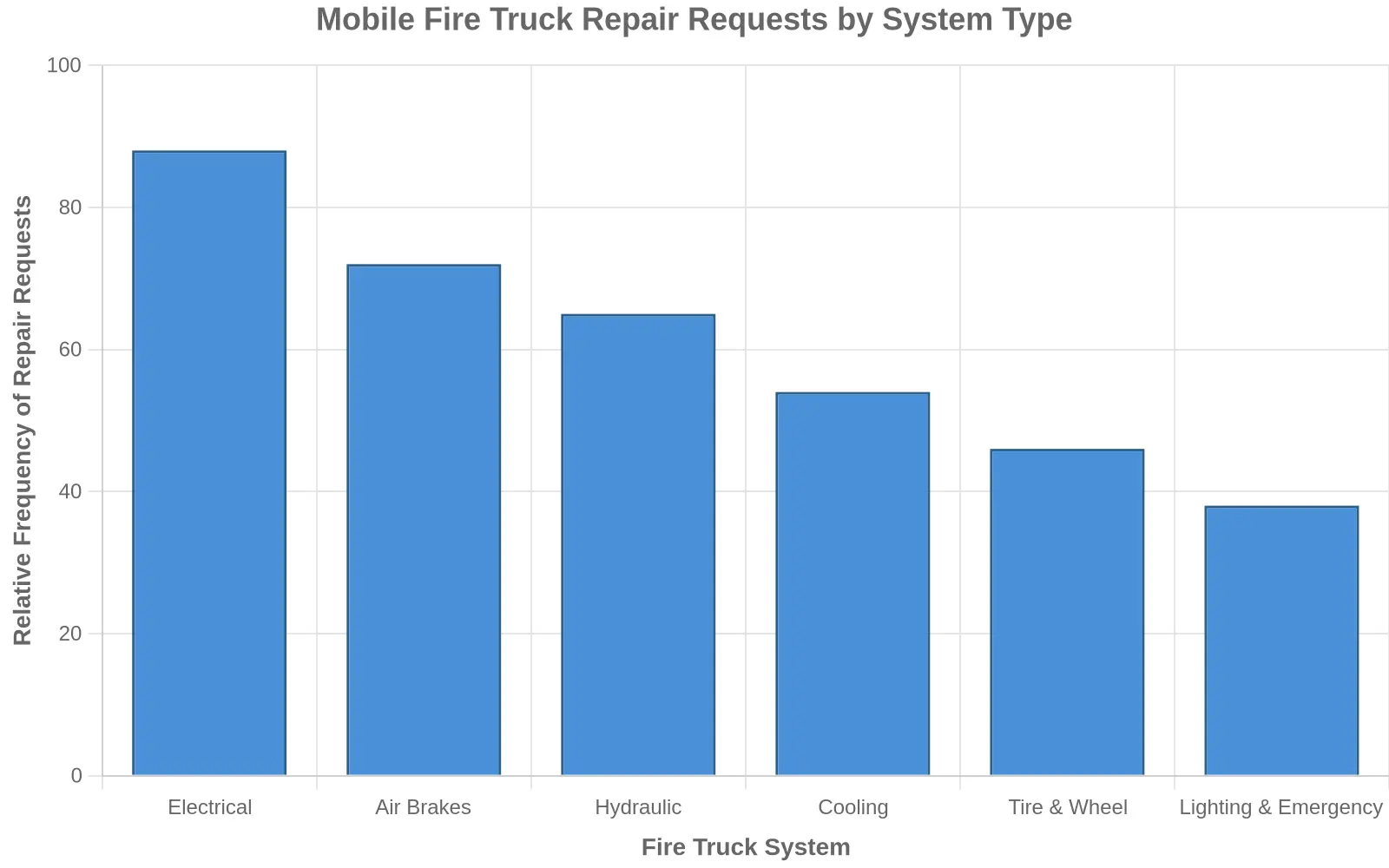
Both charts point the same way: electrical and air brakes generate the most mobile repair calls.
Benefits of mobile repair for fire departments and fleet managers
Mobile repair keeps apparatus in service instead of parked at a distant shop. A technician who comes to you cuts downtime first, because the fire truck stays close enough to answer the next call. Searching for fire truck repair near me usually leads to a mechanic who arrives at your station, which saves the hours otherwise lost to travel and paperwork.
Towing a heavy apparatus is expensive and risky. An on-site mechanic removes the towing bill for any job the van can finish in your own bay or lot. The crew also keeps the rig, tools, and equipment at hand while the work proceeds, so the station stays ready.
Turnaround matters for any emergency vehicle fleet. Mobile service is often faster on common fixes like brakes, electrical faults, and hydraulic leaks, with no shop queue in the way. Fewer vehicles leave the property, so disruption to the daily schedule drops. For departments without a dedicated shop bay, suitable platforms are listed here: municipal fleet vehicles.
Supporting your municipal and emergency vehicle fleet
Maintenance only gets you so far. The other half is a dependable fleet. When your fire apparatus and support vehicles run on solid municipal vehicle platforms, mobile mechanics can keep them in service longer, with fewer surprises between calls.
Whether you operate solid waste trucks, liquid waste vehicles, or road cleaning equipment, well-built units mean predictable service intervals and easier on-site repairs. Our municipal range is built for exactly that kind of daily, heavy-duty work.
Tow truck solutions matter to the same equation. Recovery vehicles move a disabled apparatus quickly, cutting downtime when no shop bay is available.
Responsive maintenance plus dependable platforms keeps crews ready. That is how municipalities hold response times tight and budgets predictable.