


Thermal Runaway Response, Not Water Tank Size, Decides the Battery Plant Fire Engine Specification
On a battery plant or battery energy storage system (BESS) site, what an engine can do about thermal runaway matters more than how much water it carries. Tank volume is a result of the response plan. It is not the plan.
The conventional assumption that a bigger tank means a safer plant comes from Class A and hydrocarbon fires, where more water buys more minutes and the arithmetic is easy to follow. Lithium-ion packs break that arithmetic. In a cell that has gone into runaway, the cathode breaks down and releases oxygen while the electrolyte supplies the fuel, so an agent that displaces air around the fire does nothing to the reaction inside the cell. Vented gas can ignite explosively. A pack that looks out can reignite hours later. Propagation from one module to the next can cross a rack in minutes, depending on chemistry, cell format and module spacing, which is faster than most sites can move. A very large tank pushed through a short-reach, low-pressure line may never place agent where the heat is. A smaller reserve delivered accurately, early and continuously can hold a module long enough to evacuate and intervene.
Three properties of the apparatus decide the outcome, and they are taken in turn below:
- Agent delivery performance: flow rate, pressure, reach and spray pattern, judged against the geometry of a containerised rack rather than an open floor.
- Response-time integration: detection, dispatch, arrival and setup, sequenced against the propagation clock of the chemistry on site.
- Sustained cooling capacity: endurance to hold cooled boundaries through the re-ignition risk, not just to knock down visible flame.
Specified this way, a battery plant fire engine may end up with a tank larger or smaller than the default assumption. The sections that follow work the number out from the hazard, then show how to defend it to procurement, to your insurer and to the fire department that would respond.
Why Thermal Runaway Response, Not Water Tank Size, Drives the Spec
Tank capacity is the one figure every bidder can be compared on, which is why procurement committees keep returning to it. It is also the figure that holds up least well once the fire starts. A pool fire runs out of fuel once enough water lands on it. A battery pack keeps working inside sealed hardware after the flame is gone, and the only way to interrupt it is to get the right agent into the cells at the right rate and keep it there. Capacity supports that effort; it does not define it.
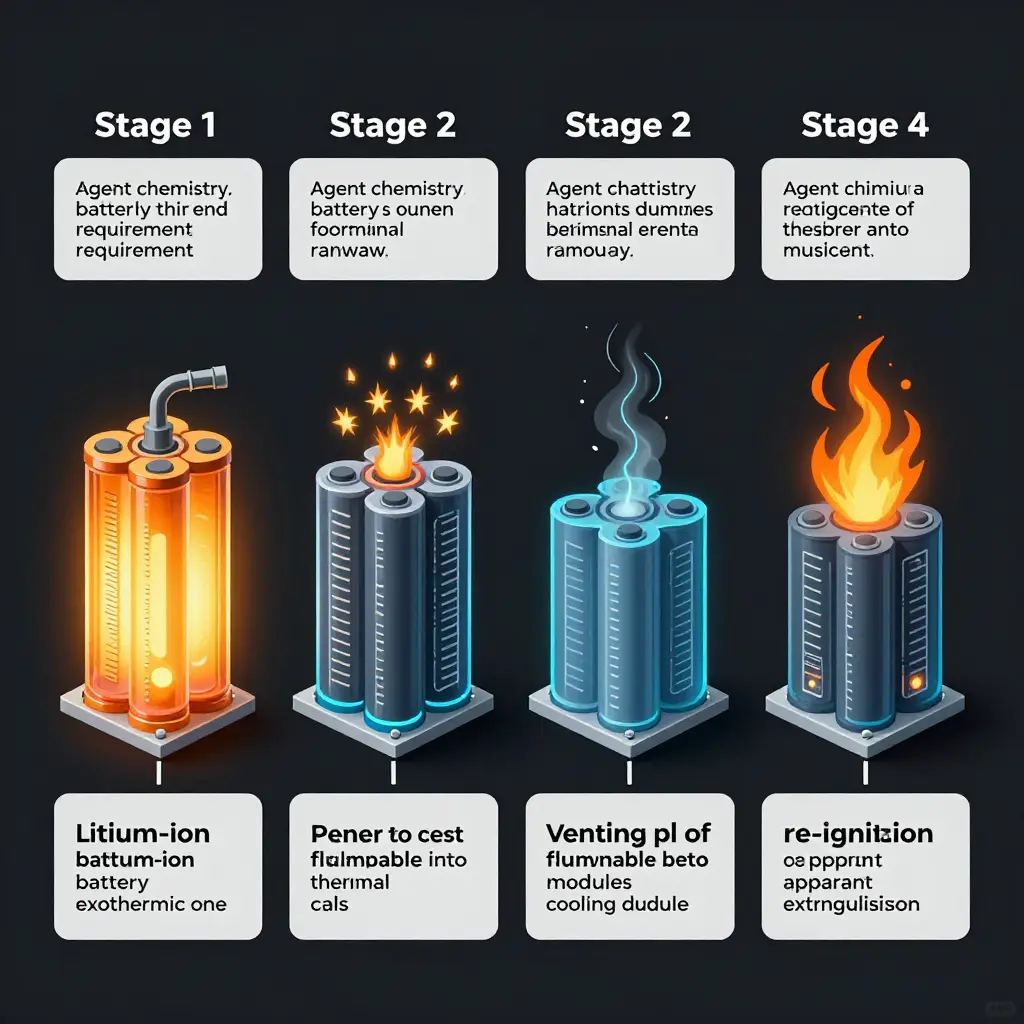
Stage One: Cell-Level Exothermic Onset Sets the Agent Question
Runaway starts in a single cell, where an internal short or local overheating drives exothermic decomposition faster than the cell can shed heat, with no external fuel involved. From that point the limiting factor is chemistry. The agent has to absorb heat from the cell mass or interrupt the reaction, and the delivery system has to reach cells rather than the outside of an enclosure. An apparatus that can only flood a compartment from a distance is answering a question the fire has already left behind.
Stage Two: Thermal Runaway Propagation Ignores Compartment Boundaries
Once a cell fails, conducted and radiated heat push neighbouring cells past their own onset threshold, and the event becomes a travelling front through the module and then the pack. The requirement at this stage is penetration: nozzles set up for direct injection into module enclosures, and enough pump pressure and reach to put agent on the failing cell rather than on its casing. Without that, the crew can only watch the front advance module by module.
Stage Three: Vented Electrolyte Gases Create the Flash Risk
Failed cells vent flammable electrolyte vapour and decomposition gases, hydrogen fluoride among them. Those gases accumulate, migrate through cable penetrations and door seals, and can ignite well away from the cell that produced them. Discharge rate therefore has to sustain flow long enough to dilute and cool the gas front for the whole suppression window; a large volume delivered too slowly does nearly as little as no delivery. Agent type and discharge rate belong on the same line of the specification sheet.
Stage Four: Re-Ignition Decides the Cooling Duration
Treating extinguishment as completion is the most common specification error. A suppressed pack can reignite hours later as heat migrates out of cells that were never cooled through, so the apparatus has to support a long holding operation rather than a single decisive knockdown. That requirement lands in plumbing layout, pump endurance and a water supply plan, and none of it is visible in the tank figure on a datasheet.
What the Specification Must Therefore Prioritise
The sequence points to a specification built around agent compatibility, discharge rate, module penetration and sustained cooling, with tank capacity sized to support that duty cycle. Buyers comparing municipal and special-purpose vehicle platforms should ask vendors to demonstrate those four capabilities against a runaway timeline rather than against a water budget. Get the response envelope right and tank size becomes arithmetic.
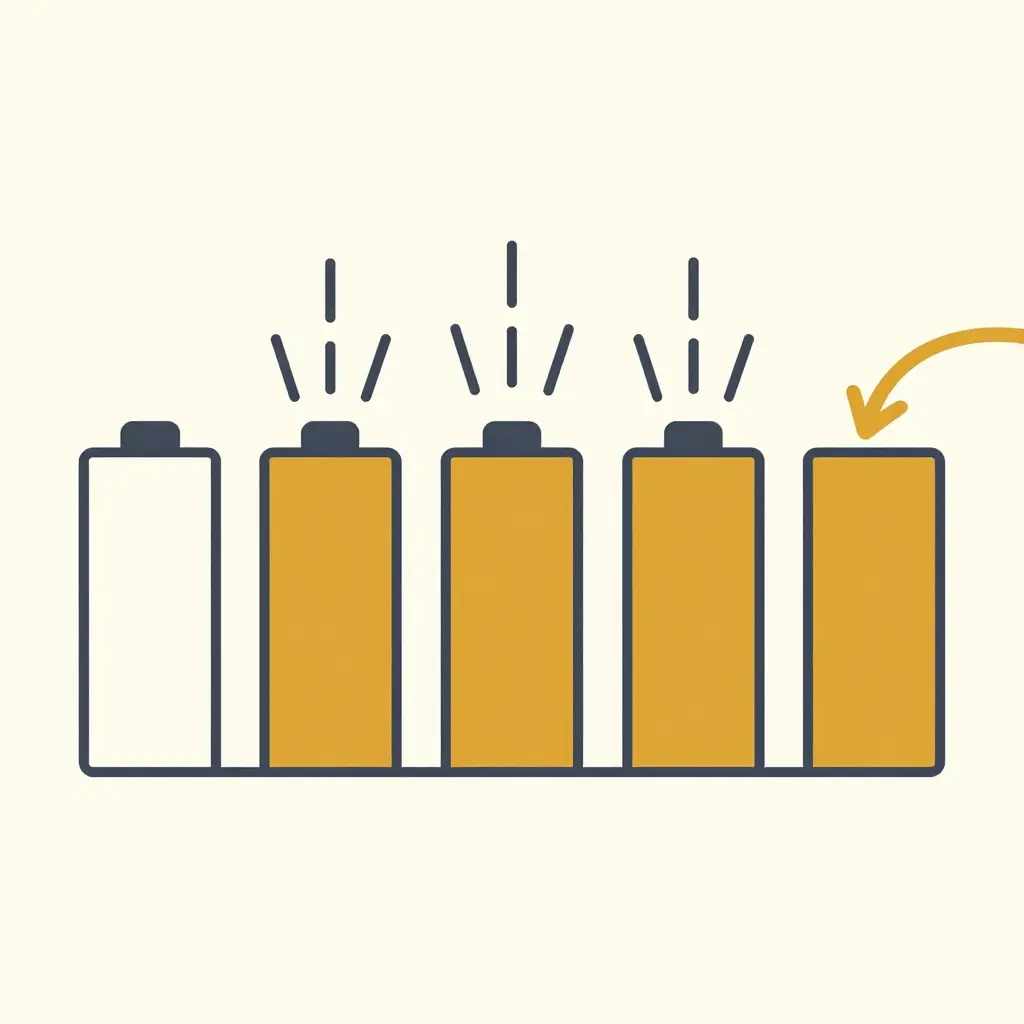
Figure: Cell-to-cell thermal runaway propagation and the direction of cooling-agent intervention.
Agent Delivery Performance: The Decisive Specification Variable
The requirement
A fire apparatus for a lithium-ion battery plant or a BESS site has to place enough agent on the burning cells, at a high enough rate, from a position the crew can safely occupy, for long enough that the pack stops making heat faster than the agent removes it. That requirement belongs in the fire apparatus specification before anyone discusses capacity, because capacity is derived: it comes from the delivery rate and the cooling duration the response plan demands, and it cannot substitute for either.
The engineering reasoning
During a thermal runaway response the binding constraint is the rate at which heat leaves the cells, not the total volume eventually applied. A propagating cell releases energy faster than a trickle stream can absorb it, so the agent delivery rate, measured at the nozzle rather than at the pump, decides whether cooling outpaces propagation or trails behind it.
Reach and pattern decide whether the agent arrives at all. Modules sit recessed inside enclosures, racks and container shells, and a high flow rate delivered from a standoff the spray cannot span is a number on paper. Effective nozzle reach at working pressure, plus a pattern that can be shaped from a narrow penetrating stream into a wide cooling fan, determines contact with the seat of the fire. This is where many nominal specifications quietly fail.
Agent chemistry has to match the fuel. Water remains the workhorse because of its heat capacity, but plain water on a live pack may not touch vapour-phase combustion or reach the cell internals. State in the specification which agents the system is plumbed to deliver, at what proportion, and whether foam or an additive is meant to improve wetting, blanketing or runoff. Foam is not a general upgrade: it brings proportioning tolerance, shelf life and induction requirements that have to be engineered rather than assumed.
Cooling duration controls re-ignition. Trapped heat re-initiates combustion well after the flame is out, so the figure that matters is a sustained application window, expressed as a qualified range tied to pack size and chemistry, that keeps modules below the re-ignition threshold while crews intervene or withdraw.
Contrasting delivery against tank volume
| Specification attribute | What it actually determines | How to frame it in the spec |
|---|---|---|
| Tank volume | Total pumping duration at a stated flow, plus reserve margin | Range-based, tied to a defined delivery rate and expected incident duration |
| Agent delivery rate | Heat removal per unit time, and whether cooling outpaces propagation | Minimum sustained rate at the nozzle, verified by flow test |
| Nozzle reach and pattern | Whether agent lands on the module face or falls short | Minimum effective reach at working pressure, adjustable pattern |
| Agent and additive suitability | Whether the agent interrupts flaming combustion or only wets surfaces | Compatibility statement for the chemistries stored on site |
| Cooling duration | Whether re-ignition is suppressed through the intervention window | Sustained application window, not a single-pass knockdown |
The trade-off is structural. Tank capacity limits pumping duration and nothing else: a bigger tank buys time. Flow rate and reach decide whether agent ever contacts the fire, and no volume compensates for a stream that falls short. Optimise for tank size and the result is a heavy vehicle that empties slowly in the wrong direction; optimise for delivery and the vehicle works in its first minutes, which is when the incident is usually decided. Chassis and body selection should follow the delivery architecture rather than precede it, which is why buyers often evaluate municipal and specialty vehicle platforms only after the pump, plumbing and nozzle envelope are fixed.
Specification conclusion
Write the requirements in this order. First, the minimum sustained agent delivery rate at the nozzle under working pressure. Second, the effective reach and pattern range at that rate. Third, the agent and additive regime matched to the lithium-ion chemistries stored on site. Fourth, the cooling duration the thermal runaway response plan calls for. Size the tank last, as delivery rate multiplied by required duration plus a margin. Buyers who invert the sequence usually find the gap at the worst possible moment.
Specification Criteria That Decide Thermal Runaway Response
The table isolates the criteria that actually govern thermal runaway response, so each line of a specification can be judged on engineering merit. Tank volume is included for comparison.
| Specification Criterion | Why It Matters for Thermal Runaway | What Tank Size Alone Cannot Deliver | Recommended Direction for Buyers |
|---|---|---|---|
| Tank volume | Buys flow time, but only until the water is spent; it does not change cell-level chemistry or propagation behaviour | Confirms how much agent is carried, not how effectively it reaches, wets, or holds overheated modules | Size to a defensible minutes-of-flow target at maximum demand, not to the largest tank the chassis will carry |
| Pump flow rate | Determines whether agent arrives at the seat of the fire at usable pressure through long hose runs and monitors | Says nothing about delivery pressure, friction loss over distance, or capacity for simultaneous line demand | Specify rated flow at the nozzle, at working pressure, with all intended lines flowing at once |
| Agent type and additive compatibility | Water cools but does not stop propagation; wetting agents and additives change how deeply agent penetrates a module | Volume of plain water does not indicate whether the agent suits the site’s chemistry, drainage, or effluent constraints | Confirm additive compatibility with the suppression approach recommended for the installed cells and with the site’s containment plan |
| Discharge duration | Thermal runaway can re-ignite hours after knockdown, so duration must cover attack plus a holding period | A large tank paired with high flow can still empty in minutes | Require a minimum sustained duration at full rated flow, documented at a stated pressure |
| Nozzle reach and penetration | Racked modules and enclosure walls shield the source; stream quality decides whether agent lands on the failing cell | Cannot compensate for a stream that breaks up early or cannot reach the module face | Specify monitor throw, nozzle type, and confirmed access routes to module faces and rear enclosures |
| Cooling endurance | Preventing propagation depends on sustained heat removal from adjacent modules, not a single knockdown | Onboard volume is not the same as cooling capacity across a multi-hour incident | Treat endurance as an incident-management metric and plan water-supply connection or resupply early |
| Detection and alarm integration | Early gas detection and cell-level alarms buy time before visible fire, when intervention is still effective | Contributes nothing before the crew arrives or while the plant is unoccupied | Require signal interfaces with the site’s BMS, EMS and gas detection, plus onboard telemetry for responding crews |
| Re-ignition hold capability | Suppressed cells can reignite hours or days later; post-knockdown holding and monitoring is the decisive phase | A full tank that is already empty offers no holding capability at all | Specify post-incident monitoring (thermal imaging, gas sampling) and a written holding and resupply protocol |
Every row after the first describes something tank volume cannot supply. Buyers who pin down flow, agent compatibility, penetration, endurance and detection end up with a specification they can defend, so it is worth reviewing the wider range of municipal and emergency-response vehicle platforms before the tender is written.
Specification Review Sequence for Expert Buyers
Work through these steps in order. Each decision constrains the next, so the sequence matters as much as the content.
- Characterize the hazard before quoting hardware. Document the site’s battery chemistry, cell and module format, rack configuration, and the dominant thermal runaway failure modes, since these define the entire response envelope the apparatus must meet.
- Establish the agent and flow-rate requirement. Calculate the flow rate and agent type (water, foam, or a dedicated suppressant) needed to cool a propagating module stack, and write it into the specification as a minimum performance figure rather than an upgrade option.
- Set cooling endurance targets. Define how long the apparatus must sustain agent delivery to arrest propagation, convert that duration into a usable payload requirement, and check it against the payload limits of candidate municipal vehicle platforms.
- Verify detection and interface compatibility. Confirm that onboard detection, thermal imaging, and communication interfaces can hand off cleanly to the plant’s fire alarm and BESS monitoring systems without gateways or manual workarounds.
- Reconcile pumping duration with resupply planning. Match continuous pumping duration to realistic hydrant, tanker, or on-site water availability, and document the resupply cycle the crew will actually run on scene.
- Confirm crew training and the safe operating envelope. Specify the training standard, PPE for hydrogen fluoride and off-gas exposure, and the standoff distances that define where crews may operate during a module event.
- Define acceptance testing. Require factory and site acceptance tests that prove flow rate, endurance, and interface performance against the numbers agreed in steps two through four.
- Require the documentation package. Insist on as-built drawings, agent calculations, maintenance intervals, and response playbooks delivered before handover, not after commissioning.
- Revisit the sequence when the site changes. Re-run steps one through four whenever chemistry, rack density, or array layout changes, so the specification tracks the hazard rather than the calendar.
Working in this order keeps tank capacity where it belongs, as an output of the analysis. It also prevents over-buying water volume that adds weight and axle load without extending real cooling endurance, and it forces thermal runaway response into the testable, documented part of the contract instead of leaving it to the supplier’s discretion.
Which Factors Actually Drive Thermal Runaway Response?
When a specification committee sits down with a supplier, the conversation drifts to tank volume because it is the easiest figure to compare across bids and the easiest line item to defend in a procurement memo. A cell in thermal runaway is indifferent to how much water is parked outside. What matters to it is how quickly, how accurately and for how long agent reaches it.
The six factors below are ranked on a normalized 0-100 index so their relative weight is visible at a glance rather than buried in a bill of materials.
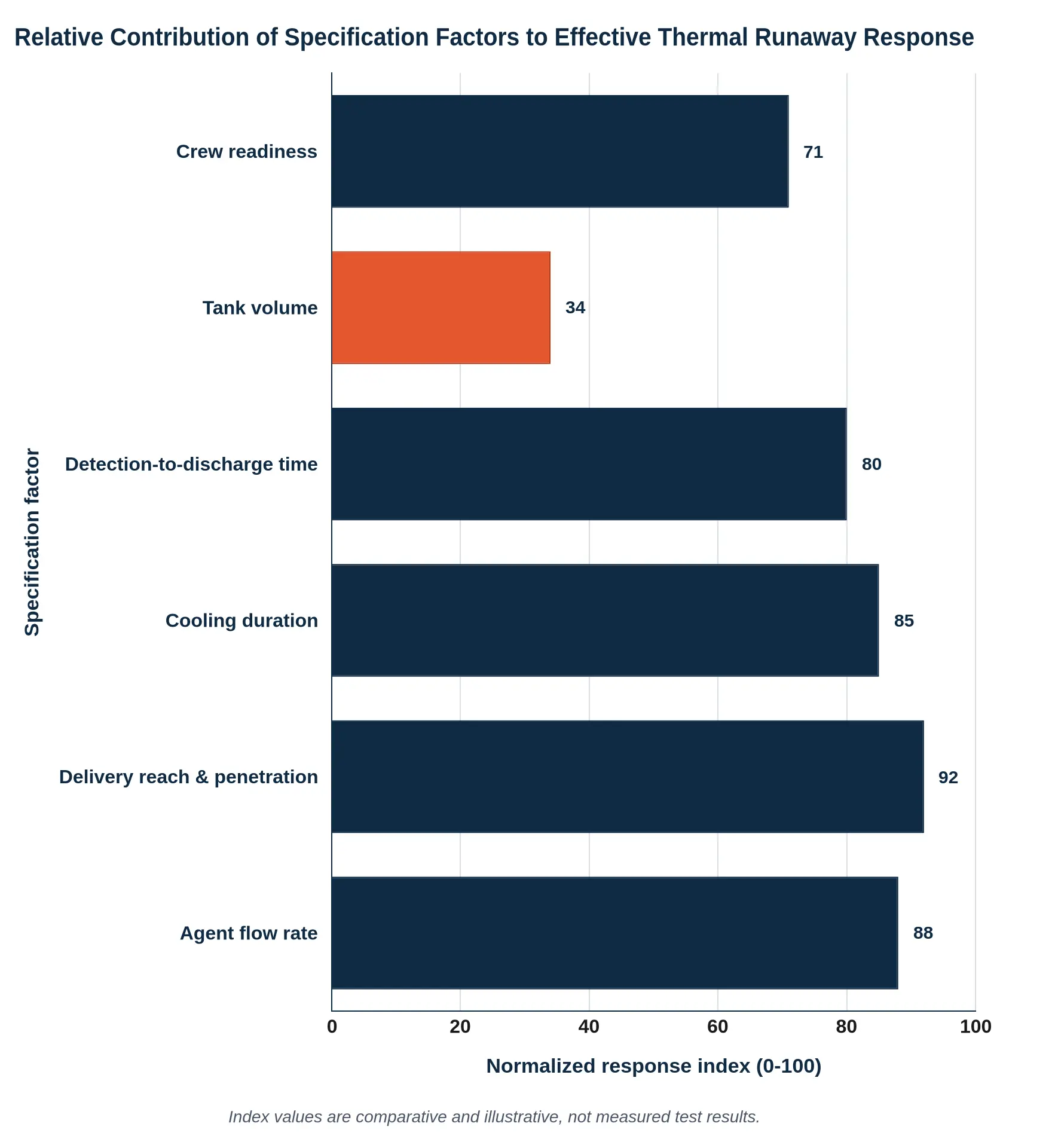
Figure 1. Relative contribution of competing specification factors to effective thermal runaway response. Index values are comparative and illustrative, not measured test results; they express engineering weighting, not certified performance data.
Reading the Bars
- Delivery reach and penetration (92) ranks highest because it answers the question the incident turns on: can the agent physically reach the burning module? A stream that hits a racking upright or showers the ceiling leaves the propagation front untouched.
- Agent flow rate (88) comes next. Sustained cooling needs sustained mass flow, and a large tank behind an undersized pump still runs dry without ever cooling the cells.
- Cooling duration (85) reflects the long tail of a battery fire. Modules can reignite hours after the flame is out, so holding a cooling envelope defines success more than knocking the fire down.
- Detection-to-discharge time (80) covers the compressed decision window. Each minute of delay at an ESS enclosure or a cell formation area compounds the propagation risk.
- Crew readiness (71) acknowledges that the apparatus is only as good as the people who arrive with it. Pre-plans, PPE and thermal-imaging drills belong in the specification.
- Tank volume (34) sits at the bottom on purpose. It is a reserve rather than a capability, and it runs out only after the other five factors have done their work.
What This Means for the Specification
For a tender document, these weightings argue for moving budget from raw capacity toward pump performance, nozzle selection and penetration-oriented delivery hardware. A modest tank on a high-flow pump with the right reach geometry will outperform a heavy tanker that cannot place agent where it is needed. Reviewing candidate chassis alongside the suppression architecture is the practical next step: browse our municipal fire and emergency vehicle platforms to see how tank, pump and body configurations can be rebalanced around response capability instead of reserve volume.
Use the index as a discussion tool with your EHS engineers and the responding fire department, then calibrate it against your site’s own hazards: racking height, cell chemistry, enclosure layout and the realistic arrival time of the first crew.
Detection Integration and Response Timing: Capability Only Counts If It Is Triggered in Time
A fire engine parked at a battery plant gate is not fire protection until it is called and pointed at the right container. Agent volume, pump performance and monitor reach count only if a detection signal reaches the crew early enough and in a form they can act on.
That interface is where specifications usually fail. Buyers compare tanks, pumps and chassis while the link that decides whether any of it matters stays undefined.
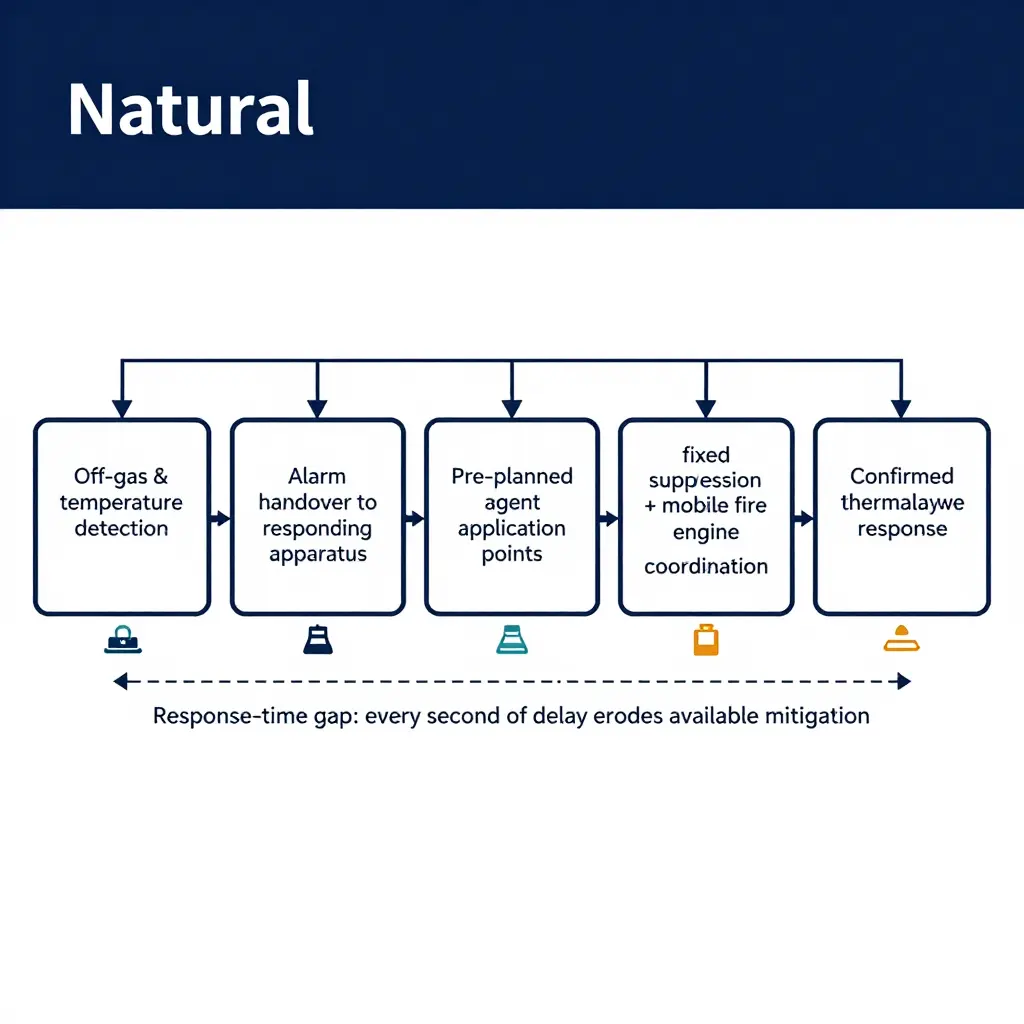
Off-gas and Temperature Detection Interfaces
Lithium-ion failures announce themselves before they ignite. Off-gas sensing at module or rack level, paired with cell and enclosure temperature monitoring, normally gives the earliest usable warning, ahead of smoke and visible flame.
The warning is only useful if the apparatus can receive it. Energy storage facility fire safety planning should define the interface: dry contacts, hardwired relays, or a protocol link into the vehicle’s cab display. The signal also has to carry location, down to container, array and module, or crews spend their first minutes on scene searching.
Alarm Handover to the Responding Apparatus
Handover is where seconds usually disappear. A detection event relayed by phone passes through a human chain; one transmitted to an on-site or responding vehicle does not.
Specify the path, the acknowledgement and what the crew sees on arrival, and put access routes, gate codes, hydrant positions and isolation points in the same package. On a sound BESS fire protection design the apparatus arrives already briefed.
Pre-Planned Agent Application Points
Agent has to reach the failing cell, not the building. Decide in advance whether application is at module, rack, container or enclosure level, and confirm the truck can actually deliver there: hose reach, nozzle type, piercing capability and designated penetration points.
If the plan calls for enclosure penetration, the apparatus has to carry the tools and the crew has to have practised the drill. Anything else is an assumption.
Coordinating Fixed Suppression with the Mobile Fire Engine
The fixed system and the fire engine are a sequence, not substitutes. Fixed suppression acts inside the enclosure within seconds and buys the window in which the mobile unit establishes supply, protects exposures and prepares for re-ignition.
That sequence needs a shared reference: a common status panel, agreed agent compatibility, a defined water supply arrangement and a clear division of roles on scene.
The Operational Consequence of Response-Time Gaps
Each stage below takes time out of a window that does not reopen.
| Stage | Typical gap | What it costs |
|---|---|---|
| Detection latency | Slow or absent off-gas sensing | Response begins after propagation |
| Alarm handover | Manual relay, unclear zone data | Minutes lost locating the fault |
| Travel and access | Gates, congestion, poor layout | Suppression starts late |
| Setup and deployment | No pre-planned application point | Crews improvise under pressure |
| Agent application | Wrong medium or delivery method | Re-ignition and escalation |
Specify Integration, Not Just Equipment
Integration requirements belong in the specification next to equipment capability. Write the detection interface, the handover protocol, the application points and the fixed-to-mobile coordination into the tender documents, then test them at commissioning.
When you evaluate municipal emergency vehicle platforms for a battery plant, ask what the apparatus can be wired into, not only what it carries. Whether the crew gets agent onto the cells before propagation outruns them comes down to that interface, not to the tank.

Each subsystem performs only as well as the ones before and after it in the response loop.
Frequently Asked Questions: Specifying a Battery Plant Fire Engine
Is a larger water tank ever justified on a battery plant fire engine?
Yes, for specific jobs. Large tanks support long-duration cooling of adjacent exposures and post-suppression soak. They do not improve suppression of a cell-level thermal runaway response, which depends on agent delivery rate, reach and penetration. Size the tank for exposure protection and holding, not for extinguishment.
How much discharge duration is realistic for a battery plant fire engine?
Plan for 20 to 40 minutes of continuous agent flow at rated pressure, plus a documented refill plan. The credible incident scenario and the site water supply set that number, not tank volume alone. Hydrant support or pump-and-roll extends it.
Can a standard municipal fire engine be adapted for lithium-ion hazards?
Partly. A standard municipal pumper can be retrofitted with thermal imaging, agent proportioning and revised tactics, but its pump curve and hose layout rarely deliver high flow at long reach, which is exactly what a thermal runaway response asks for. Factory-optioned apparatus closes that gap. Buyers comparing chassis options can review the same municipal vehicle platforms used across municipal fleets.
How should buyers weigh flow rate against tank volume?
Specify flow rate first. It decides whether suppression works at the container face. Tank volume only sets how long you can hold that flow. Derive the flow from the hazard analysis, then size the tank and the water supply to match.
What documentation should accompany acceptance testing?
Require pump performance curves at rated flow, agent proportioning accuracy, measured throw distance, nozzle pressure verification, electrical bonding and grounding records, and a signed as-built drawing set with commissioning results for every discharge point. Acceptance testing should also document operator training completion.
How does the apparatus specification interact with fixed suppression systems?
The apparatus is mobile backup, not a substitute. Fixed systems handle detection and incipient response; the battery plant fire engine has to deliver volume and reach beyond fixed-system capacity. Specify compatible agents, shared hose connections, and a documented interface with the site fire alarm panel.
Turning the Trade-Off into a Purchasing Decision
On lithium-ion and BESS sites, thermal runaway response capability decides whether the apparatus can change the outcome of an incident. Tank volume does not.
Three things carry most of that capability, and they are not equal in weight. The first is the time from detection to first agent application, which compresses or expands the window in which a propagation event can still be influenced. The second is the agent type and application method, matched to the chemistry and configuration on site, which decides whether agent reaches the cells in a form that interrupts the reaction. The third is protection of the crew and the apparatus itself, through thermal shielding, remote or deck-mounted monitors and protected hose and appliance routes, which keeps the delivery system working long enough to matter.
In a tender scoring matrix these criteria should carry the dominant technical weight. A defensible split places roughly 60 to 70 percent of the technical score on thermal runaway response criteria and 15 to 20 percent on water tank volume, with the remainder allocated to chassis, pump performance and operational logistics. Score response criteria against submitted evidence rather than nominal claims: documented agent testing against lithium-ion fire scenarios, a stated time from alarm to agent application, monitor reach measured against the site’s isolation zone, specified shielding ratings. Score tank volume as a supporting figure tied to the cooling duration the site’s pre-incident plan requires. A bid offering a very large tank with thin response evidence should not be rewarded by the matrix.
Tank capacity beyond what the cooling plan requires returns little for its cost, and the cost is hard to reverse. Every additional cubic meter of water adds mass, which drives axle ratings, chassis size and wheelbase and reduces access on constrained plant roads. It raises capital cost and increases the volume of contaminated runoff that must be contained after an incident. The benefit is additional cooling time after knock-down, which is useful but secondary. The same money spent on detection, chemistry-appropriate agent, monitor reach and crew shielding buys influence over the phase of the incident where outcomes are still open.
For lithium-ion and BESS sites, the minimum specification posture should therefore be a documented thermal runaway response package with chemistry-appropriate agent, rapid detection, remote monitor reach beyond the isolation zone, crew and apparatus thermal protection, and water volume sized to the post-knock-down cooling plan rather than to a general-purpose target. Chassis and body integration choices in the municipal vehicle range should be assessed against that posture, not in place of it.
About the Manufacturer Behind the Platform
CRRC is an industrial and municipal vehicle platform provider founded in 2016 and headquartered in Suzhou. Its portfolio covers municipal, cargo and crane-lifting vehicle families, with manufacturing and service operations that support customers internationally. For specifiers, the relevant point is that chassis, subframe and equipment-body interfaces are engineered as one package rather than assembled from unrelated parts, which is the discipline a fire body, pump module or suppression system needs when it has to be mounted, powered and serviced over the life of the vehicle.
That capability connects to the body-upfit questions raised earlier. The municipal vehicle range shows how purpose-built platforms are structured around a defined duty cycle, while the cargo-box body option and the trailer platform show how payload limits, body stiffness and mounting points are resolved when a chassis has to carry a heavy, non-standard body. On a battery plant those are the constraints that decide whether a thermal runaway response package can be integrated without compromising the base vehicle.