

The Core Risk Thesis: Documentation Outranks Reputation
A used fire truck listing on eBay puts the seller’s feedback score near the top of the page, and that score tells you almost nothing about the truck. Pump test records and underbody photos tell you most of what does matter: whether the pump still holds pressure at draft, and whether the frame rails are sound enough to keep carrying load. A five-star profile is a history of past transactions, not evidence about the apparatus in front of you.
Only two kinds of evidence carry much weight here, and both are narrower than most listings suggest.
Documented pump performance history. Pump test records show measured output: rated flow at pressure, vacuum and priming performance, relief valve behaviour, and the date each test was witnessed. Numbers, not adjectives.
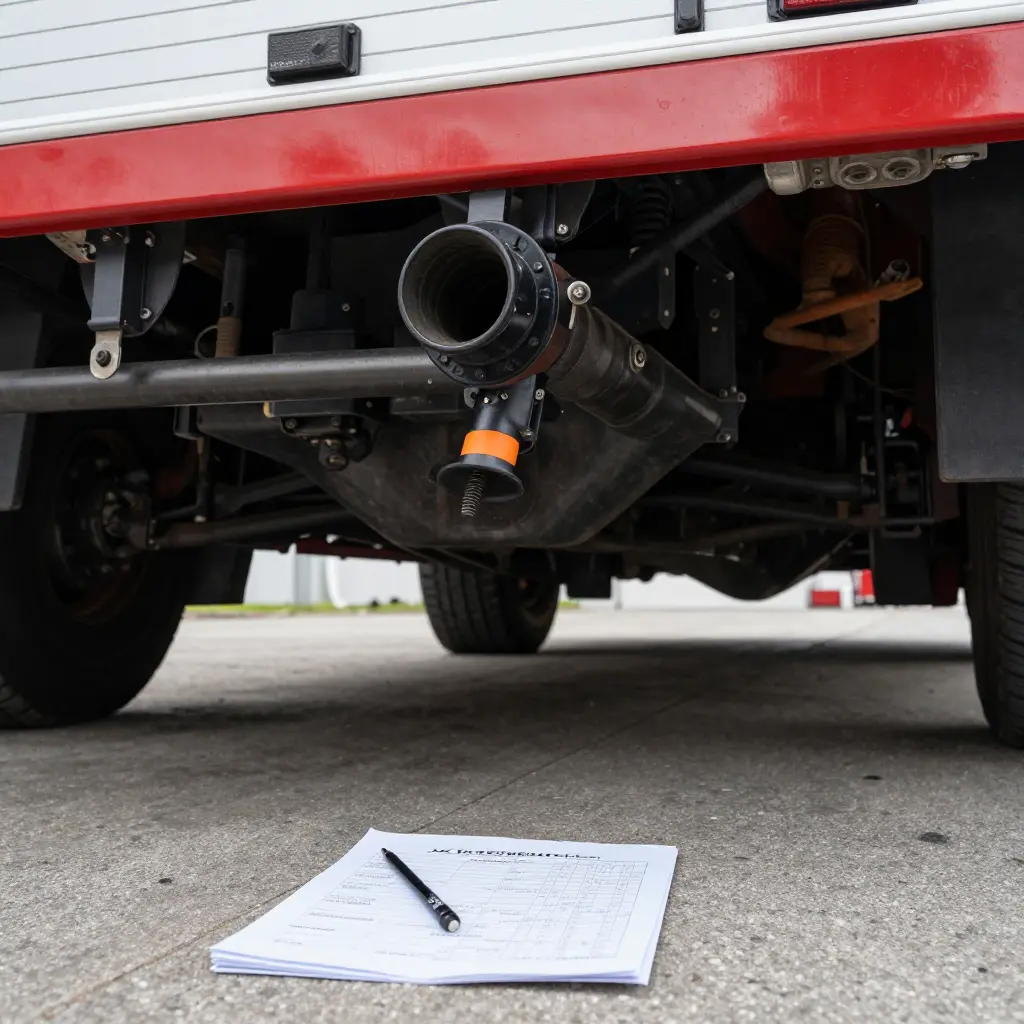
Photographic proof of chassis and underbody condition. Underbody photos need to show the frame rails, crossmembers, outrigger mounts, tank cradle and pump plumbing at close range. Corrosion in those places is expensive to correct and hard to reverse.
Neither category depends on the seller’s word. Pump figures originate with an accredited testing provider or a department’s own service log, so you can check them instead of trusting them. Underbody images can be matched against the VIN plate, requested at set angles and resolution, and read against the wear visible on the rest of the truck. A feedback score, by contrast, is produced by a self-selected group of past buyers and says nothing measurable about mechanical condition.
For a business buyer this is money, not sentiment, because the purchase is capital equipment. How much revenue disappears per week of downtime, what residual value survives a resale, whether the unit can pass the inspection standard its operator is held to. A compliant pump and a sound frame protect all three. Feedback stars protect none of them.
| What the listing shows | What actually sets the risk |
|---|---|
| Seller ratings and badge level | Dated pump test data at rated flow |
| Free-text condition notes | Underbody rust photos at close range |
| “Runs great” descriptions | Chassis, cradle and plumbing integrity |
| Buyer feedback count | Inspection and compliance status |
Buyers who work from the right-hand column, and treat ratings as a tiebreaker, tend to price risk about right. Buyers who shop by badge level usually find the gap after delivery. Fleets that later scale into municipal-grade fleet inventory tend to apply the same documentation-first standard, because a truck idled in the shop breaks a schedule somebody else depends on.
Why seller ratings are a weak risk proxy
Ratings measure the transaction, not the apparatus. A feedback score records whether a buyer felt the deal was handled well: shipping, communication, invoicing, whether the item matched the photos. It does not tell you what the main pump does under load, what shape the valves are in, or whether an aerial is still structurally sound. A seller can be excellent at closing deals and still have no idea how the truck performs.
The sample is usually one. Most used fire trucks on eBay sell once, to one buyer. A parts vendor with thousands of orders has an average worth reading; a heavy-apparatus seller may collect a handful of ratings over several years, often from buyers of entirely different equipment. That is an anecdote with a percentage sign on it.
Feedback arrives before the failures do. eBay feedback locks in not long after delivery. A pump seal starts weeping, a relief valve drifts out of calibration, rust comes through a floor pan after the first wet season, and none of it has anywhere to go. The seller’s record freezes at the moment of maximum optimism.
Accounts and vehicles are hard to tie together. Heavy apparatus often trades through infrequent or rotating accounts, and feedback is not linked to a VIN or a unit number. You cannot audit a rating, and you cannot confirm it refers to the truck in front of you.
A pump test record is different, because it carries its own evidence. It is dated, signed, and states pressure and flow figures you can re-verify on site. A set of underbody photos shows frame rails, crossmembers and cab corners clearly enough to be checked. Both belong to one vehicle, and both can be challenged by someone other than the seller.
Seller Ratings Answer a Question You Did Not Ask
Every used fire truck listing on eBay shows the seller’s feedback score in green, near the top, and it is the first thing most buyers look at. Buyers who have done this before slow down at that point. The score describes how a seller handles a transaction: shipping, messages, invoices, whether the item matched the photos. It says nothing about whether the midship pump still delivers its rated flow, whether the frame rails are sound, or what “recently serviced” actually covered.
Two sellers at 99.6% and 96.4% can be listing the same model with wildly different amounts of life left in it. What separates a solid purchase from a $40,000 surprise is the paperwork behind the listing: the pump test sheet, the underside photos, the service file. Experienced buyers use ratings to decide who is worth a phone call and use evidence to decide what to pay. The same discipline applies when you benchmark fire apparatus against other municipal vehicles sold with full documentation.
Any claim in a listing sits somewhere between “provable in an afternoon” and “taken entirely on faith.” The table below ranks the signals you will actually meet, so you know which ones deserve to move the number on your offer sheet.
Read the column as a hierarchy. A High-weight signal can carry a purchase decision on its own, Medium signals adjust what you offer, and Low signals only raise questions.
How Much Each Signal Should Move Your Decision
| Signal | What It Actually Proves | Verifiable By Buyer? | Recommended Weight in Decision |
|---|---|---|---|
| Pump test record (flow rate, pressure, test date) | Certified performance of the pump on a specific day, under measured conditions | Yes, if dated and tied to the truck’s VIN or unit number | High |
| Underbody and chassis rust photos | Structural condition of frame rails, crossmembers and tank cradle, if shot honestly | Partly; dated close-ups and video walkarounds help, on-site inspection is better | High |
| Maintenance and service logs | Whether routine work happened, and how gaps or repeat repairs reveal neglect | Yes, when matched to shop invoices and hour readings | High |
| Hours and mileage readings | Cumulative wear on engine, drivetrain and pump, plus idle-heavy duty cycles | Yes, by comparing dash, ECM and service records for consistency | Medium |
| Seller feedback score | Transaction behaviour and communication, not equipment condition or honesty about defects | Yes, but review comments for equipment complaints, not just the percentage | Low |
| Listing description claims | Seller’s marketing language, useful mainly as a list of questions to verify | No, until each claim is backed by a document or inspection | Low |
| Third-party inspection report | Independent assessment of mechanical, structural and pump condition by a qualified inspector | Yes, when you commission or verify the report yourself | High |
Putting the Ranking to Work
Weights matter most when the signals disagree. A pump test showing rated flow at 150 psi plus clean underside photos can outweigh a thin service file, because both High signals describe the truck as it stands today. A strong test record on perforated frame rails is still a walk-away, however polished the listing reads or however high the score climbs. If a High-weight signal cannot be verified before you pay, book a third-party inspection or reduce your offer to cover the worst realistic repair. Ratings tell you who is worth a phone call. Documents tell you what the truck is worth.
Reading Pump Test Records Correctly
A pump test record is the closest thing a buyer gets to an independent health check on a fire apparatus, and it deserves more scrutiny than the star rating. The photos show paint, chrome and polished aluminum; the test record shows whether the water delivery system still performs anywhere near its nameplate rating. Read it as a sequence of facts, not as a sales brochure.
A legitimate record is dated, and that date should fall within about twelve months of the listing. A recent test is a snapshot; a five-year-old test is history.
The record pairs the rating stamped on the pump plate with the measured flow at one or more specified pressures. A 1,000 gpm pump, for instance, should show 1,000 gpm at 150 psi, 700 gpm at 200 psi and 500 gpm at 250 psi. Both the nameplate rating and the measured numbers belong on the sheet.
Suction conditions belong there too: draft height in feet, hose size, and whether the test drew from a hydrant or a static source. The rating assumes a 10-foot lift, so a test run at 15 feet tells you more about the impeller than a shallow one does.
Primer performance should appear as vacuum achieved and time to prime. Slow priming usually means worn seals or a weak primer pump.
Duration counts as well. A standards-based test runs long enough to expose heat soak and pressure drift, not thirty seconds of splash.
Finally, the testing party should be traceable: an in-house maintenance shop, an independent service company, or a certified third-party tester.
Three failures turn up again and again in the records sellers supply:
- No test date, or a date that cannot be matched to the listing timeline.
- Flow figures with no measured values, no test pressure and no lift conditions — a claim, not a test.
- Measured output far below rated output, quietly presented as normal.
Each of those gaps says something about maintenance history. Missing dates usually mean record-keeping that never existed, which tends to mirror skipped service intervals. Numbers well under rated output point to a worn impeller, a scored wear ring or failing mechanical seals: parts that erode slowly and then fail fast under real fireground demand.
The cost translation is direct. A rebuild means impeller and wear ring replacement, seal kit, valve and gauge work, plus labour, and the truck sits in a shop instead of answering calls. Downtime removes a unit from service while you rent coverage or stretch the rest of the fleet. Lower output cuts capability as well, since a pumper rated at 1,000 gpm that delivers 700 gpm cannot support the same attack lines or relay operations, which limits the contracts and mutual-aid calls you can accept. Buyers comparing municipal fleet vehicles new versus used should price that gap into the offer before the auction closes.
Pump Test Records and Underbody Photos: Where the Paper Trail Breaks Down
The documentation gaps in used fire truck listings are not random. Sellers who skip a pump test record almost always skip the underbody gallery, and the longest descriptions tend to come with the thinnest evidence. A five-star seller rating says the transaction went smoothly. It says nothing about whether the pump still moves its rated volume at 150 psi.
That is why we score listings on documentation first and reputation second. The chart below shows how often each item was missing or failed outright, as a share of the listings we examined.
A dated pump test is the document buyers ask for first, and it is missing from nearly three listings in four.
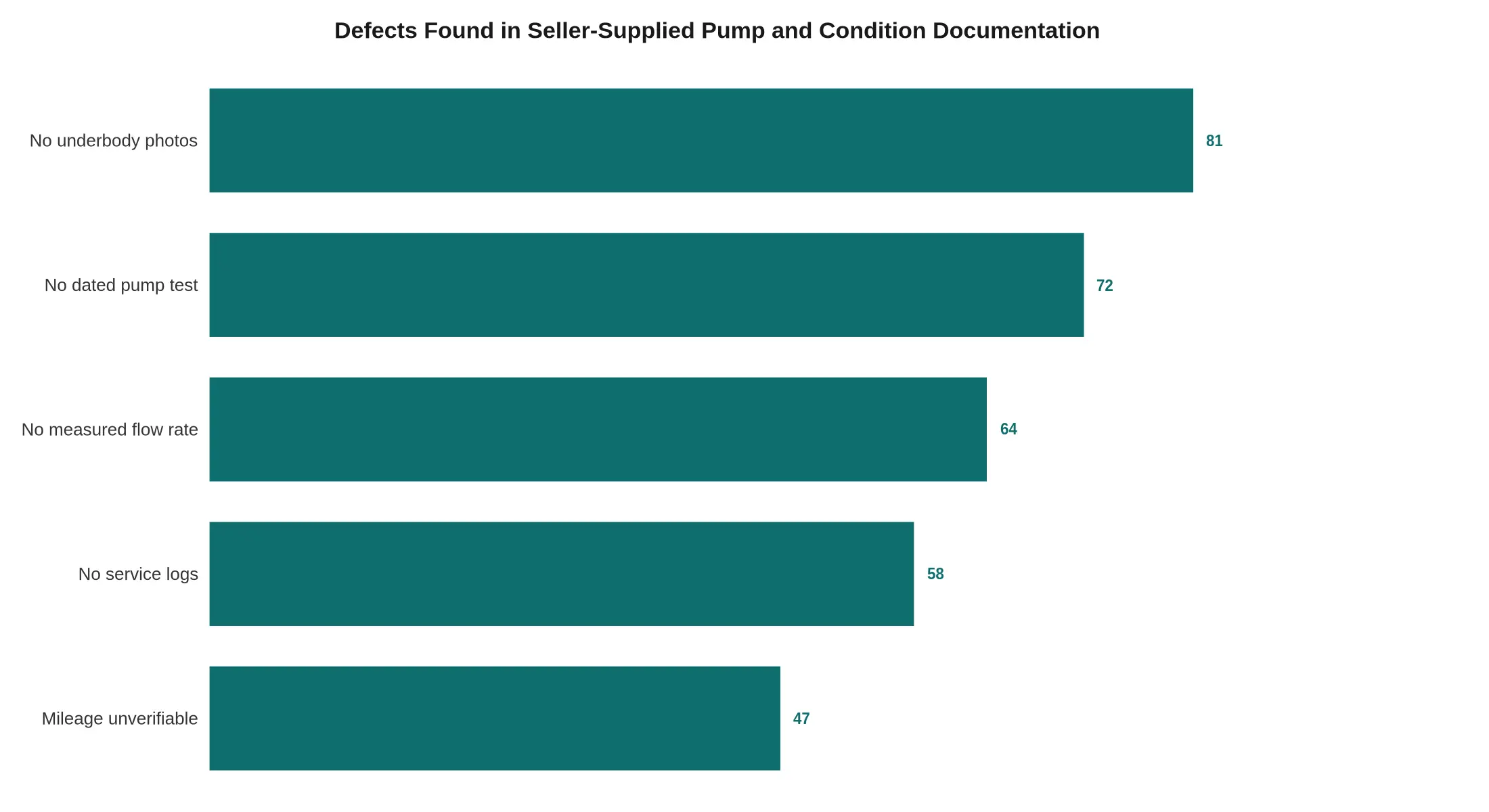
The two cheapest documents to produce, a dated pump test sheet and a set of underbody photos, are the ones sellers omit most often. Until a seller hands over both, along with clear shots of the frame rails, crossmembers and tank cradle, treat the asking price as an opening bid on an unknown rather than a valuation.
What the five bars actually tell you
- No underbody photos (81%) is the most common gap and the most expensive one to find late. Rust on a fire truck hides in the frame rails behind the rear axle, under the tank cradle and along the crossmembers, none of which appear in the three-quarter front shot that anchors most listings.
- No dated pump test (72%) costs buyers the most money. A pump test without a date, a testing body and recorded pressure and flow figures is decoration.
- No measured flow rate (64%) leaves you unable to confirm the apparatus will hit its rated capacity, often the reason the truck is being sold.
- No service logs (58%) breaks the maintenance chain, so you cannot tell whether the annual pump service happened or was quietly skipped.
- Mileage unverifiable (47%) affects roughly half of listings, and on apparatus with hour meters rather than odometers it is often simply unrecorded.
How to read a listing in five minutes
Ask for the pump test sheet first, then the underbody photos, then the hour-meter reading. A seller who supplies all three within a day keeps records, which is a stronger signal than any feedback score. If the answers come back as photographs of a phone screen, or as reassurance instead of documents, price the truck as though the pump needs a rebuild and the frame needs work, because that is the scenario you are buying.
Before you negotiate on faith, it helps to know what a properly specified unit looks like on paper. Buyers comparing documented municipal apparatus against open-market listings can use the municipal apparatus range as a reference point for specifications and record-keeping standards.
Reading the Underside: How to Judge Underbody Rust Photos
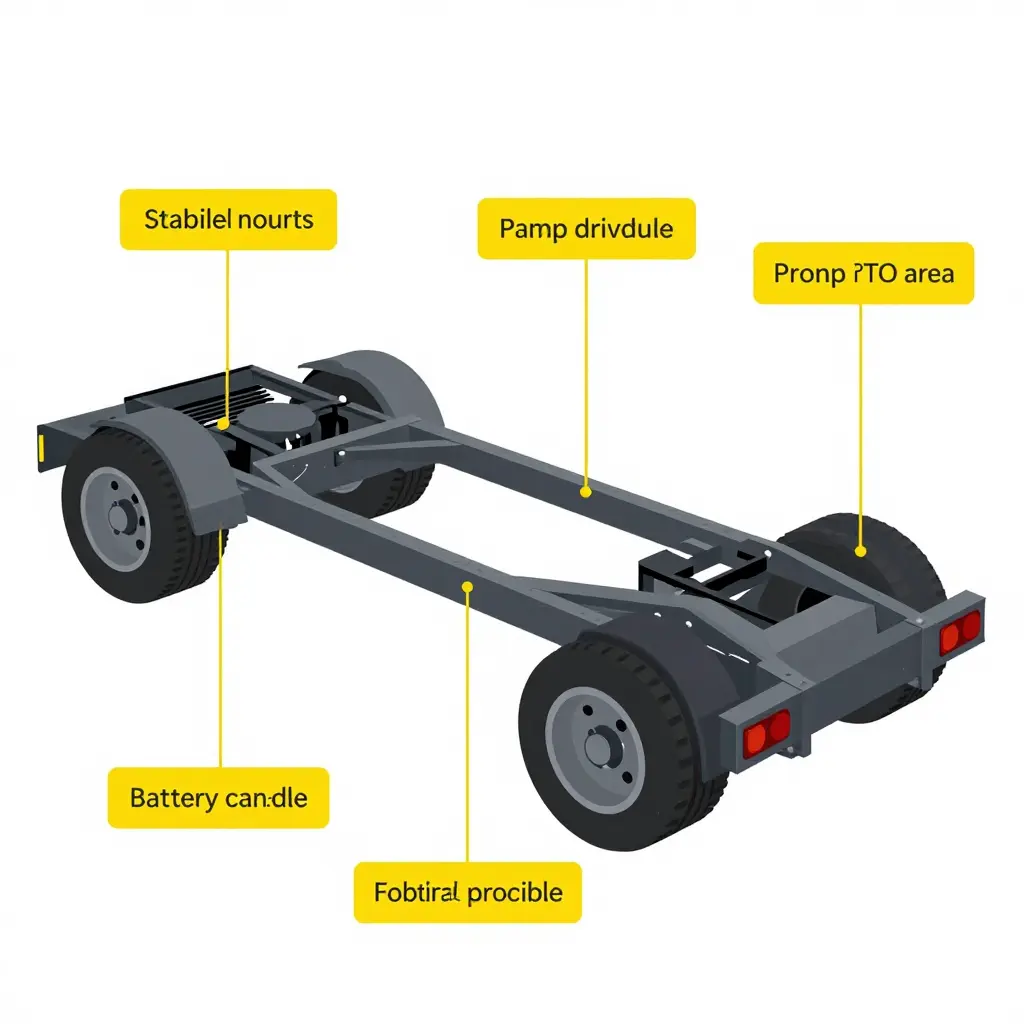
What the camera actually catches. Good underbody rust photos are not one shot of the frame. They walk through the zones that carry load and water. Start at the frame rails and crossmembers, where road spray collects along the lower flange and around every rivet and bolted joint. Then the outrigger and stabiliser mounts, because a truck that has spent twenty years dropping jacks on wet ground hides its worst corrosion exactly there. The pump driveline and PTO area comes next: a leaking pump seal washes salt off and keeps that pocket permanently damp. Finish with the spring hangers, the battery and tank cradle, and the rear body sub-frame, where mud and road grit accumulate.
Surface oxidation, scale, pitting, perforation. These are four different problems, and sellers like to blur them. Surface oxidation is a thin, powdery film that wire-brushes off and costs you a weekend. Scale is flaking layered rust that has already taken metal thickness and is lifting paint from beneath. Pitting is localised cratering that looks small and concentrates stress. Perforation is a hole you can see light through, and that is where the economics change. A perforated frame rail means plate, weld and certification. Perforation under a load-bearing mount such as a spring hanger or stabiliser bracket means the mounting geometry itself is compromised, so the repair becomes engineering work plus downtime plus resale disclosure. On a working truck, the gap between a few hundred and several thousand dollars is the whole margin.
When a photo is simply unusable. Treat those images as missing evidence, not as proof of condition. A shaded shot taken in a dark bay hides the shadows rust lives in, and a distance shot from standing height shows you nothing. Wet surfaces reflect light and make fresh rust look like clean paint; mud coating is often applied before the photo rather than left over from the last job. Tight cropping that shows one rail segment without its neighbours prevents you from judging how far the corrosion runs, and a shot with no reference scale (no tape measure, no boot, no hand) leaves you unable to tell a two-inch blister from a two-foot section. Ask for dry, lit, close, wide-angle and scaled images of each zone before you bid.
The Request List to Send Before You Bid
Before you bid on used fire trucks on eBay, write your questions down and send the seller one clean, numbered request: the same discipline we apply when sourcing municipal fleet vehicles. Vague reassurance is not evidence, and a seller who can produce paper quickly has usually maintained the apparatus.
- Dated pump test sheet showing measured flow and pressure at rated capacity, signed by the technician.
- Daylight photos of every underbody zone we listed earlier, one wide shot and one close-up each.
- Valve and nozzle operation record listing each discharge, handle travel, observed leaks, and the last exercise date.
- Clear photo of the hours meter beside the VIN plate, same frame, no cropping.
- Service and repair invoices for the last five years, itemized with part numbers and dates.
- Corrosion treatment history: dates, products used, applicator name, and before-and-after photos of treated panels.
- Title and lien confirmation, front and back, plus current registration and the seller’s ID matching the title.
- An unedited cold-start video, thirty seconds or longer, from key-in through idle and a full gauge sweep.
- Recent NFPA 1911 pump service test results, if the department runs them, with the testing contractor named.
- Written disclosure of any active rust warranty claims, recalls, or open repair orders on the apparatus.
Every request the seller leaves unfulfilled is itself a data point. A slow or partial answer tells you as much about the truck as any document that does arrive.
Turning Evidence Into a Negotiating Position
Evidence only changes an outcome when it changes a number. Convert pump test records, underbody photos and service files into cost lines before you name a price.
1. Quantify the three big unknowns
Pump refurbishment scope. Price it as parts plus labour plus retest: impeller, wear rings, mechanical seals, bearings, relief valve, hose set, and a witnessed flow and pressure test to the required standard. A pump that “ran fine” in a two-minute video is a repair line item.
Chassis corrosion repair. Measure remaining plate thickness on rails, crossmembers, outriggers and the tank cradle, then cost it per panel for blast, cut-out, welded insert and re-coat. Perforation at a stressed point is structural work for a certified welder, not cosmetic work.
Deferred maintenance. Tyres, brakes, batteries, hydraulic hoses, overdue service intervals and missing documentation all carry a price. Missing records are a cost in themselves, because you have to repeat the work before you can trust the unit.
2. Build an adjusted total cost
Add transport, commissioning, downtime and any registration compliance to the hammer price and the three repair lines above.
| Line item | Example amount (USD) |
|---|---|
| Hammer price | 42,000 |
| Transport and recovery | 2,500 |
| Pump refurbishment | 9,800 |
| Chassis corrosion repair | 6,400 |
| Deferred maintenance | 3,200 |
| Downtime and commissioning | 2,000 |
| Adjusted total cost | 65,900 |
That adjusted figure is the only fair comparison against a new build or a second unit of a model you already run.
3. Compare against alternatives, not against the listing
Set the adjusted total next to a new-build quote and next to the cost of standardising on one chassis across the fleet. Buyers weighing replacement can review CRRC’s municipal equipment range as a benchmark, particularly for long-term parts support, which is where a one-off second-hand purchase usually gets expensive. If your duty cycle is street washing or similar work, purpose-built road-cleaning vehicles give a cleaner specification baseline for fleet standardisation.
4. Decide: reprice, inspect, or walk away
- Reprice when the defects are measurable, repairable and fully visible. Set the discount at repair cost plus a risk margin plus downtime.
- Require an independent inspection when corrosion is visible but unmeasured, pump test records are missing or inconsistent, or the seller limits access. If the inspection fee is small next to the price gap, it is the cheapest line in the deal.
- Abandon the unit when rails are perforated at stressed points, the tank cradle is separating, the pump is seized with no verifiable test history, or the repair cost approaches the price of a serviceable replacement.
Name the number, state the assumptions, and give the seller a deadline. A documented position is what converts evidence into leverage.
Where Risk Exposure Concentrates in a Used Fire Truck Purchase
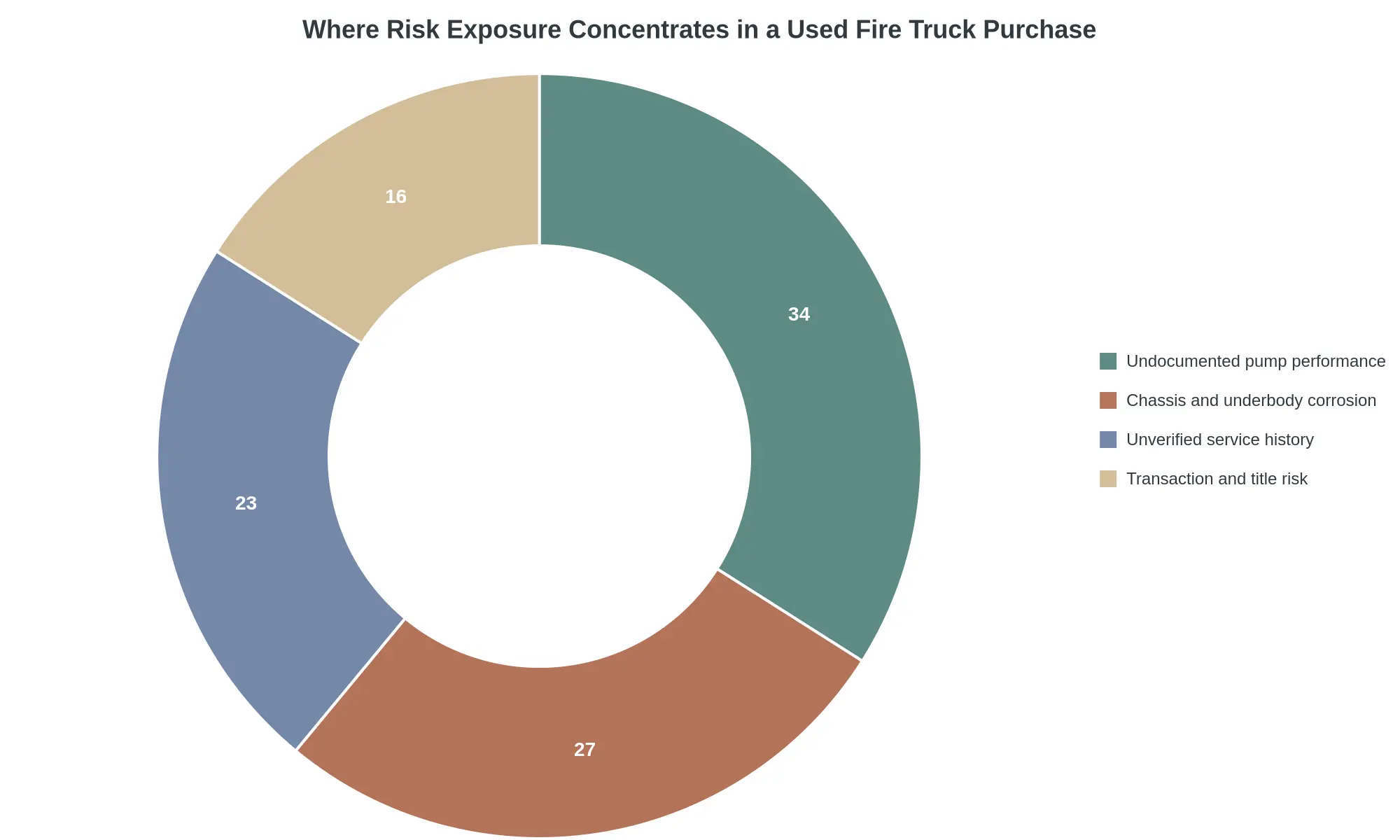
Documented pump test records and dated underbody rust photos close the two heaviest segments on that chart: undocumented pump performance and chassis and underbody corrosion.
What does a complete pump test record include?
Test date, tester credentials, rated gpm at pressure, vacuum readings and any repair notes. A good record also puts the annual results on one sheet, so you can follow performance year over year before you bid.
Can underbody rust be judged from listing photos alone?
Not reliably. Listing photos never replace a physical look at the frame rails and crossmembers. Ask for daylight underbody shots from several angles, then confirm the worst spots yourself with a magnet and an ice pick before you pay.
Is a high seller rating a reliable indicator of apparatus condition?
No. A high rating measures transaction behaviour, not mechanical fitness. Deferred maintenance, a cracked pump casing and hidden corrosion will not show up in it, which is why used fire trucks on eBay should be weighed on documents and inspection instead of feedback stars.
What should a buyer do if the seller refuses to provide documentation?
Walk away. A seller who withholds pump test records or service history is selling an undocumented unit: price it that way, or have a third-party inspector verify the apparatus before any deposit leaves your account.
How much should missing records reduce the offer price?
A 10 to 20 percent reduction is a fair starting point, and more on older municipal apparatus. Missing paperwork raises your maintenance exposure, so budget a full pump rebuild or frame repair and deduct that estimate plus inspection costs from the asking price.
The Closing Case for Evidence Over Reputation
The asymmetry is simple. Pump test records and underbody photos can be audited by a third party, compared line by line across several candidate trucks, and read as a forecast of what the vehicle will cost to own. Seller ratings cannot do any of those three things, because they describe transactions and people rather than pumps, frames and steel. So the sequence runs: request the documents, read the measurements, check the photo coverage, price the gaps the evidence exposes, and then decide. It works the same way every time, which is what makes it useful when you are screening municipal vehicle inventory where listings look broadly alike. It also turns a subjective negotiation into arithmetic, since every missing test sheet and unphotographed frame rail becomes a number instead of an argument. Treat documents and photographs as the entry requirement for a bid rather than a courtesy requested after the price is agreed, and corrosion and pump wear get caught before purchase instead of after delivery.