

Defining “1999 Trucks for Sale” in the Secondary Commercial-Vehicle Market
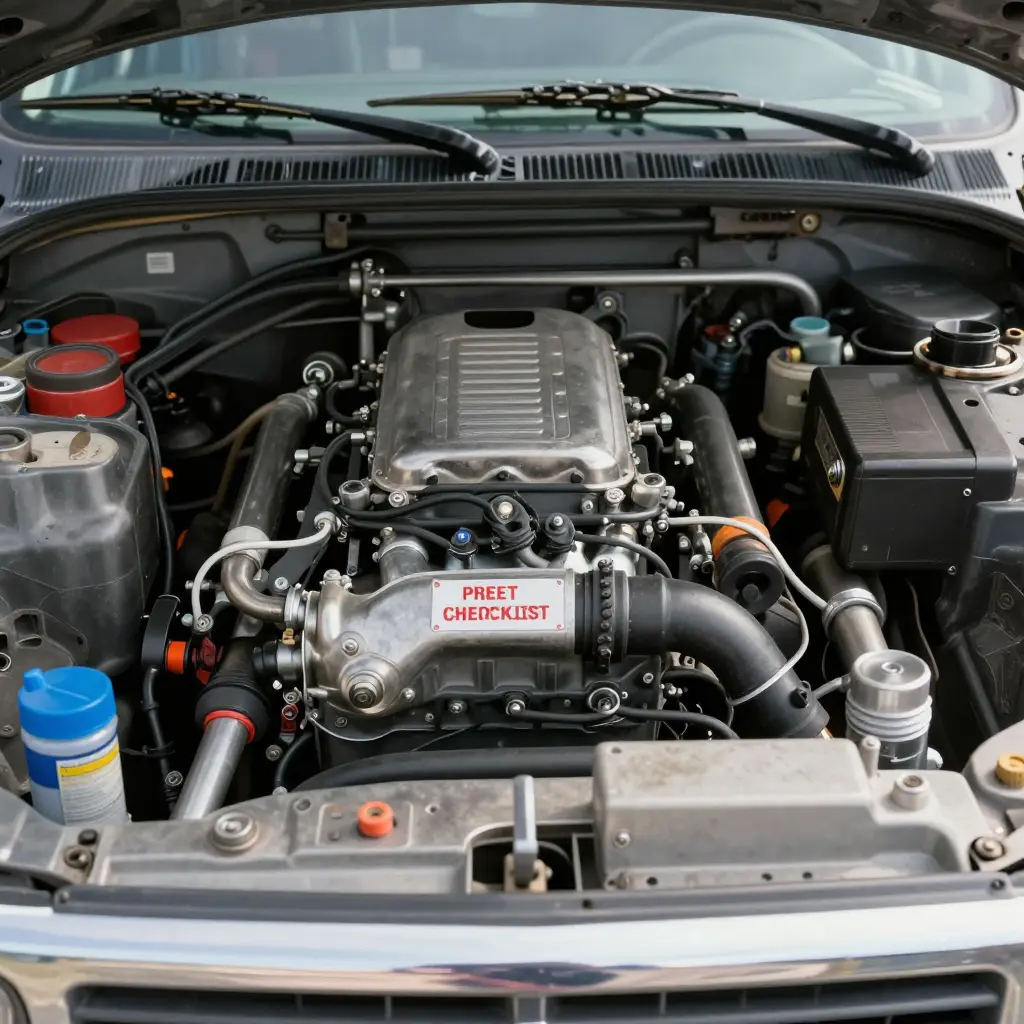
What separates a 1999 truck from a 2006 one is usually mechanical. On the engines this article covers there is no control unit, no sensor on the injection system, and no software layer between the throttle pedal and the fuel: a pump driven off the engine meters diesel through a rack or a metering sleeve, and its calibration is set in metal. A 1999 model year sat at a useful boundary. European trucks of that build were still certified to Euro II, and mechanical pumps were standard fitment on much of the volume; North American on-highway diesels had largely gone electronic by then, so the mechanical units left in the used market tend to be European, vocational or export-spec machines.
That difference shows up in the price. Buyers searching 1999 trucks for sale are not shopping for fleet replacements. They are buying a machine whose uptime depends on the condition of the pump and on whether anyone still supplies it.
The original manufacturer parts channel for these units has narrowed. What remains is an aftermarket: remanufactured injection pumps, rebuilt alternators and brake components, and independent suppliers serving vehicles that still earn money. Availability, lead time and price of critical parts now carry as much weight as the purchase price, which is why operators often compare a candidate against newer stock in our used commercial truck inventory before committing capital.
Two things decide whether a 1999 unit is a sound purchase: the condition of the mechanical injection system, and the durability of the parts supply behind it. Neither shows up in a ten-minute test drive. Both can be measured, and the measurement belongs on a written pre-purchase checklist with numbers on it.
How Mechanically Governed Diesel Injection Works
A 1999-era diesel with mechanical injection uses a pump, not a computer. The pump is either an inline unit with one plunger-and-barrel assembly per cylinder, or a rotary unit where a single distributor rotor feeds each injector in firing order. Fuel delivery is set entirely by pump calibration: the throttle linkage moves a control rack or metering sleeve, and that physical position decides how much fuel each plunger displaces per stroke. The governor, driven by pump speed, is the limiter; flyweights move against spring pressure and cut fuel as rpm rises, so the engine holds a steady governed speed under load. Because the whole system is calibrated in metal, it tolerates variable fuel quality far better than common-rail equipment. The clearances inside an inline pump are comparatively generous, and grit that would score the fine-tolerance control valves and nozzle orifices of a high-pressure common-rail system tends to pass through instead.
What a Buyer Should Physically Verify
Inspection here is hands and eyes, not a scan tool. Work through the following before money changes hands:
- Pump seal condition – look for hardened, weeping or fuel-stained seals at the pump body and drive hub. A leaking throttle shaft seal points to internal wear.
- Governor response – blip the throttle and watch rpm rise and settle without hunting, hanging or a slow return to idle.
- Injector spray pattern – crack a line nut and the spray should form a fine, even cone with no streaming or drip; a ragged pattern means new nozzles. Keep hands and eyes clear of the spray, because diesel at injection pressure will penetrate skin.
- Fuel rack free play – check the rack or linkage for binding or slack. Any free play turns straight into erratic delivery.
- Fuel weeping at delivery valves – dampness at the delivery valve holders or high-pressure line nuts is a sealing fault that gets worse under load.
Fuel weeping at the delivery valves, or a governor that will not settle to a stable idle, means a pump overhaul rather than an adjustment. On a truck you have not bought yet, that is a reason to walk away.
These checks replace electronic diagnostics because there is nothing electronic to interrogate. With no ECU holding fault codes or freeze-frame data, the pump seals, governor behaviour and injector patterns are the entire diagnostic record, and that is also why parts support for these engines stays workable: rebuild kits, nozzles and exchange pumps are catalogued commodity items rather than proprietary modules. Buyers sourcing used commercial trucks should treat a clean, dry, correctly governed pump as the most valuable line on the inspection sheet.
Quick Reference: Mechanical vs. Electronic Diagnostics
| Check | Mechanical System | Electronic System |
|---|---|---|
| Primary tool | Hand tools, visual, feel | Scan tool, software |
| Fault storage | None – physical symptoms only | ECU codes, freeze frame |
| Fuel delivery control | Pump calibration, rack position | ECM pulse width mapping |
| Governor function | Flyweight and spring assembly | Software torque curve |
| Typical repair | Seal kit, nozzle, pump exchange | Sensor or module replacement |
Reading the Mechanical Fuel Delivery Path
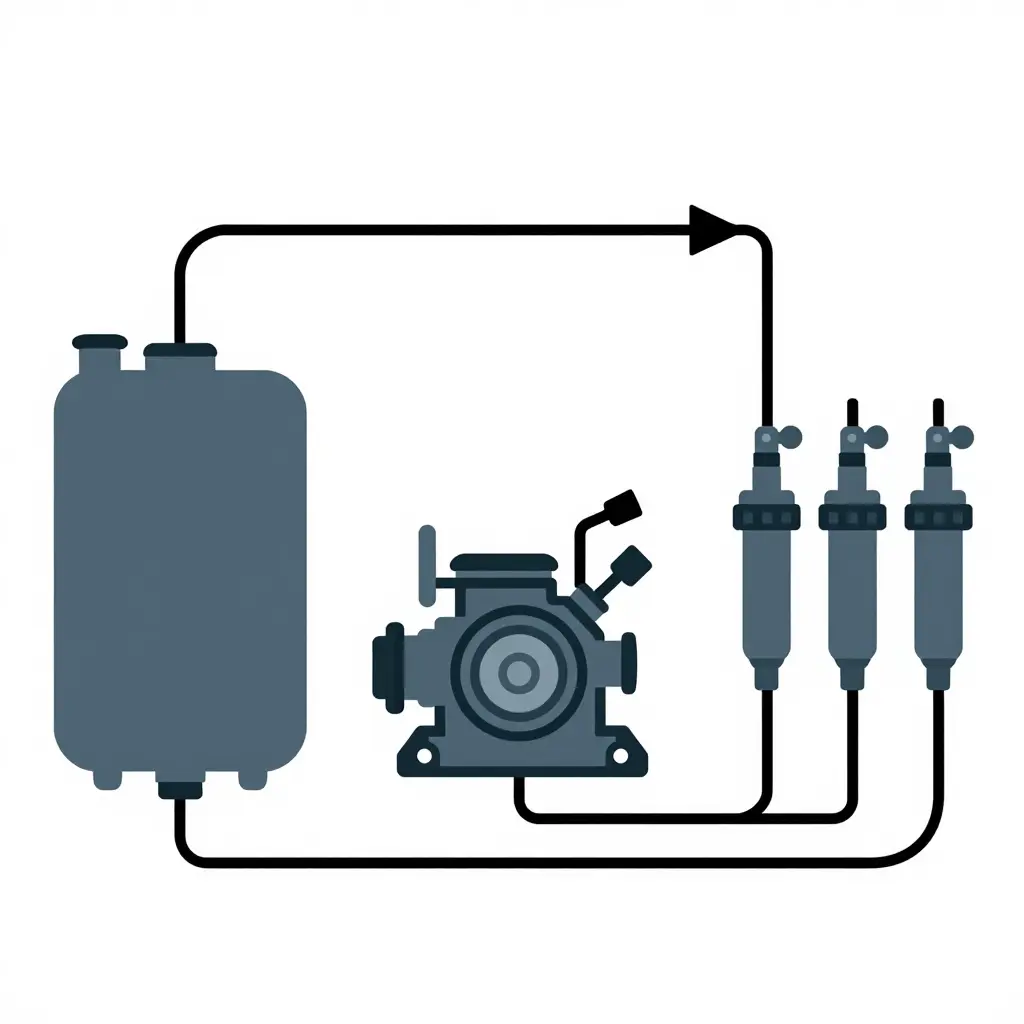
Fuel follows a fixed route, and every stop on that route can be checked by hand. Follow the diagram from left to right and you have walked most of the fuel system.
- Tank and pickup: rust, sediment, and a sender that still reads accurately.
- Water separator and filter: fresh filters, clean bowls, no sign of water carry-over.
- Lift pump: steady supply pressure. A weak lift pump usually announces itself as hard starting.
- Mechanical injection pump: the expensive item. External leaks, tampering, unstable idle.
- High-pressure lines and injectors: chafing, weeping fittings, and even exhaust temperatures across cylinders.
- Return line: a restricted return causes rough running and hard hot starts, so trace it back to the tank.
Print the diagram for whoever inspects the truck, so the same six points get checked on every candidate. If you are comparing work-ready chassis while you do it, our dump truck inventory is a reasonable place to benchmark condition and spec.
The Ordered Pre-Purchase Checklist That Protects Your Money
Twenty-seven years of service means the injection pump, the frame and the parts supply chain each need their own look, on the same visit, in the same order. A truck that runs well and cannot be repaired economically is a liability. Work through the steps below and write down what you find; written numbers are what make a negotiation credible.
- Verify the VIN and model-year plate. Match the chassis stamp, door-jamb plate and title, so the truck you inspect is the truck you register and insure.
- Cold-start the engine and watch the smoke. Arrive before the engine is warm, then note the colour, white, blue, grey or black, at idle and under load.
- Record the injection pump part number and calibration tag. Photograph the tag and casting numbers. That number decides which rebuild kit or exchange unit you can buy, and how long the next breakdown lasts.
- Pressure-test the cooling system. A fifteen-minute hold finds head-gasket, liner and radiator problems that a warm idle in the yard never will.
- Inspect frame rails and crossmembers for cracks. Check the web and flange near the suspension hangers and behind the cab, where stress risers hide under grease.
- Measure brake drum and lining wear. Take readings rather than relying on feel, then compare them with the legal and practical limits.
- Check cab mounts and floor pan corrosion. Lift the floor mat and probe the mounts. Hidden rot is what turns a working truck into a restoration project.
- Confirm the wear parts are still catalogued by at least two suppliers. Test the fast movers: filters, brake hardware, pump seals. A single-source part is a standing risk.
- Price the first year of consumables. Filters, fluids, belts, hoses and tyres, added up so the real cost of ownership sits next to the purchase price. Compare the total with the work-ready cargo truck listings you are already looking at.
Then score every candidate against the same notes. A truck that clears the engine, structural and parts-supply steps is worth paying more for; one that fails any of them is worth walking away from, however clean the paint looks.
Most sellers cannot tell you which injection system the engine has, and some will not know. The comparison below is the one that decides what you are buying.
| Criterion | Mechanical Injection (1999-era) | Electronic Control (later model years) | What It Means at Purchase |
|---|---|---|---|
| Diagnostic method | Road test, smoke and feel | Scan tool codes and live data | Budget for scan tool access upfront |
| Tolerance to fuel quality | More forgiving of dirty, variable diesel | Sensitive to water and contamination | Invest in clean fuel and filtration |
| Injection pump serviceability | Bench rebuild by local diesel specialist | Pump and electronics matched as a pair | Confirm a specialist within towing distance |
| Spare parts availability | Generic parts stocked by many suppliers | Model-specific sensors, thin aftermarket stock | Check sensor part numbers before committing |
| Rebuild and replacement cost | Lower rebuild cost, simple bench work | Higher cost, pump plus electronics | Price a full rebuild into your offer |
| Skill required of the workshop | Basic diesel skills, hand tools suffice | Needs diagnostic training and software | Ask who serviced the truck previously |
| Downtime risk if a control unit fails | No engine control unit to fail | ECU failure can strand the truck | Keep a spare ECU or written plan |
A 1999 mechanical truck costs less per repair but asks more of the driver, who has to notice a change in sound or pulling power before it becomes a breakdown. A later electronic unit starts easier and runs cleaner, and ties your uptime to a scan tool and a control unit that may be hard to source. Pick the column your workshop can actually support.
Parts Supply and Interchangeability
Parts supply decides whether a 1999 truck stays a working asset or becomes a yard ornament, so it belongs on the checklist before price and paint. Many wear items are still made by independent manufacturers, which keeps everyday ownership affordable: brake chambers, slack adjusters, wheel seals, air dryers, belts, hoses, filters, U-joints, leaf springs, clutch kits, and starters or alternators, frequently as remanufactured units. Mechanical injection helps here, since inline pumps and injectors can be rebuilt rather than replaced, though cores are getting scarcer and rebuild queues longer. Other items are realistically used or refurbished only: cab interior trim, sheet metal, model-specific brackets, frame crossmembers, glass for low-volume cabs, and some engine control hardware. When you shortlist 1999 trucks for sale, confirm the engine family and axle ratings first, because those two choices set the size of your parts pool.
Before you commit, verify that a part number is genuinely shared across models and years. Pull the OEM catalogue listing, check for serial number breaks, cross-reference supplier interchange tables, and compare casting numbers and physical dimensions on the old part instead of trusting a description. Sort what you buy into quality tiers as well: original-equipment parts from a dealer or OEM-spec supplier, premium aftermarket brands with documented material specs, and economy lines that often carry thinner friction material and lower temperature ratings. For any wear part, confirm at least two suppliers who physically stock it today, because a single-source item on backorder idles the truck and throws the maintenance schedule out.
Hold a small stock of high-turnover items, sized as expected annual use divided by twelve, multiplied by supplier lead time in months, plus 25 to 50 per cent safety stock for critical parts. Two filters a month against a three-month lead time gives six on the shelf, or seven to nine with the buffer added. Two independent suppliers confirming stock is the condition for buying the truck; that shelf buffer is the condition for running it.
Where the Parts Clock Actually Runs Fastest
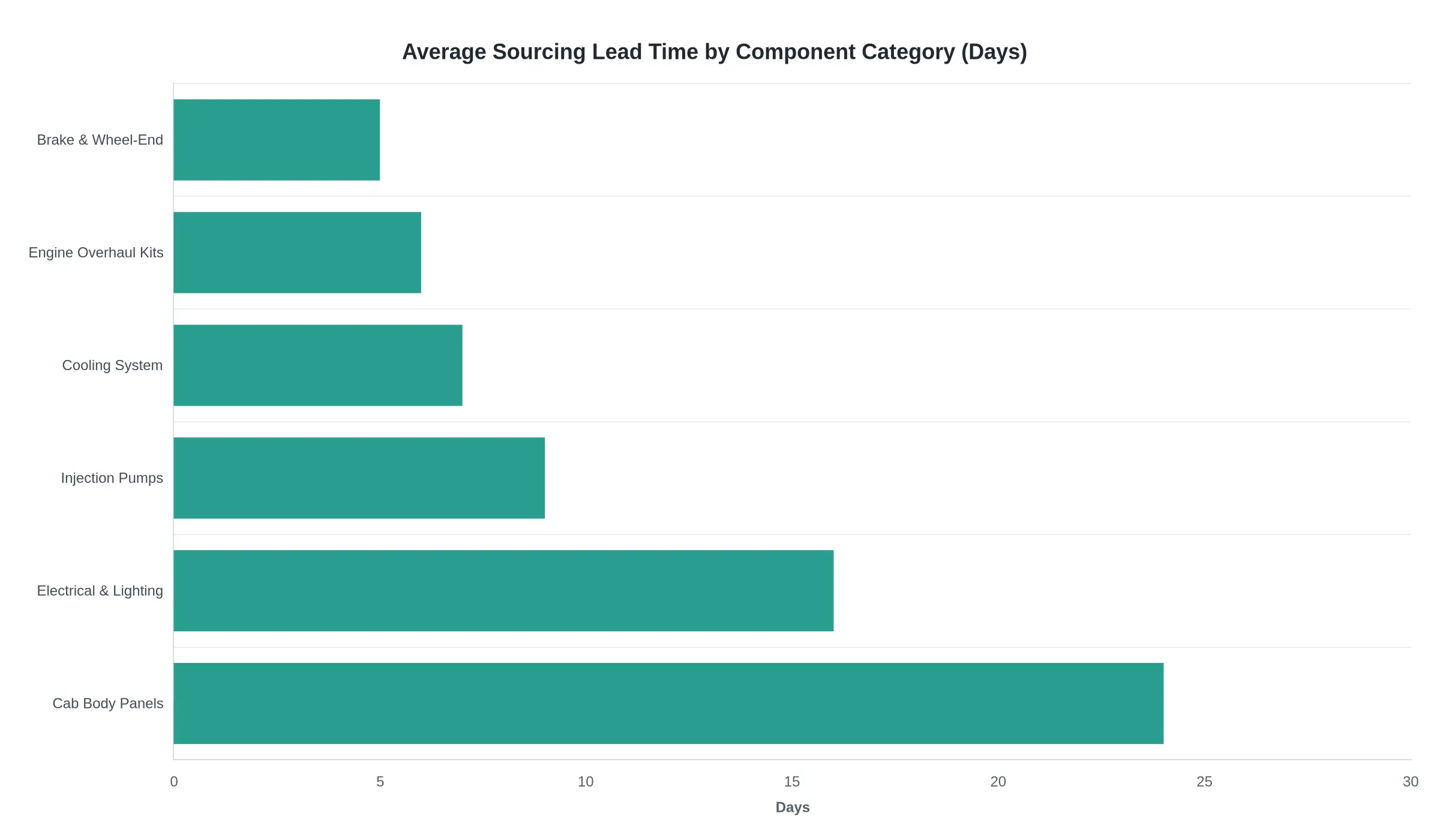
The question that matters before you commit is not “does it run?” but “how long until it runs again if something breaks?” The chart below plots average sourcing lead time, in days, across six component families that decide whether an older truck keeps earning or sits in the yard.
Reading the bars
- Brake and wheel-end parts (5 days), engine overhaul kits (6), cooling system components (7) and mechanical injection pumps (9) all land inside about two weeks. These are high-volume consumables, so distributors, rebuilders and aftermarket suppliers keep them on the shelf.
- Electrical and lighting parts (16 days) and cab body panels (24 days) stretch into multiple weeks. Trim, sheet metal and model-specific harnesses are slow movers with thin inventories, and good used panels are often the only realistic source.
For a fleet buyer the conclusion is practical: a mechanically sound truck with tired bodywork is a manageable purchase, because the supply chain is deep and fast exactly where the money is. A truck with a healthy cab and a tired injection pump is a different risk altogether. If your operation runs tippers and site work, compare how a dump truck is specked before assuming the body is the expensive part.
Reserve the long-lead items, cab panels and electrical, for the pre-purchase conversation, and negotiate on what the calendar will cost as well as the invoice.
Chassis, Running Gear, and Service History
Start under the truck, not next to the paint. On used commercial trucks of this age the frame records the workload: flaking scale between web and flange, cracks around spring hangers and crossmember rivets, stretched bolt holes, and old weld repairs that were never painted. Move up to the cab, the floor pans, the rocker panels and the seam where the floor meets the firewall, where water intrusion shows up first. Then the running gear: cracked or reverse-arched leaves, perished spring bushes, leaking shocks, U-bolts that have been re-torqued too often, play at the slip yoke and universal joints, and pinion play or oil weep at the differential. Comparing candidates such as heavy-frame dump trucks, judge the rails and hangers before you judge the seats: a scuffed cab on straight rails with documented fleet maintenance is a working asset, and a spotless cab over a rusted, re-welded frame is a cosmetic truck carrying a liability.
Reading the paperwork is the second half of the inspection. Incomplete records are normal at this age, so silence proves nothing either way. Prioritise what is expensive and hard to reconstruct: mechanical injection pump and injector calibration notes, valve lash adjustments, oil sample trends, and brake or spring replacement dates. Where maintenance is documented, weigh it above cosmetic condition, and let an absent paper trail for fuel-system work push your offer down, because an uncalibrated pump looks fine on the lot and then burns fuel or fails under load. Price each defect with a real quote, add a contingency of roughly 15 to 25 per cent for what you cannot see, and keep the total on the pre-purchase checklist so the final number is a decision rather than a feeling.
Building a Total Cost of Ownership Estimate for a 1999 Truck
A total cost of ownership estimate turns every cash outflow over a fixed holding period into one comparable figure. Set the holding period first, three to five years for most operators, then model each line item separately so variable costs stay visible in the fleet budget instead of disappearing into a single annual average.
Line items to model
| Line item | Basis for the estimate | Sensitivity to parts supply |
|---|---|---|
| Purchase price | Negotiated price for comparable 1999 trucks for sale, plus auction fees, transport and pre-delivery inspection | Low |
| Immediate refurbishment | Brakes, tyres, hoses, seals, cab and body repairs, compression and injector testing | High |
| Scheduled maintenance | Oil and filter services, greasing, brake adjustment, annual inspection items | Medium |
| Unscheduled repairs | Documented workshop history plus a reserve for injection pump, injector and turbo work | Very high |
| Fuel | Measured consumption per loaded mile or tonne-kilometre on the mechanically injected engine | Low |
| Downtime | Expected downtime days multiplied by the daily contribution margin the vehicle earns | Very high |
| Fixed ownership costs | Insurance, registration, inspection fees, yard space | Low |
| Residual value | Expected sale or trade-in price at disposal, entered as a negative figure | Medium |
Benchmark the purchase price against current used dump truck units rather than one asking price, and put transport and inspection costs into the entry figure.
Refurbishment should cover what the vehicle needs on day one, not a wish list: brakes, tyres, cooling hoses, seals and any cab or body work, plus a compression and injector check, because a mechanically injected engine can hide wear until it is loaded.
Fuel is the largest running cost and the easiest to misjudge. Mechanical injection meters fuel through a pump and governor with no electronic trimming, so consumption depends on pump calibration, injector condition, gearing and driving style. Get measured litres or gallons per 100 km from the seller’s records, or from a trial run.
Downtime has to be costed rather than ignored. Multiply expected downtime days by the daily gross margin the truck generates, then add a rental replacement if the route cannot wait.
Unscheduled repairs and downtime are the two lines most exposed to parts supply. Filters, linings and belts stay widely available, but body panels, cab components, injection pumps and model-specific sensors for 1999 trucks are being discontinued or held in thin aftermarket coverage. Long lead times stretch the repair invoice and the idle days together, so keep a separate availability reserve in the fleet budget.
Residual value closes the model. What a buyer will pay at disposal depends partly on whether parts supply for the model is still workable, so review the figure annually as the estimate matures.
Total Cost of Ownership: Where the Refurbishment Budget Actually Goes
When an operator compares a 1999 truck against a newer unit, the sticker price is the weakest number in the comparison. What decides whether the purchase pays for itself is the combination: purchase price, refurbishment budget, parts pipeline, and the downtime that runs between them.
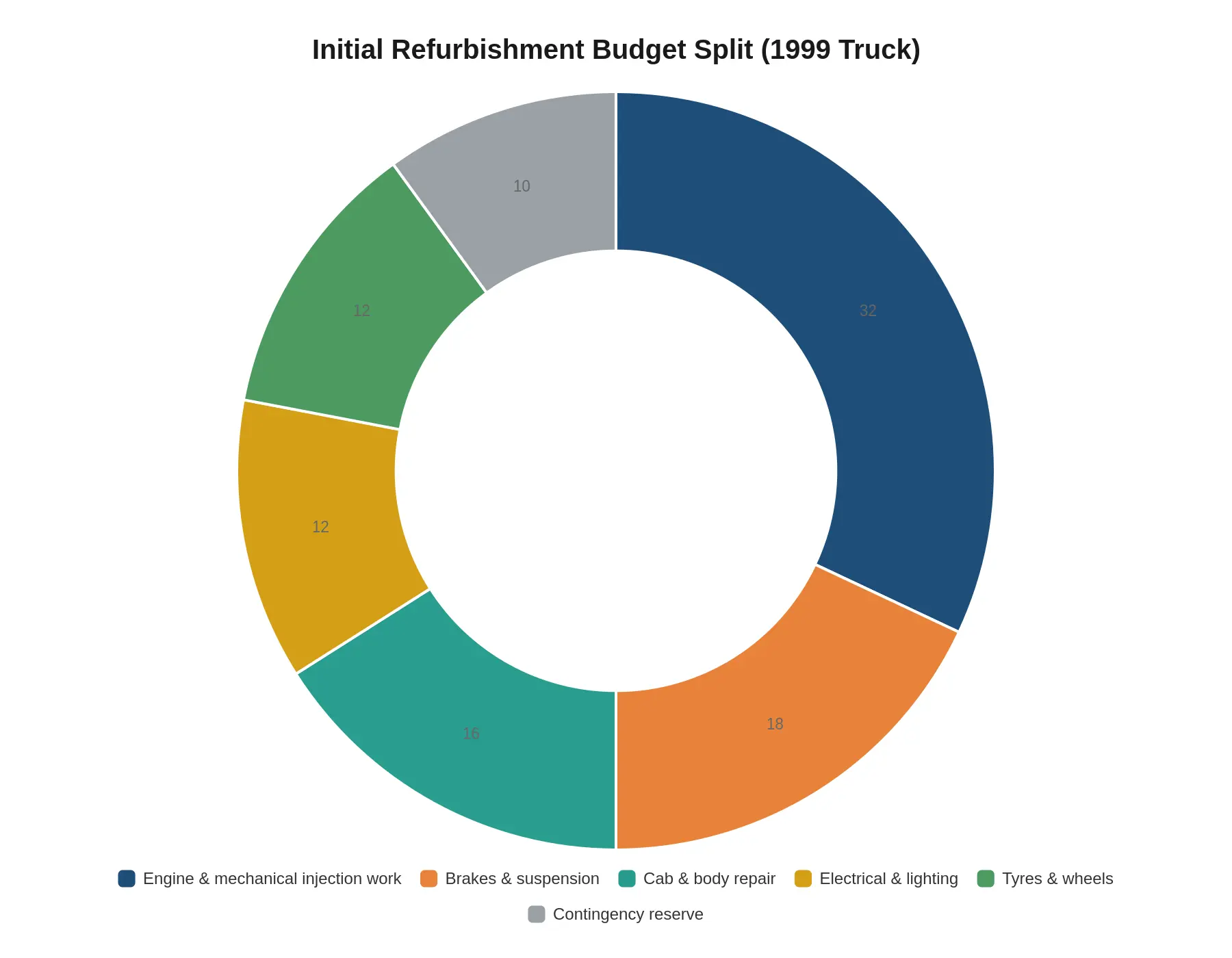
The chart below splits a representative refurbishment budget across six categories. It is a planning template, not a quote, but the shape is the useful part. Roughly half the money lands in two categories, and both sit where the truck earns.
Reading the numbers
| Budget item | Share of budget | What actually drives the cost |
|---|---|---|
| Engine and mechanical injection work | 32% | Injector and pump servicing, valve adjustment, compression testing, cooling system, seals and gaskets |
| Brakes and suspension | 18% | Drums, linings, air valve work, springs, shackle bushes, kingpins, shock absorbers |
| Cab and body repair | 16% | Rust in the floor and sills, door hardware, glass, hinges, bunk and interior trim, paint |
| Electrical and lighting | 12% | Wiring harness repairs, alternator and starter, lamp assemblies, relays, dash instruments |
| Tyres and wheels | 12% | A full set of drive and steer tyres, rim straightening, wheel studs and nuts |
| Contingency reserve | 10% | The surprises that appear once the cab is stripped and the sump is off |
Why mechanical injection gets the largest slice
A 1999 truck sits near the end of the fully mechanical fuel system, and that is the attraction. There is no high-pressure common rail to fail, no injector coding to negotiate, and no software licence between your workshop and a repair. Instead there is a pump, a set of injectors, and adjustments a competent diesel mechanic can measure and correct.
The trade is that the work is precision work. Injectors wear gradually, and a truck that starts easily but smokes under load is usually telling you the spray pattern has drifted. Pump timing that is a few degrees out costs fuel and power on every kilometre. Because these components wear together, a serious refurbishment treats them as one job: test the pump, service or replace the injectors, set the timing, and confirm the result on a dyno or on a road test under load.
For an owner-operator on a tipper or a rigid cargo body, that is where the budget earns its keep. A tired injection system does not fail dramatically; it drinks more diesel and pulls less weight for years. Fixing it early converts a daily loss nobody notices into a measurable gain, which is why the mechanical line deserves the largest allocation rather than the smallest.
Running gear is the second concentration point
Brakes and suspension take 18% and tyres and wheels another 12%, which puts 62% of the budget into mechanical and running-gear work. The reason is order of failure. Body panels can wait; a cracked spring hanger or a brake chamber that will not release cannot. On a loaded truck the running gear carries every tonne the body holds, and bushes and shock absorbers fitted in 1999 usually look acceptable right up to the moment they come off.
Owners shopping for working vehicles on established dump truck platforms find the same pattern repeatedly: the expensive items are the ones you cannot see from the kerb.
Keeping the cab and electrical spend honest
The 16% for cab and body repair is not vanity spending. Water ingress is what kills these cabs. Floor pans, sills, door bottoms and the seam under the windscreen are the usual entry points, and rust caught early is a welding job while rust caught late becomes a structural argument with your inspector. Electrical work follows the same rule: chafed harness sections and corroded earth points produce faults that read like injection problems, so a proper refurbishment cleans the earths and repairs the loom before anyone blames the pump.
The 10% contingency is not padding. A stripped cab reveals what a walkaround cannot, and a budget with no reserve gets abandoned halfway through.
Turning the chart into a checklist
Use the split as a negotiating tool, not a forecast. Ask for the injection test results, the brake and suspension inspection sheet, and photographs of the cab floor before paint. If a seller cannot show that the mechanical and running-gear money has already been spent, price the truck as though it has not been, because in most cases it has not.
A 1999 truck bought with a clear refurbishment plan behaves like a predictable asset. The same truck bought on appearance is an open-ended invoice.
Repair or Renew: A Decision Based on Duty Cycle, Lead Time, and Remaining Service Life
Repairing a 1999 truck stays rational under three conditions: the duty cycle is light and predictable, such as seasonal hauling, yard switching or low-mileage support work; mechanical injection parts can still be had from local suppliers within days rather than weeks; and the frame and chassis are sound. If annual repair spending stays below a defined share of replacement cost, keeping the unit in service preserves capital that would otherwise go into a down payment.
The advantage disappears when utilisation is high and the schedule is unforgiving, when lead times run to weeks and lost billable hours exceed the repair invoice, or when the remaining service life is shorter than the payback period on the fix. In a fleet renewal plan, replacement usually becomes the cheaper option once downtime risk, fuel consumption and compliance exposure together outweigh the savings of one more repair cycle.
For operators who reach that threshold, CCIG, the Suzhou-based group formerly known as CRRC Urban Traffic and still affiliated with CRRC Group, is one option to talk to about renewal planning. It was set up in 2016 as a state-controlled mixed-ownership enterprise, jointly founded by CRRC Group with Yangtze Delta local state capital and strategic investors, and is headquartered in Wujiang District, Suzhou. Its total assets are above RMB 40 billion and it employs close to 10,000 people. The group works across five sectors, including smart manufacturing, new energy vehicles and agritech, holds two listed companies, and operates in Asia and Europe.
Renewal comparisons are easier to frame by equipment class than by model year. For municipal operations, municipal fleet vehicles cover collection and service duties, with dedicated configurations for solid waste and liquid waste transport. Street and depot maintenance maps to road cleaning equipment.
- Distribution and general haulage: the cargo truck range, cargo box bodies and trailers cover the common replacement profiles.
- Construction and bulk movement: dump trucks for high-cycle aggregate and site work, where old units rarely survive another overhaul.
- Recovery and lifting duties: crane and lifting equipment, tow trucks and loader cranes, for yards that need repeatable lifting capacity rather than patched-up hydraulics.
Frequently Asked Questions About Buying a 1999 Truck
What makes mechanical injection easier to maintain than electronic injection?
There is no engine computer, no sensors on the fuel system and no proprietary software in the loop. A competent diesel mechanic can diagnose and repair with hand tools, sometimes at the roadside, which lowers downtime and long-term ownership costs on 1999 trucks for sale.
How many spare parts should be held for a 1999 truck?
Most fleets keep a modest kit of filters, belts, hoses and brake components, plus one spare injector per engine family. Because supply for older models is thinner, stocking the two or three failure-prone items specific to your route is what actually cuts waiting time.
How to confirm a part number is still in production?
Get the number from the seller, then check it with the original manufacturer or an authorised distributor. Ask whether it is active, superseded or discontinued, and get the successor number in writing before committing funds.
What service records matter most?
Oil and filter intervals, injection pump work, transmission and clutch repairs, brake overhauls, and any accident or frame damage history. Complete, dated records with mileage support the pre-purchase checklist and show whether maintenance was preventive or reactive.
How to price a 1999 truck against a newer used unit?
Compare total cost of ownership rather than sticker price: purchase cost, expected repairs, insurance and resale. A well-documented mechanical injection truck often wins when parts supply is stable and annual mileage is moderate. Cargo box options are a useful benchmark for body configuration and value.
Quick Reference
| Question | What to Verify |
|---|---|
| Mechanical vs. electronic | Tooling, diagnostics, roadside repair |
| Spares holding | Filters, belts, hoses, one injector |
| Part number status | Active, superseded, or discontinued |
| Records | Pump work, clutch, brakes, frame |
| Pricing | Total cost of ownership |
Take these answers into the checklist before you inspect a truck in person, and confirm parts supply in your own region first.
Concluding Decision Summary
Every used-truck decision comes down to the condition of the mechanical injection system and the depth of parts supply behind the model. Paint, cab trim and tyre brand can be argued about, adjusted or replaced inside a week. A fuel system run on contaminated diesel or cooked once by overheating is neither cheap nor quick to put right, and a chassis with thin dealer and aftermarket support turns a minor failure into a month in the yard. Whether the shortlist comes from 1999 trucks for sale listings or from a yard of work-ready cargo truck inventory, those two points separate a working asset from a parked liability.
The inspection follows a fixed order. Evidence first: service records, injection pump and injector history, compression and blow-by readings, engine hours against odometer, structural and corrosion inspection, and a written survey of parts availability covering the ten most commonly replaced components. Only then does the buyer turn findings into a repair allowance, as one figure in currency per truck, covering the work the evidence proves is needed. That allowance goes against the purchase price and the projected cost of a newer unit, which produces a repair-versus-renew comparison built on arithmetic instead of instinct.
Three rules worth applying as written:
- Price the injection pump and injector set before you price the truck.
- Confirm part numbers and lead times in writing, not from memory or a yard hand’s reassurance.
- Set the repair allowance in figures before negotiating, and treat any truck that exceeds it as a decline.
What a completed pre-purchase checklist leaves you with is a condition record, a fixed repair budget and a cost comparison: enough to defend the decision to a finance committee, an insurer or a co-owner.